Search This Blog

Sunday, February 21, 2016

Adventures in Technology: TodaysMeet in the Classroom

During our English PLC, Susan Anderson from our Instructional Technology Department came by to share some online sites to help us with formative assessments. Although I was familiar with some of the tools, Susan provided some alternate uses that I had not previously considered with those both known and unknown to me. 

My students recently worked on a collaborative story writing assignment in Google Docs.  In order to discuss their work without speaking while some students were finishing a district exam, I allowed them to use the chat box within the document to communicate with their partners about what they were writing. As I walked around glancing at their work, I was pleasantly surprised that no one was talking about anything more inappropriate than wanting to see the Deadpool movie. 

In order to communicate with me without blurting out and calling my name, I set up a Today's Meet forum. This is a site that Susan showed my department. I have used TdoaysMeet in meetings containing over one hundred people, but I never even thought about using it in class. Susan talked to us about using it as a backchannel for conversations while other things are taking place in class, and this was the perfect opportunity for me to try it out. Well, let me just say, best made plans... 

My first Pre-AP class is definitely a gifted group. So gifted in fact, that when asked to type a name to identify themselves to others, they started using my name as well as the names of their classmates. No one knew who anyone was. Fake versions of me were threatening to write referrals, and a very strange rap battle took place (I think one version of me may have won). 


In my academic classes, I can guarantee that Student E. finds some way to work my nerves on a daily basis, and for some reason, I still love him. I figured that without being able to speak out loud, it would be a peaceful day in Student E. land. Wrong! He did not understand my response to his request to go to the restroom, despite four other students typing for him to go. He did not believe them, as he thought I was correcting his grammar - which I had done initially. 

My last class of the day actually used the site as I had intended: by asking questions about their assignment. Do we need paragraphs? Can I add the title to the slide? How do we get our work back if it was lost? This group is often quite unfocused as they come to me after lunch, but using TodaysMeet actually seemed to help them. 

Out of my five classes, only one pushed the boundaries. This class is always on warning with technology, but I want them to have the exposure and always give them a "second" chance. They used TodaysMeet to say hello to one another, to tell jokes, to ask to go to the bathroom, to ask to go to the bathroom, and to ask to go to the bathroom. They were, however, working on their assignment, so I did not go to hard on them. Because we had not had a formal conversation about how to use the site, I took responsibility for the situation and know that in the future, I will need to set firmer ground rules. 

Although this was a trial run, I can see myself using the site again in the future. I want to put some more thought into how I can use it effectively in a blended lesson. Stay tuned. 

Sunday, February 7, 2016

And just like that, we were in a blended learning environment!

I use technology as often as possible in my classroom. I am fortunate to have a 2:1 situation - one Chromebook and one iPad per student. I have to admit, though, that the work we do online is not terribly original. We tend to stick to basics. I do try, however, and I am slowly branching into new territories with my kids that I have not thought they would be able to handle previously. Right now, my focus is on how I can get students working collaboratively in a digital environment. 


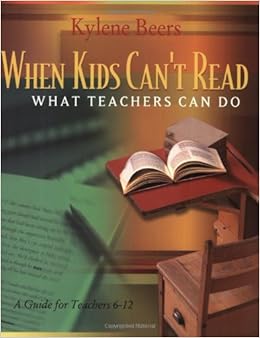
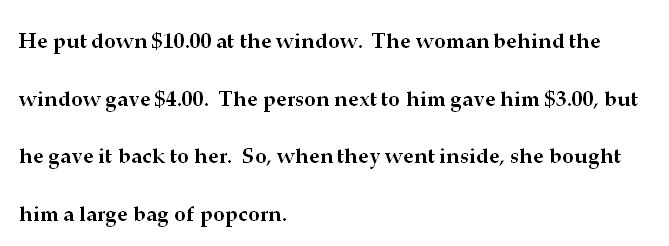
In my graduate reading class this week, we were discussing the following passage from Kylene Beers' When Kids Can't Read.  I want you to try to figure out what the passage is about before moving on. The struggle, if you have one, is part of the process. 


 ______________________________________

 ______________________________________


Are you ready? Did you figure it out? Then keep on readin'. 


In my class of adults, there was a great deal of discussion about the information in the passage. I own the Beers book and have used this particular passage in a number of workshops, so I did not have any original thoughts to contribute. I sat back and listened to what my peers had to say. One classmate got hung up on the numbers from the beginning, thinking it was a math problem. Most everyone got past that stage and pieced together a general idea of what is happening, but we were all making up completely different stories about who the people are - a married couple, a first date, friends, a brother and sister. 

Back in my eighth grade classroom, I knew I had some time to fill. We recently finished a unit, and I had a couple of days open prior to a district test. Why not see what the kids think of this passage?

I started by giving my students the passage and asking what it was about and how they figured it out. Quite a few thought it was a math problem and could not get past that idea. I actually had to have kids act out the scene in one class to try to get the kids to see it as a mini story. Once we walked through the passage, like my college peers, my students immediately began making up stories about who the people were and what the situation was. So I ran with it. 

Image result for harry potterFor the first time ever (insert drumroll here), I have students working collaboratively in a Google Doc. They are writing the full-length story of the initial few sentences. My students are sitting face-to-face in order to discuss what they want to write, then they are writing together in a single document. I walked them through setting up the document step-by-step, and you would have thought I had performed a spell straight out of Harry Potter. They oohed and aahed like I was the greatest wizard to ever live. 

Since I have not done this type of assignment before, I was concerned that the kids would be off-task, but I can honestly say that not one single student was discussing anything but the story. Two of my girls are writing the world's greatest love story, and when class ended the other day, one told me that she could not leave her characters hanging all weekend; she needed to know what was going to happen with them. Two of my boys are writing a fantasy version. Two others have turned the passage into a story about my date with John Cena (currently my imaginary boyfriend who doesn't know we are involved). Many students could not believe that I was having them stop because class was ending. They were completely engaged in what they were doing. 

In addition to all of these wonderful moments, the best thing I realized about this impromptu lesson is that I have blended learning taking place. Blended learning is an important component of the new Texas teacher evaluation system that will be put in place next year, and I feel like I am working through some practice rounds to prepare for that. My students are working together both face-to-face and online. They have control over the content of their story. They are determining the structure of their collaboration, and each partnership is quite different. 

This might not be a giant step for mankind, but it is a step for my classroom and for my own thinking. Sometimes I do not think I give my students enough credit for all that they are capable of, but I am determined to continue pushing myself to break out of my safe zones in order to challenge them, even if it's only one baby step at a time. 

Friday, January 8, 2016

Flexible Grouping Strategies: Part 1

This semester, one of our school focuses is upon flexible grouping strategies. Prior to the kids returning to school, we had half a day of professional learning focused on different types of groups and grouping strategies to use in the classroom to meet the needs of all students. The expectation was for us to immediately implement what we learned. So I am jumping to it as I am always up to a challenge. 

All teachers have also been expected to readdress class and school rules this week, especially those that have been trouble spots for us this school year. Most teachers have been giving students handouts and having conversations about them. Not me! We are writing skits that we are going to film and share. 

For the latter half of the first semester, I had not rearranged my student groups. Today, I found a lesson in which to incorporate the flexible grouping strategies. At the beginning of the school year, I used a grouping strategy using play cards. Today's strategy was a variation of that one:
  • Desks were arranged in groups of four. 
  • On each desk, I taped a playing card suit.
  • For each group, I taped a card number (9, 10, J, Q, K, A).
  • As students arrived at class, they choose a playing card. 
  • Students found their assigned number and suit, creating random groups. 

The card suits were for this particular strategy. The A/B signs are for a partnering activity.

Although there was some initial grumbling about who was working with whom, I only had one group out of five classes that struggled to find a working relationship. Everyone else took a few minutes to find their groove, and once they got started, some great ideas started pouring forth. I am anxious to see where we end up with the final products next week. 

Monday, November 16, 2015

Writing - How Data is Changing My Instruction

I have been fortunate (or unfortunate, depending on your viewpoint) to be involved in numerous programs and committees in my district that keep me informed about district and school strengths and weaknesses. I am the lead for my school literacy initiative and our ESL program and also work with these programs at the district level. I am part of my school leadership team, a group that works to set instructional and student goals. This year, I was invited to participate in a district committee that looks at district and school data. The point of this brief resume is to show that I am fully aware of my district and school needs, and within the past few weeks, a great deal has come to light in a new way. I have had to shift gears in regard to how I teach and how I model my instruction. 

Our eighth-grade English curriculum has focused heavily on reading and less on writing for the past few years. As we (the teachers) become more educated in how to understand and use student data, we have started to balance more writing into our instruction. I feel like teaching writing is much more my area of expertise than reading will ever be, but with limited time for writing instruction, I have to admit that I have truly glossed over the writing process for the past few years. 

For the past couple of weeks, my students have been working on an essay about teens cheating on schoolwork (see NY Times writing springboard). I had my kids using a generic expository graphic organizer to create an opening sentence (thesis) with three reasons for their viewpoint and three supporting details per reason. I chose an organizer that I have used in prior ESL training to best meet the needs of my student population. I created my own example and modeled how to create each part. 


While this was occurring in my classroom, I had a meeting with my principal and instructional coaches. We were having a conversation about what is missing in teacher instruction and came to the conclusion that teachers are modeling, but we are not modeling our thinking and metacognitive strategies effectively. Teachers show how to do something, but we are not necessarily conducting a thorough think-aloud to show the students the thinking process and inquiry involved in the work being done. 

Shortly after that meeting, I had an expository writing workshop to attend that provided some new strategies that I immediately brought to class and applied with more thorough instruction and modeling of my thinking. Here is what changed:


  • I had my students analyze the reasons and supporting details that they created to determine if they had facts, personal experiences, and/or references (this piece was presented to us for planning, but I was already on the flip side of that). The kids also decided that we needed to identify commonplace assertions. I conducted a think-aloud, deliberately asking questions of myself and expressing the steps I took in sorting through my own ideas. Although it was not a thoroughly planned think-aloud, I do feel like I made progress in making my invisible thinking visible. 
  • References were new to my students, and this provided them with an option for making revisions after discovering they had too many facts and personal experiences. Students who lacked personal experiences suddenly had more information to include in their writing. 
  • We used a four-question technique to determine what information needed to be included in our paragraphs. Without this, students were simply copying over their reasons and supporting details without any additional thought. I again conducted a think-aloud on how to answer these questions to build a paragraph, rather than just modeling my writing. 
    • What point am I trying to make?
    • What details support my point?
    • How can I show this? or Why is this important?
    • How do these ideas connect back to my thesis?
  • Another step with the questions was to color code our work to show the thought process. For each question answered within the paragraph, students had to use a different color to ensure that they were actually including all necessary information. 


I still feel like I have a long way to go to provide writing instruction of the quality that I used to when teaching it independently, and working in more focused and specific think-alouds is definitely challenging (and you will hear more about it as I read through Jeffery Wilhelm's Improving Comprehension with Think Aloud Strategies). As adults, it is amazing that we know as much as we know, and it is not very easy to verbalize all of that in order to help students learn how to think on their own. 


Thursday, October 15, 2015

Comprehension Processing Questions with videos

A few weeks ago, I wrote a short post about using Comprehension Processing Questions. I was asked for some follow-up information, so here is follow-up number one (yes, there is even more to come). 

I teach at an incredibly diverse school. Because we are in Texas, we tend to focus on our Spanish-speaking population, but we have students and families here from all over the world - Vietnam, Nigeria, Middle Eastern countries, South American countries. 

We are moving into a unit on expository text, and our first reading set is about immigrants and the challenges they face. Although some of my kids have a great deal of background knowledge in this area, some have none. So I searched for a video to help, and I ran across this: 


Although it had not come up in my summer training, I wanted to give my students something to focus on with this video. I created a Comprehension Processing Question to guide them: What do immigrant parents give up when moving to the United States? We discussed the question, and I clicked play. 

At first, my kids starting making notes in response to the CPQ, but I noticed that their pencils were being put down very quickly. I sat back and watched, wondering what was happening. As soon as some of my students started getting teary, I declared victory. I had, as the kids say, put my students all up in their feelings. That moment was worth so much more than their responses to the CPQ. 

We did, however, watch the video a second time in order to answer the question. My kids were able to discuss - in detail - what they had heard in the video. I do not show many videos in my class, but this certainly added value to what I was attempting to do with my lesson. 

Up next - CPQ with expository text. Stay tuned. 

Wednesday, October 14, 2015

Spelling Madness

http://www.shoemoney.com/wp-content/uploads/2015/09/real-time.jpg
Yesterday was yearbook picture day for my middle schoolers. Because the length of time needed for each class to be photographed varies based on how many other classes are waiting, I was improvising time fillers upon each return to class - organize binders, work on homework, new seating charts. 

One of my classes is fifteen minutes longer than the rest due to our lunch schedule. We took pictures, then came back to class and created our new seat assignments - and I still had thirty minutes left. On a whim, I issued a spelling challenge that worked far better than I expected. 

I had my students take out an index card, and I gave them five words to spell: Wednesday, February, library, university (student requested word), and pneumonia (just for fun). I then called individual students up to the board who thought they spelled the word correctly. If that student was wrong, she/he called on someone else to come up and correctly spell the word. 

I was not expecting the madness that followed. My kids were raising their hands, pleading to be called upon, and jumping up and down.They were determined to show their classmates that they knew something. We do not conduct formal spelling lessons at this stage so having students get excited about spelling is like encountering the Northern Lights. But now that I know it is a way to sneak in spelling, I am certainly going to have to do it again. 

Sunday, October 4, 2015

Kagan Remixed

I am very fortunate to receive numerous opportunities for training in my district, but somehow, Kagan training has always bypassed me. That does not mean I will allow myself to be left out, however. I have grabbed bits and pieces here and there, and I use them in my classroom legally or illegally, gosh darn it! 

My favorite strategy to use is Stand Up - Hand Up - Pair Up. I like for my students to get up and move (because who wants to sit on a hard chair for seven hours a day), plus it gives them a chance to talk to different classmates. I can also incorporate reading,writing, listening, and speaking in one strategy, addressing the needs of my English language learners. 


from Cooperative Learning

For some reason, my eighth graders are not into the Hand Up part of the routine. So I have put my own spins on the strategy:


  • Remix #1: Speed Friending
    • This concept is similar to speed dating. The kids mix-and-mingle, like they would at a social gathering, sharing their work with different students. They have to communicate with three different people and make it "home before curfew." I call curfew two times. The first time, the kids are expected to wrap up and head back to their seats. The second time, they get "threatened" with grounding (and for some reason, they found this highly amusing). 
  • Remix #2: Dah Club
    • We are still doing the same thing, but I set the scene as a dance party. It's easy to turn on some music while kids are moving around. I even pull out some of my corniest dance moves and work the room while the students are engaged in their conversations. I am silly to begin with, so this is not out of character for me in the least. 
The strategy works without any revisions, but my students seem to be enjoying it more in the remixed versions. It's easily modifiable for any age group by simply adding a scene - playground, mall, football game. And secretly, I have ulterior motives to develop an Oscar-winning actor at some point in time.