Search This Blog

Showing posts with label #ELLChat_BkClub. Show all posts

Wednesday, July 25, 2018

Nine Box Grid - Modified and Magnified

This week, I have returned to school to assist with our third annual incoming seventh-grade student orientation camp. I volunteer my services for this camp every year for numerous reasons: it gives me a chance to start building relationships with students I may or may not teach later on; the sample of students who participate usually reveal what we can expect from our new student population (so far, so great), and I get the opportunity to try out lessons on a smaller scale before the school year begins. 

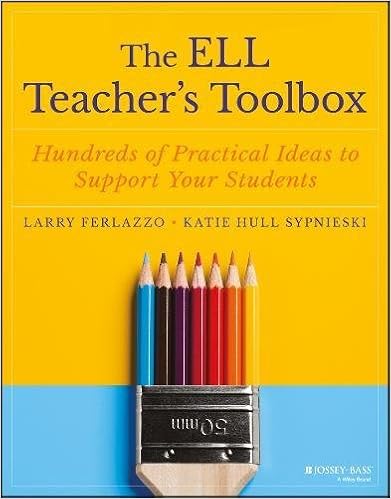
As part of the Twitter ELL book club, I  read The ELL Teacher's Toolbox by Larry Ferlazzo and Katie Hull Sypnieski. I love being part of this book club, as I have been exposed to strategies for working with ELLs - and ALL students - that I might not run across otherwise. The unfortunate part about this particular book was that we started reading it at the end of the school year, and I did not have time to implement all of these ideas that had my brain swimming in excitement. 

One activity I have been anxious to use in my classroom since last spring is Katie Toppel's Nine Box Grid. The authors acknowledge that they have modified this strategy, and I have to acknowledge that I, in turn, modified and magnified the strategy for my own needs based on the time constraints of the camp.

The Nine Box Grid involves creating a nine numbered boxes. A word is entered into each box, and they are used one at a time in a writing activity. During the school year, I am likely to use related words that we are learning in class, but due to limited time with my camp students, I chose to use a random word generator to come up with the nine words. These are readily available online. Some allow you to choose the words you want; others provide a set list. I used different types of generators for different groups of students to test out how I could make this activity work. My higher level classes received a specific set of words; my still-working-on-it groups were able to choose words from those provided to build our own list. 

I also turned the activity into a writing challenge by adding in rounds, For each round, the students received a topic (I also used an online generator for this). We started by writing about a topic with one word from the nine box grid. After completing a round, I changed the topic and increased the number of words. Most of the classes completed four rounds. 

_________________________________________________________________


  • Round 1
    • Run topic generator 
    • Pick a number on a card (the book says to use dice, but I don't even know where anything is in my classroom right now)
    • Write a sentence with the word in the box matching that number that connects to the topic
    • Share out 
  • Round two
    • Run topic generator
    • Pick two number cards
    • Write a sentence with both of the chosen words, connecting to the topic
    • Share out

    _________________________________________________________________

    My camp classes consist of English language learners (I have one student who has been here for two years, and she speaks eight languages), 504, special education, Pre-AP, and academic students. Within all of these groups, there was a great deal of groaning when I said we were going to write. I am happy to report that this was not the case by the end of the activity. The kids truly rose to the challenge. If we do not find ways to make writing fun for our kids, regardless of which student groups they fall into, those groans will never go away. We have a responsibility to light a fire within our students. 

    In addition, I have a special education co-teacher with me during one of my class sessions. She loved this activity, and her final class of the day joined mine in order to participate. She took lots of notes and said she is excited to use this with her kids once we return to school. When we model these activities for others, and they get to see how the kids respond, we spread the wealth. 

    Do not be afraid to take risks and try new things. Be contagious. Our kids deserve it. 


    Sunday, November 19, 2017

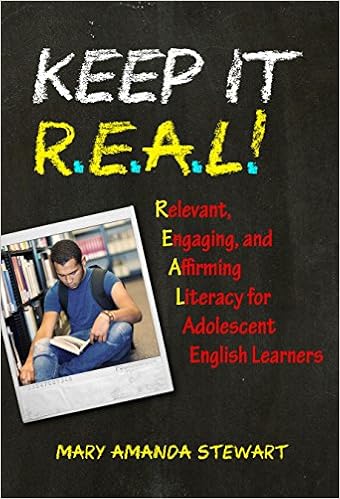
    Keep it R.E.A.L. - Chapter 1 Response

    A few weeks ago, I received an unexpected message in my work email from a professor at Texas Woman's University. Dr. Mandy Stewart, a professor who I have not met, asked if she could share some of my work with potential graduate students. Fortunately, Dr. Stewart could not see me gushing and blushing behind my computer.

    As if that were not flattering enough, our conversation led to a book she recently wrote, Keep it R.E.A.L!: Relevant, engaging, and affirming literacy for adolescent English learners. Dr. Stewart asked me two questions: Would I mind if she sent me a copy to read? Would I mind providing my opinion on how the information can be more inclusive of middle school students?

    Me? Seriously? Two words: Jaw. Drop. What kind of expert am I? Fourteen plus years of experience teaching middle school, six of those as a certified ESL teacher, and I still do not see myself as an expert. But I do have opinions all the time, so why not! So here goes...something.

    Reader Response:

    Dr. Stewart shares how she used reader response instruction with newcomer students in a high school summer institute. Reader response might be the only theory I can comfortably discuss. I read Lois Tyson's book Critical theory today prior to entering the field of education. Even as I was studying this information as part of my English minor, reader response criticism resonated with me the most because it is how I read naturally. Once I entered the seventh grade classroom (and later on eighth), this became my go-to theory with my students.

    Reader response is all about interacting with the text to make meaning. It is about the experience of the reader. Not only do I consider this to be an ideal way for middle school students to develop a relationship with text, I also see this as beneficial for English language learners. Because we are asking our ELLs to engage with the text and develop connections, they cannot be wrong (unless they have completely misread, of course). The students are bringing their experiences to the table that allow them to engage in writing, listening, and speaking, in addition to the reading, all within the framework of a low affective filter.

    The Acronym:

    Just as we wish for students to connect with text, we need to connect with our students. Why not incorporate some slang into our teaching? I could easily say, "We are going to Keep it R.E.A.L. today," as part of a reading lesson. (That is far more comfortable for me than referring to myself as the G.O.A.T. or as Gucci.)

    Newcomers will need instruction in understanding slang American language. Pre-teens and young teens are on a journey of self-discovery, and as much as we may want them to be focused on long-term educational goals, their goal is simply to fit in with and be accepted by their peers. So I am all for keepin' it real. We can teach our newer ELLs an expression that will help them communicate socially, while also making new-language text more accessible.

    So here is my initial opinion regarding this content and students in grades 6-8: The foundation of this work is definitely an ideal fit for the middle school classroom. It allows for all students to connect to the learning, in particular our ELLs who may feel isolated and withdrawn. Reader response through Keep it R.E.A.L. provides for every student to be part of the learning community.

    Dr. Stewart discusses each element of R.E.A.L. in chapter one, and I would rather you read it than have me share all of my reader responses to the questions she proposes in regard to relevancy, engagement, affirmation, and literacy instruction, as we each bring different backgrounds and experiences from our teaching to these topics.


    Saturday, September 16, 2017

    Roving Paragraph Frames

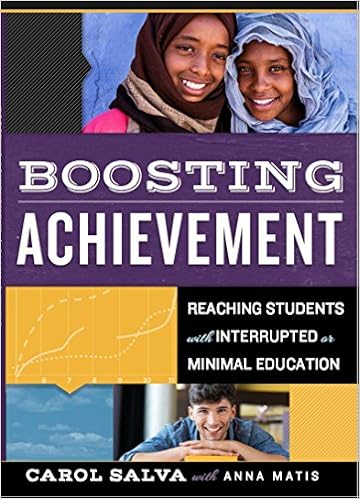
    This summer, I was introduced to a book chat on Twitter specifically focused on English language learners. The first book I read for #ELLChat_BkClub was Boosting Achievement: Reaching Students with Interrupted or Minimal Education by Carol Salva. Most of my students are long-term ELLs, but good strategies are good strategies, so I was not going to pass up the opportunity to dialogue with educators all over the country regarding this information.

    I do have some shorter-term ELL students in my classes this year, ranging from two to five years. Although we are four weeks into the school year, I do not know about their educational careers prior to immigrating. I do know that I want to provide them with the best possible education, and in Boosting Achievement, I discovered roving paragraph frames. As an AVID teacher, my students engage in writing, reading, collaboration, and reflection regularly. The roving paragraph frames strategy caught my attention because of its ability to meet my AVID expectations in addition to assisting my ELLs. I often use writing frames and templates in class, but the addition of movement and collaboration makes this a special strategy.

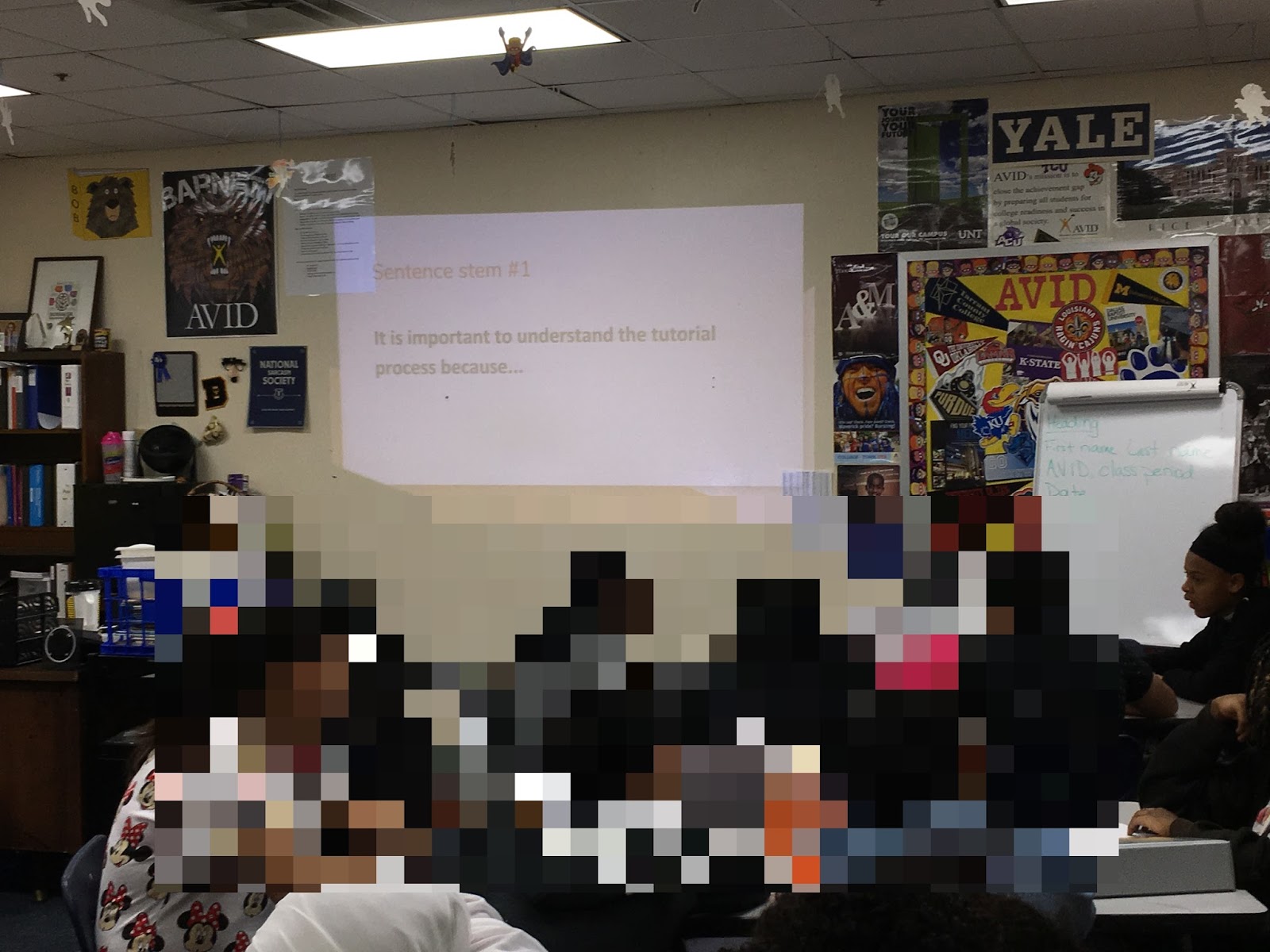
    After spending a week watching videos and taking notes over the AVID tutorial process, my students needed a day to get up and move. I used the roving paragraph frames strategy as a collaborative reflective writing assignment about our learning. Salva provides options for students who cannot yet write in English and for the newcomer classroom, as well as the following method that I used with my students:
    • Provide students with a sentence stem. They should complete the statement, creating a complete sentence. 
    "It is important to understand the tutorial process because..."
    •  Students signal when they have completed their writing and are ready for the next step. Salva suggests having students stand up in preparation to move. Because my classes are large, I simply had my students set their pencils down. 
    • Students next rove around the room to find a partner. I used the Kagan Hand up/Stand up/Pair up strategy. 
    • Once a partner is found, students read (speaking/listening) what they have written to one another.  
    • Provide another stem for students to add on to what they have written, creating another complete sentence. Students may write the information they received from their partners or write a brand new idea. 
    •  Students signal when they have completed their writing and are ready for the next step. Salva suggests having students stand back-to-back. I used this idea, but I would like to caution you in advance: we had some booty bumping taking place. 😀
    • Lather, rinse, repeat until your students have written what you wish for them to write. I kept this initial round to four sentences, as I was not sure how my students would react.
    After completing the activity, I had my students reflect on how we used listening, speaking, reading, writing, and collaboration with the strategy. It is important to me that they understand all aspects of communication skills as part of their college prep program.

    These three students are my newest to the United States and all wrote equally as well as their native Texan classmates: 

    Student from Mexico; in US 2 years


    Student from Vietnam; in US for 3 years

    Student from Vietnam; in US for 5 years

    If you have read my blog with any regularity, you know that I consider all students to be English language learners. Middle schoolers still have a lot to learn about writing fluently, and by using roving paragraph frames, my students have a foundation upon which to build.

    During my last class of the day, one boy asked if we were going to be doing this again. I told him that depended on whether or not the class enjoyed the activity. I was met with a chorus of resounding approval. I also have to tell you that my kids gave me a bit of a hard time. Apparently, I needed to increase the sophistication of the transition statements because they already know how to use the basics. Challenge accepted! Stay tuned.


    P.S. I will be presenting this information at the TexTESOL V conference in Plano in a few weeks. If you happen to try this before then, I would love your thoughts.

    P.P.S. Here is the presentation from the TexTESOLV conference. Thanks to all who attended and shared.