Search This Blog

Showing posts with label ELPS. Show all posts

Tuesday, September 6, 2016

Quote Analyses in Canvas Discussions

My Pre-AP students took a test over their summer reading today, and I needed an extension activity for those students who finished sooner rather than later. Since I administered the test in Canvas, I decided to create something else for my kids to do online, as that is usually what keeps them the quietest. 

This summer, I attended an AVID conference strand called AVID Academic Language and Literacy. One activity introduced was using a quote analysis (reading) to lead to academic discussion (for listening and speaking), as well as review and revision (writing). The process involves responding to a quote with a writing frame, then sharing and discussing with a partner using academic language scripts, leading to revision.

I needed a quiet classroom, however, so I moved this process to a discussion board within Canvas. The discussion board allows threaded replies and likes, similar to Facebook (but without all the cute cartoons). I am also able to join my two separate Pre-AP classes together for one cross-class conversation.


Although there were some initial struggles due to the lack of direct instruction with this instruction, the kids caught on quickly. For a first try, they didn't do too bad. Their responses included statements like "I agree with..." and "I like what you said about...". Then at some point, they became the grammar police, pointing out mistakes that needed to be corrected and directing classmates to use the entire writing frame for their responses. Talk about teaching made easy! 

This initial trial run has definitely given me incentive to pursue this further, adding depth and rigor as we move throughout the year. My student teacher did inform my kids that this is part of what she has to do in her college classes, so she may prove to be a valuable resource in this arena.

Sunday, October 4, 2015

Kagan Remixed

I am very fortunate to receive numerous opportunities for training in my district, but somehow, Kagan training has always bypassed me. That does not mean I will allow myself to be left out, however. I have grabbed bits and pieces here and there, and I use them in my classroom legally or illegally, gosh darn it! 

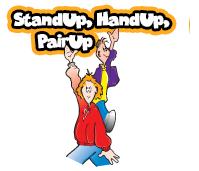
My favorite strategy to use is Stand Up - Hand Up - Pair Up. I like for my students to get up and move (because who wants to sit on a hard chair for seven hours a day), plus it gives them a chance to talk to different classmates. I can also incorporate reading,writing, listening, and speaking in one strategy, addressing the needs of my English language learners. 


from Cooperative Learning

For some reason, my eighth graders are not into the Hand Up part of the routine. So I have put my own spins on the strategy:


  • Remix #1: Speed Friending
    • This concept is similar to speed dating. The kids mix-and-mingle, like they would at a social gathering, sharing their work with different students. They have to communicate with three different people and make it "home before curfew." I call curfew two times. The first time, the kids are expected to wrap up and head back to their seats. The second time, they get "threatened" with grounding (and for some reason, they found this highly amusing). 
  • Remix #2: Dah Club
    • We are still doing the same thing, but I set the scene as a dance party. It's easy to turn on some music while kids are moving around. I even pull out some of my corniest dance moves and work the room while the students are engaged in their conversations. I am silly to begin with, so this is not out of character for me in the least. 
The strategy works without any revisions, but my students seem to be enjoying it more in the remixed versions. It's easily modifiable for any age group by simply adding a scene - playground, mall, football game. And secretly, I have ulterior motives to develop an Oscar-winning actor at some point in time. 

Sunday, August 23, 2015

Community Building Activity: Hands On

Tomorrow is the first day of school with my 2015-2016 students. I will have 118 (at last count) new bodies in my classroom, some of whom I know a bit better than others. Some I do not know at all, as we have had many students transfer in from other junior highs, districts, cities, and states. 

With so much newness, it is important for everyone to get to know one another. It is my responsibility to build a healthy and safe classroom community. Our first assignment is going to be an introductory activity called Hands On, another  steal from the AVID Culturally Relevant Training I attended this summer (see Poker Time seating/grouping strategy)


We will be hanging the hands in the hallway to show everyone that we are going to work together. When this year's parents come in Thursday night to meet the teachers, I want them to see that we have been building a community from day one. I am a big preacher about my classroom being accepting of all people, regardless of any type of differences, and the Hands On activity is just one way to begin expressing that. 


In addition, my students will be reading, writing, listening, and speaking with this lesson, all of which are essential components of both English language arts and English language learner instruction. 

There is another, more secret reason that I am using this as my first day lesson. How many of you are still preaching procedures, expectations, rules, consequences, and the like on day one? How does your mouth and throat feel by the end of the day? It took me ten years to realize that coming home with a sore throat was not the way to start my school year, so I stopped that a few years ago. The kids will listen to me a little bit, but for the most part, I get to walk around, monitor, listen, and smile (yes, I smile before December). 

How will you build a safe and welcoming classroom environment?

Wednesday, July 8, 2015

It's poker time!

Well, not really, but now that I have your attention, let me share a seating/grouping strategy that I learned about this summer at AVID Culturally Relevant Training: Empowering Students. It involves elements of poker!

Upon entering my second day of the conference, I was instructed to draw a card from a deck. I then had to sit at a table the held a sign of the same suit as my playing card. This forced me to sit with (mostly) different people from the first day of the conference. You know that as teachers, we become very territorial very quickly. We find a comfort zone and stick with it. This training was not allowing that, and I am grateful for the push. 

I like this idea for the classroom. My environment is set up in groups every day. I usually make a seating chart the second week of school for the sole purpose of splitting up friends. Being friends, however, does not mean that students can not learn from one another. After thinking about it, shouldn't students be offered this same opportunity by random draw? 

My intention is to use this method on the first day of the 2015-2016 school year. Students may end up with friends; they may not. Either way, that should not take away from the group-building activity that I am planning on using (keep checking back for future blog post). I am considering using it every day for the first week, just to get the kids familiar with all of their classmates. [One of my biggest issues is always when students do not know the names of classmates after a couple of months. Heck, if I can learn them in a week, they should be able to learn them, too.]


__________________________________________

Resource: Table Signs

  • I have doubled the symbols on each page in order to fold them in half to get them to stand up. I am considering using the four-suit image for the last students who come in who may not fit into other full groups. This will depend upon class sizes. 

__________________________________________

At the conference, we took the playing cards a step further. Although we sat with one group, we created poker hands to mix-and-mingle with other classmates to answer questions. We took our cards, then paired up by a poker hand that was called out: two of a kind, three of a kind, flush, straight. For each round I participated in, I managed to meet someone new. Sometimes I was with one other person; sometimes four. 

This has unlimited possibilities for the classroom. For the first week, I am considering using this method with a 3-2-1. Students will write down three things they learned (it probably will not actually be about my class), two things they like, and one question they have. Then I will have them create their poker-hand groups to discuss what they have written. My goal is to always to incorporate reading and writing with listening and speaking to address ESL needs. And after twelve years of teaching, it becomes easier and easier to blend different strategies, so why not! 

__________________________________________

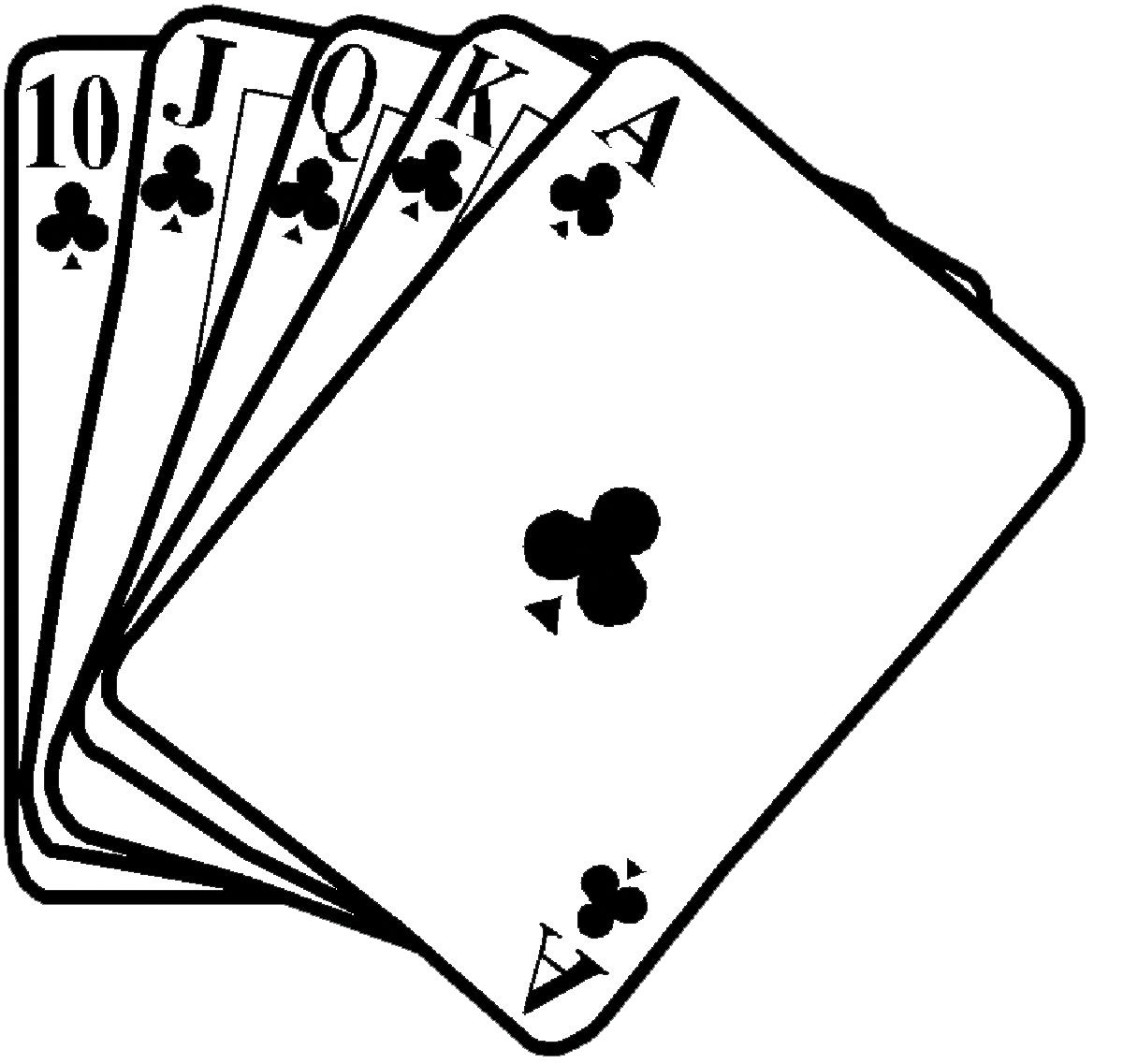
  • Because I am not terribly familiar with poker, and because I really hope that my students are also clueless (yes, naive), I made myself a display cheat sheet. I will post this to assist with students making their groups. 
__________________________________________

The AVID site team is hoping to present these playing card strategies during our in-service week in conjunction with some team-building activities. I only share what I see value in, and I am excited about adding this to by classroom management repertoire. Plus, I can definitely get cheap decks of cards at the dollar store (a teacher's best friend). 

What are your thoughts? How can you use this with your students (aside from teaching them how to play poker)?

Monday, December 8, 2014

Using Notice and Note with Dialectical Journals

I have discovered my favorite thing with Notice and Note: it goes with everything! I had been planning on teaching The Giver this year, as I have for the past few years. When I went to get copies of the book from our storage room, however, I discovered we did not have enough for me to provide each student with a copy. I did not want to work with a class set because I often have students who want to read ahead. I already had my Notice and Note lesson prepared, but since it works with everything, I did not have any issues with changing novels to work with. 

After much scrambling, I decided to teach Milkweed, a novel I used only with my Pre-AP students last year. My students will be studying World War II later this year, and after reading this book last year, I realized that even my knowledge was limited to a concentration camps (I still remember the paper I wrote in my eighth grade English class about Auschwitz). This easy-to-read novel gives my students a perspective that is not taught in most history classes. 

Coming back from Thanksgiving break last week, I had my students do nothing but copy my Notice and Note mini-posters. Ok, ok. I was really tired and did not want to have to work too hard the first day back, but...but... I am human, too! 

When I distributed student novels, I also gave them a Notice and Note bookmark. Aside from that, I have not mentioned one thing about the mini-posters until today (I actually had one kid try to talk to me about when we discussed the signposts earlier but we had not; I must be really good). 

Today I taught my students how to create a dialectical journal, using the signposts as a guide. We analyzed the text for signposts, using our bookmarks as a cheat-sheet. After identifying a signpost, we used the accompanying question from the bookmark and our posters to guide our class discussion and to write our responses. I never stopped to teach each the signposts individually. I simply jumped right in, and the kids reacted. This is what my classes came up with today for chapters one and two of the novel:


Tomorrow, the kids will start working in groups to identify signposts in the text. Some want more support before having to work on their own. Since dialectical journals are new to 76 of my 77 students, I do not have any problems with this. 

On a side note, many of my students are close to finishing the novel. Since I never even assigned a specific reading, this is a thrilling thing to see. 

Skills targeted:

  • ELPS - listening, speaking, reading, writing
  • using text evidence
  • monitoring comprehension
  • collaboration
  • inference
  • reader response