Search This Blog

Showing posts with label teach. Show all posts

Friday, November 8, 2013

Getting started with Data Walls

A couple of weeks ago, I was ranting about the stupidity of data walls. I had read an article that I disagreed with. I posted it on Edmodo and Facebook for discussion, and there were definitely varying perspectives. I read. I processed. I did not change my opinion. 

One, I hate numbers. Hate with a capital, italicized, bolded, and underlined H. I look at numbers and feel like I am looking at a foreign language. Despite this, I am really good at looking at and analyzing data. I have even been asked to conduct a professional development session on our database. 

Two, what is the point? Putting a bunch of numbers up on the wall is not going to change my student population or class sizes. I am still going to have students who have special needs and those who do not do their homework. 

Three, I think they are stupid. So there!

Tuesday, we had a staff meeting, and because life likes to play games, DATA WALLS was listed on the agenda. I swear my brain groaned. Not my throat. My brain. All teachers are now required to have classroom data walls and binders full of data and brains full of data and data and data. And guess what. Two weeks to get everything ready. 

I am easily aggravated, but that does not tend to last long. I am quick to step back and look at any change in a positive light and get to work on whatever is expected of me. Therefore, I am making my attempt to create an ever-changing data wall. 

Yesterday, we took our quiz of "The Tell-Tale Heart." As each class was scored and entered into the gradebook, I posted the class average for the quiz. Third period wanted to do better than second. Fourth wanted to do better than third and fourth. Sixth didn't care. And seventh, my Pre-AP class, simply expected to do the best. When second period came in today, they were pretty upset. 


All right, so why did third period do significantly better? I can do this. I can analyze. 

Well, third period is my smallest class at 15. They are a very engaged group, and we have a great time every day. Are they doing the best because they are the smallest? Are they doing the best because of the rapport? Is it a combination? I am not quite sure on this, but I am determined to figure it out. 

Today, we are completing our Istation testing. Istation is a computerized reading program that measures lexile levels. We use this to help monitor student progress throughout the year. The first time they took the test, they did not take it seriously (and it was a Monday morning). I raised the stakes this time.

Throughout the day, I have been keeping track of the September averages compared with today's averages. Despite third periods exceptional work yesterday, they actually decreased significantly. I did have some students tell me afterward that they were not focused and/or concerned. Now I have to try again with them and see what happens. Grrrr! 


While the kids have been working today, I have also been finishing up grading for report cards (yes, I really can multitask this well; the joys of ADHD). I have been looking at the passing rate for each class for the first and second marking periods. Their focus for this set has to be solely on their own class periods because the different class sizes keep the percentages from matching up to one another. 


Sadly, I had to add 82% to my last box with five students failing. Pre-AP has been completely off their game, and I have been all over them for the past few weeks. I knew it. They knew it. But they haven't seen it. As soon as I walked over the the board and wrote it down, there was a lot of turning around and whispering. Maybe there is more impact here than I realize. 

So those of you who use and/or understand data walls, what are your thoughts about my start? When I don't know something, I ask, and I am really asking. 


Saturday, October 26, 2013

Close Reading Strategies with "The Tell-Tale Heart" (Planning)

It has taken hours, and my back is killing me, but I believe I have put together a quality close reading lesson for "The Tell-Tale Heart" using two of the signposts from Notice and Note: Contrasts & Contradictions and Again & Again. 

My goals for this lesson were to:

  • have students connect our Sketch and Stretch vocabulary lesson to the words within the text
  • connect our introductory lesson for Contrasts & Contradictions in "The Horror" to "The Tell-Tale Heart"
  • teach a second signpost, Again & Again
  • be EXPLICIT in all teaching
I began by reading "The Tell-Tale Heart," marking up my text, identifying the above elements and making some teaching notes:


As I was reading, I was making a sample CC/AA reading log. You can see that I do not always think in order. 


Using all of my notes, I created my presentation, adding my nerdy sense of humor throughout. I have an underlying goal to educate on all things 1980s. If I had to endure the torture, so should they!

I am definitely going to have to do some proofreading tomorrow. I am a bit delirious at this point (and not Eddie Murphy style), but I was determined to crank this baby out tonight. Any and all feedback is welcomed. 

As always, I will post feedback from the lesson as we progress through the next week. 

What modeling writing ends up looking like in my classroom

Pardon my braggadocio, but I have really good rapport with my students. That characteristic is not always a positive, but it does allow me to be a bit zany with my examples (maybe more than a bit). It is really important to model skills with students. I know not all teachers are comfortable being goofy in the classroom, but that has been my style since (almost) day one. I had another example about my true first fear, but they this one was much more effective for teaching. 

This is one of the writing samples I produced for our personal narrative about fears:


We were working on elaborating and clarifying with sentence stems from Academic Conversations by Jeff Zwiers. 


I turned 40 right before school started this year.
One of my students told me,
"But I thought you were 48."
It is now a running class joke. 

Thursday, October 24, 2013

Vocabulary Strategy: Sketch to Stretch is a hit!

A few days, I posted my vocabulary lesson  for "The Tell-Tale Heart." I truly felt I had something good, but as always, the children have surpassed my expectations. 


You know it's a good strategy when the kids start drawing you for the assignment. Of course, this student thought he was the first and only child to ever come up with an idea like this.

I used this as my example for the rest of the day, telling them I have never lied about being a model. This is the proof! The lips are too big, however. No Botox for me, thank you very much. 

Here are some other examples:


This was fun and engaging for the students and for me. 


Wednesday, October 23, 2013

Midnight Lesson Planning: Close Reading with Contrasts & Contradictions

I tend to do my greatest lesson planning in the middle of the night. For some of you, midnight might be bedtime, but for me, it is usually hours into sleep. Unfortunately, I'm a light sleeper, and most everything wakes me up, including my constantly working brain. 

A few days ago, I posted about a passage I found to connect to "The Tell-Tale Heart." I was excited about the prospect of the piece, but in my rush to incorporate it into class, I had not thoroughly processed the potential - at least not until waking up in the wee hours of the morning. 


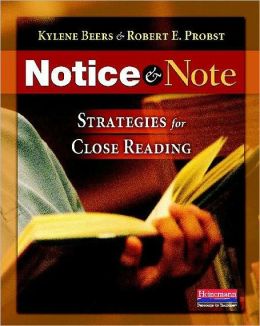
My new favorite book (Don't I say that about every book?) for reading comprehension strategies is Notice & Note by Kylene Beers and Bob Probst. The strategies are almost so simple, one wonders why one didn't think of it on her own (her being me). 

With my midnight genius, I realized that "The Horror" is a perfect piece to introduce the signpost Contrast & Contradictions, especially as a contrast piece itself to "The Tell-Tale Heart." I already had my presentation for this strategy created, and a first period conference time allowed me to do some quick editing and revising to teach this concept today. 

The idea behind the strategy (and the others in the book) is for students to look for repetitive patterns to help understand text. With Contrasts & Contradictions, the kids look for (notice) character actions that are the opposite of what we expect. 


We began the lesson by discussing the concepts in the slide - everything from the stop sign, what notice and note mean, and examples of contrasts and contradictions. Now, as an edutainer, I have no problem making fun of myself, so coming up with real-life examples to teach this was easy:

  • If Ms. Foti came to school in a dress, you would be asking... (this is where they all chime in with, "Why?"). 
  • If Ms. Foti was mean to you for a day, you would be asking...
  • If Ms. Foti got married this weekend, you would be asking...
Hook, line, and sinker, all in one. 

Before reading the piece, I set the mood. I turned the lights off (I have a big window). I got everyone quiet. I reminded them that we were focused on identifying contrasts and contradictions within the reading. Then I read "The Horror" as if it was the scariest, most frightening, terrifying work ever written. 

I didn't even have to teach after that. Each class period, the kids were already commenting about everything that was "not right" with the passage. The contrasts and contradictions stood out like me in a dress (for those readers who do not know me personally, I am a bit of a tomboy and do not even own a dress). Of course, we did discuss afterward, identifying and labeling (noting) the CCs. But I would not call what I had to do at that point work. It certainly helps to have middle school students who are horror movie connoisseurs. 

I have to give a genius student credit for pointing out an obvious CC that I completely overlooked. At the beginning of the text, Eggers sets up Sandra as fearful, yet by age thirty, she is ready to write a horror novel. Can Ms. Foti say contradiction?

It always feels fantastic when students grasp a concept (and quickly), but the best reward is watching them enjoy education. Today ranks as one of the best learning days of the year. 

Sunday, October 20, 2013

Vocabulary Strategies for "The Tell-Tale Heart"

I will begin teaching "The Tell-Tale Heart" later this week. I am working on two vocabulary strategies for this lesson to mix things up: the Texas Literacy Initiative vocabulary routine and another strategy called Sketch to Stretch. 

I will start the vocabulary work with the vocabulary routine for the word vex. I chose this word because it ties in well with our last vocabulary routine for the word gripe. I want my students to be able to view words in connection to one another, rather than isolated pieces from different readings. I have heard my students using the word gripe - correctly - in conversation with one another, so I will be curious to see if they pick up on vex the same way. 

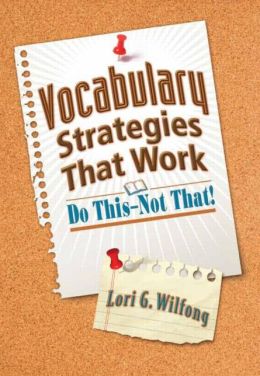
The second strategy, Sketch to Stretch, comes from Vocabulary Strategies that Work, a book provided by the Texas Literacy Initiative as part of our vocabulary focus. Sketch to Stretch was originally created as a reading comprehension strategy for visualization (I am going to use that as a connection piece at the end of the reading). In this process, students read a section of text, then create a reaction drawing. By the end of the reading, they have a series of drawings to help them recall information. [If you search this strategy online, you will find a great deal of information.]

Wilfong has adapted this strategy for vocabulary study. Students read a chunk of text, then they choose a word from that section that they feel is vital to the meaning of the selection. They then draw what they think the word means in the given context. 

Since this is the first time I will be using this strategy, and because "TTH" tends to be complicated enough for my students to understand, I have modified Wilfong's strategy to suit my own needs. Rather than use Poe's text, I am giving my students modern-language sentences with selected words from the story. They will create their drawings and definitions based on this information to help them apply it to "TTH".

Follow-up to come after I teach this Thursday or Friday. Stay tuned.

Saturday, October 19, 2013

Teaching in Metaphor: Writing Sentences with Coordinating and Subordinating Conjunctions

Sentence variety. Aaaah. As much as I love understanding how sentences are constructed, for some reason (cough-cough) my students simply do not find it terribly exciting. But with my unique teaching style, I am comfortable totally nerding out over sentence construction. This year, I managed to take it farther than ever before. 

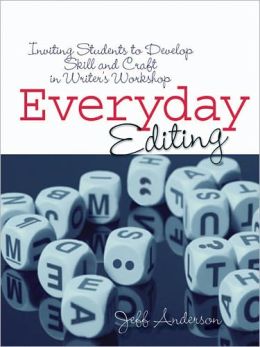
For starters, I use Jeff Anderson's Mechanically Inclined and Everyday Editing  to teach many writing skills. The man is a genius, and his books have been some of my best investments. And he has already done so much of the work that I really only have to put my presentations together. 

This past week, we worked on writing with coordinating and subordinating conjunctions for their sentence revisions. I had the kids copy the mini-poster slides and examples in their resource journals while I explained the basic structures of the sentences. So far, so not-very-exciting. Then I pulled out the metaphor!

I have used this for years now, and it works. At first, I get the you-are-such-a-nerd look (to which I respond with my own duh-I-have-a-poster-of-Darth-Vader-on-the-wall look). It doesn't take long, however, for the kids to become pretty impressed with my genius on this one - or maybe it is just what I am showing them and connecting to sentence building. 

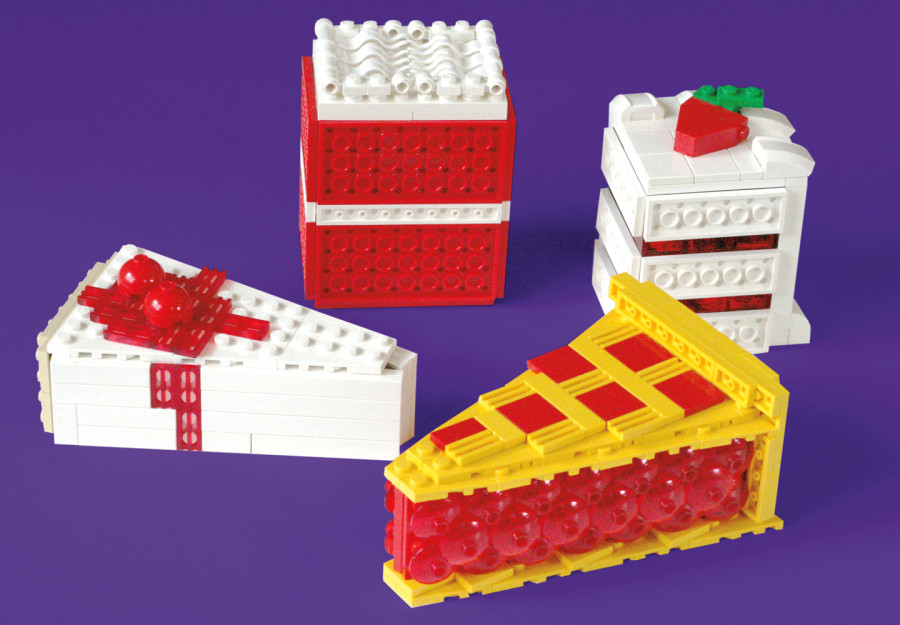
What is this magical metaphor, you ask? Let me leave you in suspense no longer. The magic is in the Lego. I teach my students that sentences are simply Legos in word form. Different pieces are different types of Lego blocks, and we can put those blocks together in multiple ways to create unbelievable creations and works of art. You will see in my presentation that there are even boxes around different elements, and when the kids write for me, they draw these "blocks" to show how they build their sentences. 

Now, explanation alone is not good enough for the kids to get this. This is a true "a picture speaks a thousand words" moment.  This year, I showed a recent article from The Huffington Post that I ran across just a couple of days before I taught this lesson (you can also find a gazillion amazing Lego creations with an image search). I compared the different levels of design to the different levels of sentences that one can write. I explained that some students would write dessert-level creation sentences and some would write castle-level creation sentences. Either way, both would be fantastic. The group I have this year is highly competitive, and they were not about to settle for dessert-level writing. I have to admit that I was shocked by how some of their eyes lit up when I read their work and responded with, "You wrote a castle!"

Don't be afraid to get your nerdy on. It is all about the passion you express. Let it be contagious. 

Wednesday, October 16, 2013

Blind Rewrites

As we continue our writing journey with the personal narrative, I added another new element that I got from Jeff Anderson's 10 Things Every Writer Needs to Know: blind rewrites. 

After the power writing, speed drafts, and a peer questioning activity, I gave my students four minutes to thoroughly read over what they had written. Their objective was to focus on the important details, particularly what their classmates felt they should add to their work. Once the four minutes were up, I collected their original papers. 

When I presented the next step, I was blatantly accused of torture, to which I replied, "Torture for you; entertainment for me." The uproar continued, but I smiled my way through it. 

Their concern? I told my lovelies that they had to rewrite their entire paper in seven minutes. Without looking. 

Sure, I heard a lot of "but I can't remember." But they did. Within that seven minutes, almost every student in class had at least a half page written, and a few were quick to point out that they only remembered the important parts. Ding-ding-ding! We have a winner!

Tomorrow, we will be contrasting the first draft with the second draft. I want them to determine if they included the information that was truly important to the meaning. If they left anything out that they deem necessary to the rewrite, they can add it back in. 

After that, sentence revisions. Oh, how I love complex sentences!

Seriously? Am I speaking English?

I am having one of those days when nothing makes sense to my students. I am modeling, explaining, explaining some more, modeling some more, and explaining again. Then when I ask if there are any questions, I am being asked the same things I just went over. 

Sometimes I know it is me. I can acknowledge when I am not making sense. I am not above my own self in this regard. But today, I really feel like it is not me. 

"Stop. Put your papers down," I demanded of my second class of the day. We are working on elaboration and clarification, and I had determined that I was not elaborating and clarifying enough. 

"Help me help you," I pleaded." I must not be explaining something well if two classes have not understood me. I am missing a step on my end."

Good teacher move, right? I am putting my guard down and letting them know that I am not perfect, expecting lots of questions from the minions. 

"No, Miss. You explained it right."

Seriously? Now I am confused. Does someone have a wall into which I may bang my head?

Tuesday, October 15, 2013

Speed Drafts

Before I move on to today's topic, let me follow-up on my Power Writing post:

  • This was a continued success with my academic students. The best response I heard all day was a whispered, "This is aaaaaawesome." In addition, I heard requests for more rounds. 
  • One of my science colleagues (anonymous shoutout) used Power Writing with her students today as a review of academic terms. We are both part of our Texas Literacy Initiative Campus Based Leadership Team, and we are working on reading and writing skills in all classrooms. The teacher provided this feedback: "They LOVE this. I was afraid they wouldn't buy in to writing in science but they did and then some!! Thank you" 

The power rounds were used in anticipation of a personal narrative writing assignment. Traditionally, in assigning a personal narrative, I would model brainstorming and Thinking Maps planning before approaching a rough draft. This time I decided to try something different based on informal observations. The  biggest issue the kids have is getting started, and the more time they are given, the more time they will take. Well, I am not into wasting time (at least not too much; we all need our moments). 

Extending on my Power Writing lesson, today I added Speed Drafts. After presenting the topic and giving the kids a few minutes to discuss their ideas with one another, I provided them with a very limited amount of time to write as much as they could about their topic - 5 minutes for Pre-AP; 7 minutes for academic. By no means did I expect them to have a completed draft. Working with a time limit, however, ensured that they had something written with which we can work on skills such as elaboration, clarification, complex sentences, and basic editing. 

I did expect some grumbling, but what I did hear was about hand cramps. I have never seen my students write so much in one day, nor have I seen them exhibit such pride in accomplishing a small feat for the day. One student came up to me with a huge smile and said, "Miss. I wrote 260 words. Can you believe it?"

I would not have believed any of it had I not seen it with my own eyes. I set a personal goal to challenge my students more this year, and this small victory ensures me that I am doing the right thing for them and for me. 

Tomorrow, rewriting without looking!

Friday, October 11, 2013

Know-it-all

For as long as I can remember, there are two names that I have been called. One is know-it-all. The other is a consequence of being a know-it-all (I'm trying to keep the blog PG). I learned early on to consider both of these titles compliments rather than derogatory statements. 

I am curious and curiouser. I want to know everything I can possibly know. I want my brain so full of information that I can hold a conversation anywhere with anyone. And like a colleague of mine mentioned last night, "Even if Foti doesn't know it, she speaks with enough confidence to make you think she does."

I read everything I can get my hands on, fiction and nonfiction alike. I'll read fantasy, historical fiction, and classic literature, then turn around to read educational materials, health and nutrition books, and memoirs. I also read environmental and tech news, gossip columns, and book reviews. No bit of information is out-of-league for this brain of mine. 

So here is the thing: If you feel the need to call me a know-it-all in a derogatory manner, then do not come to me when you need any of the following:

  • technology help
  • classroom management strategies
  • teaching ideas
  • ESL resources
  • rapport-building strategies
  • book recommendations
  • scaffolding recommendations
  • websites
Do I need to go on, or do you get the point?

The information in my brain is for me. I share because I am capable. And beware with whom who use my name negatively. It will get back to Ms. Know-It-All. She knows-it-all. 

Thursday, October 10, 2013

Were our teachers like this?

I love spirit week, mostly because I get to wear jeans. I was thinking about my own teachers today, trying to remember any of them participating in events like tacky day and crazy hat/sock day. Did we even have these things? Were our teachers too lame to participate? Or am I lame for participating?


Saturday, October 5, 2013

Texas Literacy Initiative: Vocabulary Routine

This year, my school has become part of the Texas Literacy Initiative. This is a grant that helps support literacy efforts from ages 0 -18. The focus for 2013-2014 is vocabulary instruction. Our at-risk students come to school with a significantly lower vocabulary knowledge-base than students from other family backgrounds. If we want out students to make it to college (or simply get by in a future workplace), it is imperative that we find effective ways to provide vocabulary instruction. 

I am serving as a pseudo-instructional coach for my school regarding this grant. I have already had the opportunity to attend professional development with state representatives that I am bringing back to my campus for my students and colleagues.

This week, I incorporated the TLI vocabulary routine into my classroom instruction. In the professional development sessions, the routine seemed extremely time-consuming and very dorky. Boy, was I wrong on both counts. The entire routine took no more than ten minutes, and it only lasted that long because the students were so engrossed in what we were doing. 

I conducted the vocabulary routine with the word gripes to accompany a news article. The first group I completed the lesson with was my Pre-AP students. I thought for sure that my group of 29 was going to hate this activity. Wrong! By the time we finished, one of my girls called me over and said, "Are we going to do more words this way? This was fun!" Out of all my students, she was one of the last I expected to hear this from. 

My favorite experience was with my co-teach class, a combination of special education and academic students. My co-teacher and I struggled to pull in the reigns with this group. Not only were they fully engaged with the routine, but they managed to turn it into a song. My classroom was full of singing, dancing, and clapping. How is that for vocabulary instruction?

I honestly thought most kids would know this word, but a quick show of hands throughout all my classes showed the contradictory. I think it is incredibly important to point that out because we often assume that our students know more than they actually do. I am working hard to break that mindset, and this vocabulary routine has provided me with an entertaining avenue to break through to my students.