In addition to everything else I do, I decided to add yet another challenge: an online blended learning course. One of the first assignments was to read a chapter that explains blended learning. For being 43, I think my educational path has included more technology that most.
When my daughter was born in 2001, I decided to get my masters degree. The University of Texas at Arlington was offering a degree plan that could be fully completed online. With a newborn, this was an ideal situation (except, in reflection, the horrific internet speeds of the time). My entire Masters of Education in Teaching (M.Ed.T) was earned based upon online discussions, assessments, and assignments. I had no face-to-face interaction with anyone, although I was having online interaction with a classmate in Japan. At the time, I thought this was one of the most amazing ways to learn, but now that I have engaged in blended learning, I have a different viewpoint.
I am currently enrolled in a masters cohort program through Texas Woman's University. Two of the four classes I have taken have been blended learning courses, including the one in which I am currently enrolled. For my current class, we meet every two weeks (my summer class met every three to four) for face-to-face learning. During our off weeks, we have online discussions regarding our readings for class, allowing us to engage in much more than we can possibly cover in a three-hour class every two weeks. We also share real-life connections that we run across and respond to the work of one another.
There is a drawback to this class - for me. Considering how quickly my brain works, I have a lot to say. I am a heavy contributor to the discussion boards, and at times, I wish my classmates would add more. But I am realistic. We all have different lives and time available to us. It is not uncommon for me to be up reading and writing by 6 AM, but I certainly do not expect that of others.
I am also currently participating in an online book study that is not blended learning. Here again, I wish there was more dialogue occurring. The administrator of this course set up expectations about how many posts and responses we need to add to the discussion. To some extent, I think that takes away from natural online dialogue, but I also see a need for it to ensure that those who signed up for this course contribute to it.
I have had a chance to speak face-to-face to a few district colleagues who are enrolled in the book study course with me. There does seem to be some intimidation for those who are not as comfortable using technology, and for them, I think adding a face-to-face component would be beneficial. But as teachers, librarians, and instructional coaches, I know that trying to find time that works for everyone is not terribly easy. This particular course was designed to be "PD in your PJs."
Having participated in fully face-to-face, fully online, and blended learning, I find blended learning to be the most beneficial for my personal growth. I feel the added online component to the face-to-face class keeps me focused on the learning and challenges me to look at other viewpoints more frequently.
I am still trying to determine how to make this work with my own middle school students who see one another on a daily basis. For the next year, I am considering branching discussions across class periods to tie multiple classes and grade levels together. I need the downtime of summer vacation to plan this out.
For those of you out there using or engaging in blended learning, what are your thoughts about the positives and negatives? Have you been involved in anything that has brought about more success than you expected?
Search This Blog
Showing posts with label blended learning. Show all posts
Sunday, March 5, 2017
Tuesday, September 6, 2016
Quote Analyses in Canvas Discussions
My Pre-AP students took a test over their summer reading today, and I needed an extension activity for those students who finished sooner rather than later. Since I administered the test in Canvas, I decided to create something else for my kids to do online, as that is usually what keeps them the quietest.
This summer, I attended an AVID conference strand called AVID Academic Language and Literacy. One activity introduced was using a quote analysis (reading) to lead to academic discussion (for listening and speaking), as well as review and revision (writing). The process involves responding to a quote with a writing frame, then sharing and discussing with a partner using academic language scripts, leading to revision.
I needed a quiet classroom, however, so I moved this process to a discussion board within Canvas. The discussion board allows threaded replies and likes, similar to Facebook (but without all the cute cartoons). I am also able to join my two separate Pre-AP classes together for one cross-class conversation.
Although there were some initial struggles due to the lack of direct instruction with this instruction, the kids caught on quickly. For a first try, they didn't do too bad. Their responses included statements like "I agree with..." and "I like what you said about...". Then at some point, they became the grammar police, pointing out mistakes that needed to be corrected and directing classmates to use the entire writing frame for their responses. Talk about teaching made easy!
This initial trial run has definitely given me incentive to pursue this further, adding depth and rigor as we move throughout the year. My student teacher did inform my kids that this is part of what she has to do in her college classes, so she may prove to be a valuable resource in this arena.
This summer, I attended an AVID conference strand called AVID Academic Language and Literacy. One activity introduced was using a quote analysis (reading) to lead to academic discussion (for listening and speaking), as well as review and revision (writing). The process involves responding to a quote with a writing frame, then sharing and discussing with a partner using academic language scripts, leading to revision.
Although there were some initial struggles due to the lack of direct instruction with this instruction, the kids caught on quickly. For a first try, they didn't do too bad. Their responses included statements like "I agree with..." and "I like what you said about...". Then at some point, they became the grammar police, pointing out mistakes that needed to be corrected and directing classmates to use the entire writing frame for their responses. Talk about teaching made easy!
This initial trial run has definitely given me incentive to pursue this further, adding depth and rigor as we move throughout the year. My student teacher did inform my kids that this is part of what she has to do in her college classes, so she may prove to be a valuable resource in this arena.
Sunday, February 7, 2016
And just like that, we were in a blended learning environment!
I use technology as often as possible in my classroom. I am fortunate to have a 2:1 situation - one Chromebook and one iPad per student. I have to admit, though, that the work we do online is not terribly original. We tend to stick to basics. I do try, however, and I am slowly branching into new territories with my kids that I have not thought they would be able to handle previously. Right now, my focus is on how I can get students working collaboratively in a digital environment.

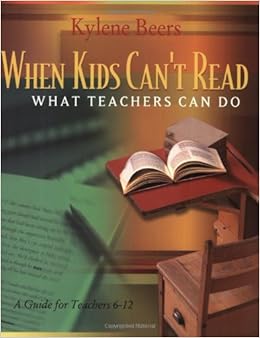
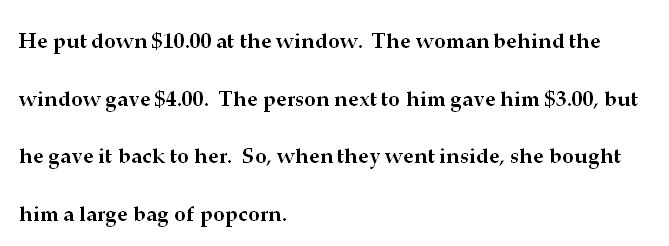
In my graduate reading class this week, we were discussing the following passage from Kylene Beers' When Kids Can't Read. I want you to try to figure out what the passage is about before moving on. The struggle, if you have one, is part of the process.
For the first time ever (insert drumroll here), I have students working collaboratively in a Google Doc. They are writing the full-length story of the initial few sentences. My students are sitting face-to-face in order to discuss what they want to write, then they are writing together in a single document. I walked them through setting up the document step-by-step, and you would have thought I had performed a spell straight out of Harry Potter. They oohed and aahed like I was the greatest wizard to ever live.
In my graduate reading class this week, we were discussing the following passage from Kylene Beers' When Kids Can't Read. I want you to try to figure out what the passage is about before moving on. The struggle, if you have one, is part of the process.
______________________________________
______________________________________
Are you ready? Did you figure it out? Then keep on readin'.
In my class of adults, there was a great deal of discussion about the information in the passage. I own the Beers book and have used this particular passage in a number of workshops, so I did not have any original thoughts to contribute. I sat back and listened to what my peers had to say. One classmate got hung up on the numbers from the beginning, thinking it was a math problem. Most everyone got past that stage and pieced together a general idea of what is happening, but we were all making up completely different stories about who the people are - a married couple, a first date, friends, a brother and sister.
Back in my eighth grade classroom, I knew I had some time to fill. We recently finished a unit, and I had a couple of days open prior to a district test. Why not see what the kids think of this passage?
I started by giving my students the passage and asking what it was about and how they figured it out. Quite a few thought it was a math problem and could not get past that idea. I actually had to have kids act out the scene in one class to try to get the kids to see it as a mini story. Once we walked through the passage, like my college peers, my students immediately began making up stories about who the people were and what the situation was. So I ran with it.
Since I have not done this type of assignment before, I was concerned that the kids would be off-task, but I can honestly say that not one single student was discussing anything but the story. Two of my girls are writing the world's greatest love story, and when class ended the other day, one told me that she could not leave her characters hanging all weekend; she needed to know what was going to happen with them. Two of my boys are writing a fantasy version. Two others have turned the passage into a story about my date with John Cena (currently my imaginary boyfriend who doesn't know we are involved). Many students could not believe that I was having them stop because class was ending. They were completely engaged in what they were doing.
In addition to all of these wonderful moments, the best thing I realized about this impromptu lesson is that I have blended learning taking place. Blended learning is an important component of the new Texas teacher evaluation system that will be put in place next year, and I feel like I am working through some practice rounds to prepare for that. My students are working together both face-to-face and online. They have control over the content of their story. They are determining the structure of their collaboration, and each partnership is quite different.
This might not be a giant step for mankind, but it is a step for my classroom and for my own thinking. Sometimes I do not think I give my students enough credit for all that they are capable of, but I am determined to continue pushing myself to break out of my safe zones in order to challenge them, even if it's only one baby step at a time.
Subscribe to:
Posts (Atom)