Search This Blog

Showing posts with label notice and note. Show all posts

Monday, December 8, 2014

Using Notice and Note with Dialectical Journals

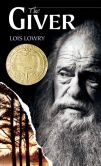
I have discovered my favorite thing with Notice and Note: it goes with everything! I had been planning on teaching The Giver this year, as I have for the past few years. When I went to get copies of the book from our storage room, however, I discovered we did not have enough for me to provide each student with a copy. I did not want to work with a class set because I often have students who want to read ahead. I already had my Notice and Note lesson prepared, but since it works with everything, I did not have any issues with changing novels to work with. 
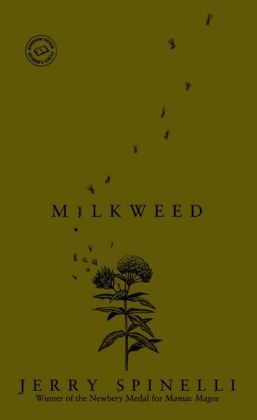
After much scrambling, I decided to teach Milkweed, a novel I used only with my Pre-AP students last year. My students will be studying World War II later this year, and after reading this book last year, I realized that even my knowledge was limited to a concentration camps (I still remember the paper I wrote in my eighth grade English class about Auschwitz). This easy-to-read novel gives my students a perspective that is not taught in most history classes. 

Coming back from Thanksgiving break last week, I had my students do nothing but copy my Notice and Note mini-posters. Ok, ok. I was really tired and did not want to have to work too hard the first day back, but...but... I am human, too! 

When I distributed student novels, I also gave them a Notice and Note bookmark. Aside from that, I have not mentioned one thing about the mini-posters until today (I actually had one kid try to talk to me about when we discussed the signposts earlier but we had not; I must be really good). 

Today I taught my students how to create a dialectical journal, using the signposts as a guide. We analyzed the text for signposts, using our bookmarks as a cheat-sheet. After identifying a signpost, we used the accompanying question from the bookmark and our posters to guide our class discussion and to write our responses. I never stopped to teach each the signposts individually. I simply jumped right in, and the kids reacted. This is what my classes came up with today for chapters one and two of the novel:


Tomorrow, the kids will start working in groups to identify signposts in the text. Some want more support before having to work on their own. Since dialectical journals are new to 76 of my 77 students, I do not have any problems with this. 

On a side note, many of my students are close to finishing the novel. Since I never even assigned a specific reading, this is a thrilling thing to see. 

Skills targeted:

  • ELPS - listening, speaking, reading, writing
  • using text evidence
  • monitoring comprehension
  • collaboration
  • inference
  • reader response


Thursday, January 2, 2014

Flowers for Algernon - Part I

This is my third year teaching eighth grade (after eight years teaching every possible reading/writing variation of seventh grade we have had). When I left seventh grade, I was teaching writing, and eighth grade is predominantly focused upon reading. One of the biggest issues I have had has been pacing. After two years of trying to manage every listed reading assignment in our curriculum, I threw it all out the window and decided to simply teach - and it is paying off. Unfortunately, there are still requirements. 

One of the eighth grade required readings for eighth graders is the short story "Flowers for Algernon." When I say requirement, I mean requirement. Oops. Missed this for the first two years! Year three, I got this...I think. So here goes. 

Progress report for March 5

  • Although my students should pick up on the indirect characterization right away, I am going to start with direct characterization. This will be a short and sweet review to introduce us to Charlie. 
  • We will be working on computer annotation skills (Google Drive), starting with some basic underlining/highlighting skills. I am trying to get them away from highlighting everything on the paper. I have been teaching annotation all year, but that has not cut down on the highlighter abuse. 
  • Since we will be using Google Drive, we will also work on adding comments to take notes. I have created a sentence stem (slide 3) to guide their reflection of the direct characterization. 
  • I am also going to have the kids rewrite the first entry in proper English. Well, as proper as they can make it, I suppose. I haven't quite figured out how to grade this. It might simply be a participation grade for them, but I want them to get some editing practice. 
  • For the second entry, we are switching gears to indirect characterization. I want my students to start putting together what we are learning about Charlie through his writing. 
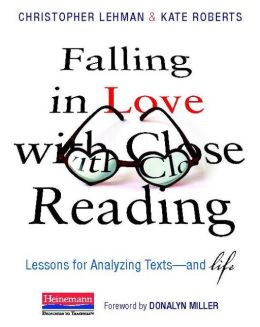
  • Since we have been working on Notice & Note signposts throughout the year, I am going to review Again & Again. With our Again & Again lenses (I am combining the N&N signpost with a text evidence strategy from Falling in Love with Close Reading), we will be looking for patterns in Charlie's thinking that help us understand his traits. 
  • Click for larger copy
  • The hard part here is getting them to focus on the text evidence. For example, what does the "rabits foot in my pockit because when I was a kid I always faled tests in school" tell us about  Charlie? (It was really hard to type all of that incorrectly.) Using a modified version of the frame provided in FILWCR, I am going to have the kids write a character traits statement about Charlie.

This is as far as I have gotten so far. Now I have to figure out where to chunk the rest of the text so it doesn't take me until the end of May to teach the entire story. 

________________________________________________________

Resources: 


Sunday, December 8, 2013

"Forgotten Language" by Shel Silverstein

My students took their first curriculum assessment of the year a few weeks ago. I intentionally set the test aside and saved it for our fall semester exam review. I am also hoping that the kids will have forgotten most of their thinking from before Thanksgiving, and we can look the reading passages with a fresh perspective..

Review for me is not just looking at answer choices. I will teach the passages from the test in an effort to model how they should be thinking about any reading, not just to answer test questions, but to gain something from the reading. Hefty goal on my part, I know. To them, it is simply a test with stuff to read.

The first passage we are going to look at is Shel Silverstein's "Forgotten Language." There were only three questions on the test regarding this poem, but my students struggle with poetry, and three questions failed are three questions failed. 


To teach this poem, I have incorporated a number of strategies:


  • From Notice and Note, I will be using the Again & Again signpost to focus on the meaning of Once and the significance of the repeated last line in connection to the rest of the poem. 
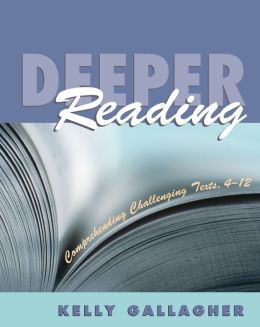
  • From Kelly Gallagher's Deeper Reading, I am using two strategies. For the second reading, we will focus on answering three questions: What does it say? What does it mean? What does it matter? I have also added the reflective question, What is the most valuable idea that you can take from this poem?
  • I am going to be using Nearpod for students to respond to all questions in the lesson. Because this review is also helping them prepare for their fall final exam, I need all students thinking and showing their thinking. I do not want them being passive and allowing others to answer questions for them. By being able to see their responses (thinking), I will be able to determine who is understanding or not understanding what. (Plus I just got Chromebooks and the kids are anxious to start using them.)
The only thing that makes this a test-related lesson is the incorporation of the test questions. I loathe multiple-choice questions, but such is the mandate of federal regulations; therefore, they must be taught at some point in time. More importantly, though, I hope they discover that Shel Silverstein is much more than a goofy poem writer. 

Saturday, November 23, 2013

Weekly Learning Logs: Take 2

The children are not understanding the point of the learning log. 

  1. There is a great deal of confusion about which class they are supposed to be writing about. I cannot figure this one out. You are in English class; write about English class. When you are in science, write about science. 
  2. I keep hearing, "But we didn't learn anything this week." Are you kidding me? I am the hardest working teacher I know, and we didn't learn anything? This week, we worked on vocabulary strategies, identifying Contrasts & Contradictions, making predictions, and explaining what we have learned using complete sentences. Yep, nothing. 
  3. The kids want a sentence limit. I keep telling them to write enough to tell me what they learned. Next time, I am going to say, with an echo, "One hundred sentences sentences sentences." 
If you are a regular reader of this blog, you know that I am willing to learn from my knuckleheads, even if they think they are learning nothing from me. So I am going to make some changes for week three. 

I talked to a couple of science teachers about how they are using the learning log. I was told that they are giving the students a specific question about the material covered during the week, then they follow the same rubric that I established. (One teacher did ask why I had not added spelling. I responded that there is only so much we can focus on at one time, and I had to pick and choose my battles on this one.)

The next time we do the learning log, I am going to give some more structure. As I am writing this, I realized that I actually gave my students to focused questions regarding what they had learned from our reading of The Giver, then I asked them to complete the learning log a day later. I really gave the same assignment twice. Since their answers to the following questions were more specific, I will use this format as the learning log the next time we complete this assignment. In addition to the one hundred sentences sentences sentences, of course. 

This assignment focused on the Contrasts & Contradictions that we had
discussed throughout chapter 1.


This one focused on our vocabulary routine for the week.


Thursday, November 21, 2013

Identifying Contrasts & Contradictions in The Giver (Chapter 1)

Before beginning The Giver, I explained to my students that we would be going through the first chapter slowly, as we often do not give enough thought to all the information being presented in this introductory piece. Since I have read the story, of course I know that there are certain things I want them to catch, so this was very much a baby-step assignment. 

I established the purpose of our reading of chapter 1: focus on identifying Contrasts & Contradictions, a skill we have been working on for weeks now. I liked them before, but I now believe I am head-over-heels in love with Contrasts & Contradictions. Adam Levine may be People's sexiest man alive, but he ain't got nothin' on 25 students asking some deep questions.

Before I present the list, let me preface by saying this: I helped point out some of the CCs, but any discussion afterward was left to my students. There was oohing, aaahing, and oh-my-goshing from them and a lot of shoulder shrugging and playing stupid from me. 

So here is what "we" uncovered in chapter 1:

  • Jets flying overhead is not frightening to us, especially since we live in proximity to the DFW airport, but this is not the same for the people in the community. 
  • We do not have speaker systems set up in our neighborhoods with unknown voices telling us what to do. We have a speaker system at school, but students often to not even pay attention when an administrator comes on because they deem it unimportant. In the community, these not only exist, but any directions are followed immediately. 
  • Being released from class is a good thing, but being released in the community does not appear to be a good thing at all. The kids did discuss what the possibilities might be. They suggested everything from death to banishment to the desert.
  • Jonas is concerned about word choice, but we say whatever they think whenever they think it. 
  • We do not tend to recognize when apologies are necessary, but in the community, they are required. (The kids also noted that the repetition of the apology was an Again & Again signpost.)
  • We don't share feelings with our parents. Eeeew! Jonas and family have to discuss feelings because it is a rule. 
  • Jonas and Lily do not know what animals are. (Although they identified this one, many of my students were quite confused about how this could possibly be. I am curious to see how they react when they learn why.)
  • Job roles are reversed in the story based on our stereotypical views (nurses are women; law enforcement workers are men). 
  • In our culture, we are not given spouses. (This did lead to some discussion of different cultures and religions around the world. I also started giving them classmates and spouses, and they were not happy.)
  • In our culture, there is not a limit on the number of kids or specified genders. (Some of the classes discussed that the babies must be given like the spouses because that's the only way this arrangement could happen. As they talked about this, they began to realize that the babies must be made in some unnatural way.)
I am proud of myself for a much better start to teaching this novel than I had last year, and I am proud of my students for showing that their brains do work right before a holiday. 

Sunday, November 17, 2013

The Giver: Chapter 1

While my Pre-AP students are reading Milkweed, my academic students will be reading The Giver. Last year, I will honestly admit that I did some of my worst teaching with The Giver. I was frustrated with my students. They refused to read outside of class, impeding the lessons I was trying to cover in class. For the most part, we listened to the book and did very little with it. Of course, when I was doing this, my newly-promoted secondary superintendent was brought to my classroom to view some of the finest teaching our school has to offer. (sigh) Not my best moment, but I refuse to let it happen again. 

Prior to beginning the novel, we will be going through our Texas Literacy Initiative vocabulary routine with the word release. Although I know my kids know this word, I want to put focus on it since it is such an important concept in the novel. We will be viewing the presentation with Nearpod so that I may assess understanding of the term. I am not expecting any issues here. We will come back to discuss this more after reading the first chapter of the book. 

Last year, I began by having my students create their own perfect societies, but it become more of a distraction and never truly connected to the novel the way I had initially intended. This year, I'm throwing that out the window. For chapter 1, we will focus on Contrasts & Contradictions from Notice and Note. They are already familiar with Contrasts & Contradictions, but now we are going to shift away from characters and focus on the setting. I want them delving deeply into the differences between Jonas' world versus our own to see what this "perfect" world is like. 

In preparing the Contrasts & Contradictions lesson, I incorporated Christopher Lehmans' Close Reading Ritual from Falling in Love with Close Reading. The lenses will be focused on the setting of the story. The patterns will be the Contrasts & Contradictions. We will then use this information to create a picture of Jonas' society. 

As with some of my previous lessons, I am going to have my students respond to the presentation questions using Nearpod. By using Nearpod, I ensure that every student submits a response, rather than letting another student answer on his/her behalf. I can skim through their responses and see who is understanding the text and the strategy, as well as who is not. This information is also saved in a report that I can use as needed.

This is definitely a better start from last year's teaching. Ain't nobody comin' back this year to say I ain't doin' my J-O-B!

Saturday, November 16, 2013

Milkweed, Chapters 1 - 4

My Pre-AP class is reading (or going to be) Milkweed to wrap up the first semester. I handed out the books Thursday and asked them to read chapters 1-4 by Monday. During an informal survey Friday, I learned that about a third of my students had already started reading the book, and many were well past chapter 4. All responded that they were finding the book very interesting. Since I have never taught this book (nor have I finished reading it), I am excited by their initial feedback. 

The biggest problem I have with novels is wanting to teach too much and not being able to finish. I think I have already  made too much work for the first few chapters, but better earlier than later. I would rather enjoy the end of the novel rather than cram too much in at the end. 

Our big assignment for the entire novel is going to be to create a blog for the main character Stopthief. Through this, I can reinforce a number of skills, including point of view and characterization. I have never done this before, but since I have started blogging, I figure I can handle it. I'm excited to see what happens with this. 

For their work, we are going to be using Kidblog. I have heard wonderful things about it and have been playing with it. The site is easy to use and understand, and all work is private. Once I see how things go with Pre-AP, I will decide whether or not to add my other classes to the site. 

For their first blog assignment, I modified a lesson I found on Read Write Think:


To make sure they have done the reading this weekend, I have a quick "higher level" assignment for them to complete on Edmodo. I believe this assignment will be a bit more challenging than a quick T/F or multiple choice did-you-read pop quiz. It should also show if they actually read. 


We will then return to chapter 1 to discuss the Memory Moment signpost from Notice and Note. This will be the third signpost added to our class discussions. I debated about whether or not to include this piece since the students are reading ahead, but I still think that it is important to cover. If the kids already know too much, they can discuss why the moment turns out to be important rather than predicting. 
I have then created an interactive lesson for chapters 1-4 using Nearpod. I made the basic presentation then added slides for my students to ask questions about the text. As we go through the questions they write, I am going to have them write down three that they want to discuss with their groups. They will take notes over this in their Google documents. This group discussion will be used to write their learning logs next week. 

After all this, I need to figure out how many days I actually have left to finish this novel before finals! 

Questions? Feedback? All is welcomed. 


Tuesday, October 29, 2013

Notice and Note Reflections: "The Tell-Tale Heart"

Today was day two of my lesson over "The Tell-Tale Heart." Yesterday was all about modeling and explicit teaching. I built upon our Contrasts & Contradictions and Sketch to Stretch lessons, then added in the new signpost, Again & Again. 

I am always concerned when I start a new text with close reading strategies. I went through the first three paragraphs one at a time, and I was afraid that it was going to take away from the overall suspense of the story. Wrong! It actually seems to have helped. By the end of class, there were a number of comments from the kids regarding what was going to happen next and how much they wanted to continue the story. 

The text itself also led to some confusion with Contrasts & Contradictions that I was not expecting. Because the narrator is already doing things that are contrary to our personal selves, some of the students were having difficulties identifying the CCs. My informal assessment of the situation is that they were overthinking it, but it was something to note for future reference. 

Today we started collaborative work on identify CCs and AAs. The students listened to a chunk of the text (through the murder), focused on identifying the elements we have been focused on. Right away, I knew there was an issue. As I walked about the classroom, I saw that the only thing being noted on the text was the vocabulary words. 

The first thing I did was address comprehension issues. We went through a simple who/what/when/where/why routine to make sure they understood the text to be able to identify the elements. No big issues. I did have to explain the difference in mattresses from the mid-1800s until now, but that certainly didn't impede their ability to locate information. 

In reflection, I think I need to allow them to listen/read first, then go back and listen/reread a second time. I believe I was asking them to do too much at the same time. Or maybe they were simply engrossed in the story. 

Their next step was to work with their groups to discuss what they had (had not) identified and add it to their reading log. As they worked together, I wandered the classroom, stopping to ask and answer questions. 

On the positive side, some of the students made Contrast & Contradiction connections that I had not even considered. For example, one student noted that despite the narrator's attempts to be stealthy, slow, and cautious, when it came to the actual murder, he leaped into the room. The student determined that this went against everything the character had done up until that time. (I <3 when I learn from my knuckleheads.)

I also noted that there were some great conversations taking place, even when the kids were not quite getting the particular skills. The groups were debating ideas and why they did or did not work. Oh my gosh! Students focused on the actual lesson! A group of my girls was very interested in the narrator's discovery of his own powers. 

Of course, we also had some negatives. I did an informal assessment on the work they did today to determine if they were understanding what I was asking them to do. These are some of the issues I saw:


  • The kids were easily able to recognize the Again & Again moments, since "TTH" is full of it. Explaining it, however, is not going well. The focus question for AA is, "Why does this keep showing up again and again?" Most of the responses stated that a word or phrase was repeated by did not address the why. 


  • There were also some issues regarding specificity and clarity. Take the following example. I discussed this with the group. They explained their idea in great detail. When it came to putting the thought on paper, some details were left out. 


The next step in my lesson is to have them create individual entries to show understanding. I do not think we are ready for that yet. When we pick back up with the lesson, we will need to return to their notes from today and work on elaboration and clarification, a skill we just used for our personal narrative. I will use some of their examples to model my expectations and allow them to make revisions to their work. The students who caught on quickly and completed exemplary work will become my back-up teachers (I do this frequently). 

Despite the negatives, I feel we are headed in the right direction. This was new for them, but it is also new for me. Today's work showed me where I can be more explicit in my own teaching to create an even better learning experience. 


Saturday, October 26, 2013

Close Reading Strategies with "The Tell-Tale Heart" (Planning)

It has taken hours, and my back is killing me, but I believe I have put together a quality close reading lesson for "The Tell-Tale Heart" using two of the signposts from Notice and Note: Contrasts & Contradictions and Again & Again. 

My goals for this lesson were to:

  • have students connect our Sketch and Stretch vocabulary lesson to the words within the text
  • connect our introductory lesson for Contrasts & Contradictions in "The Horror" to "The Tell-Tale Heart"
  • teach a second signpost, Again & Again
  • be EXPLICIT in all teaching
I began by reading "The Tell-Tale Heart," marking up my text, identifying the above elements and making some teaching notes:


As I was reading, I was making a sample CC/AA reading log. You can see that I do not always think in order. 


Using all of my notes, I created my presentation, adding my nerdy sense of humor throughout. I have an underlying goal to educate on all things 1980s. If I had to endure the torture, so should they!

I am definitely going to have to do some proofreading tomorrow. I am a bit delirious at this point (and not Eddie Murphy style), but I was determined to crank this baby out tonight. Any and all feedback is welcomed. 

As always, I will post feedback from the lesson as we progress through the next week. 

Kylene Beers read my blog!

Ok, this is truly me being a braggart. I take great pride in the work I do, and to receive a comment like this back from the author of the book has had me smiling all day:


Wednesday, October 23, 2013

Midnight Lesson Planning: Close Reading with Contrasts & Contradictions

I tend to do my greatest lesson planning in the middle of the night. For some of you, midnight might be bedtime, but for me, it is usually hours into sleep. Unfortunately, I'm a light sleeper, and most everything wakes me up, including my constantly working brain. 

A few days ago, I posted about a passage I found to connect to "The Tell-Tale Heart." I was excited about the prospect of the piece, but in my rush to incorporate it into class, I had not thoroughly processed the potential - at least not until waking up in the wee hours of the morning. 


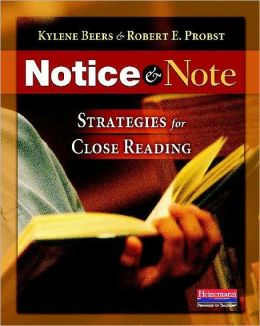
My new favorite book (Don't I say that about every book?) for reading comprehension strategies is Notice & Note by Kylene Beers and Bob Probst. The strategies are almost so simple, one wonders why one didn't think of it on her own (her being me). 

With my midnight genius, I realized that "The Horror" is a perfect piece to introduce the signpost Contrast & Contradictions, especially as a contrast piece itself to "The Tell-Tale Heart." I already had my presentation for this strategy created, and a first period conference time allowed me to do some quick editing and revising to teach this concept today. 

The idea behind the strategy (and the others in the book) is for students to look for repetitive patterns to help understand text. With Contrasts & Contradictions, the kids look for (notice) character actions that are the opposite of what we expect. 


We began the lesson by discussing the concepts in the slide - everything from the stop sign, what notice and note mean, and examples of contrasts and contradictions. Now, as an edutainer, I have no problem making fun of myself, so coming up with real-life examples to teach this was easy:

  • If Ms. Foti came to school in a dress, you would be asking... (this is where they all chime in with, "Why?"). 
  • If Ms. Foti was mean to you for a day, you would be asking...
  • If Ms. Foti got married this weekend, you would be asking...
Hook, line, and sinker, all in one. 

Before reading the piece, I set the mood. I turned the lights off (I have a big window). I got everyone quiet. I reminded them that we were focused on identifying contrasts and contradictions within the reading. Then I read "The Horror" as if it was the scariest, most frightening, terrifying work ever written. 

I didn't even have to teach after that. Each class period, the kids were already commenting about everything that was "not right" with the passage. The contrasts and contradictions stood out like me in a dress (for those readers who do not know me personally, I am a bit of a tomboy and do not even own a dress). Of course, we did discuss afterward, identifying and labeling (noting) the CCs. But I would not call what I had to do at that point work. It certainly helps to have middle school students who are horror movie connoisseurs. 

I have to give a genius student credit for pointing out an obvious CC that I completely overlooked. At the beginning of the text, Eggers sets up Sandra as fearful, yet by age thirty, she is ready to write a horror novel. Can Ms. Foti say contradiction?

It always feels fantastic when students grasp a concept (and quickly), but the best reward is watching them enjoy education. Today ranks as one of the best learning days of the year.