While reading "College and Career Readiness in Middle School: From George Constanza to Oprah Winfrey" in Voices From the Middle one day, I ran across a lesson idea that jumped out at me as being perfect for my AVID classroom, as we focus on college and career readiness. The Head, Heart, Hands, and Feet lesson I was reading about focused on exploring future career possibilities in a far more creative way than simply writing a research paper, and I am all about mixing things up to keep my students engaged. I took the basic idea and expanded upon it, ending up with some amazing results.
 Per the article, I started by sharing the literary nonfiction trade book Me...Jane with my students. In my experience, many middle school teachers are unwilling or afraid to use children's trade books with older students, thinking they do not provide much value. I strongly disagree. In the many years that I have been using trade books with my classes, I have seen unbelievably positive response from my students. Children's trade books are intelligent and witty, requiring students to not only read text but to also read images and create inferences.
After reading Me...Jane to my students, together we created a graphic organizer , analyzing Jane's actions with her head, heart, hands, and feet that led her to become a world famous primatologist. We filled up our person map (I could not think of anything else to call it) with information about Jane climbing trees, drawing pictures, reading books, and using her imagination. We then took this information and wrote a short analysis regarding Jane's career development. I guided this process, receiving student input, creating a model for my students to use in their next step:
As many of you know, I am currently working with a master's cohort program through Texas Woman's University, and this semester, I am enrolled in Literacy and the Diverse Learner. At some point during our class last Wednesday, Dr. Claudia Haag made a comment regarding children's and young adult literature that made an impact on me: With all the book series out there that are inspiring children and teenagers to read, where are the non-white protagonists?
My mind started racing with all the book series I have read. Little House? Obviously not. Sweet Valley High? I don't think the 80s were so accepting. Harry Potter? Nope. Hunger Games? I don't think so. Eragon? Percy Jackson? Twilight? No, no, and no. I searched book lists. None. I looked through my house. None.
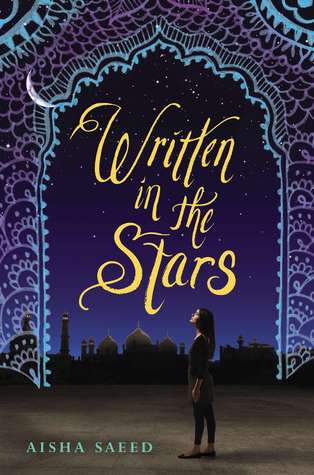
 I consider myself to be pretty on top of things, but this one has passed right by me. I have worked hard to make sure that my classroom library reflects all of my students. I received a $1500 grant through First Book right after changing classes this year, and it was the perfect time to create a new classroom library. I ordered books about African American teens. I ordered books about Muslim teens. I ordered books about gay teens. I bought a few book series that I had never heard of before. But not a single one of those series has an African-American, Muslim, or gay main character.
There is plenty of research out there that supports the need for young readers to see themselves reflected in what they read. Book series provide students with automaticity based upon familiarity with the author. Reading and fluency improve. With an achievement gap that continues to widen between racial groups, it is incredibly important to have students reading, not because we make them, but because we want them to enjoy the process. My student population consists predominantly of African-American, Hispanic, and Asian students, and I do not have a single book series in my classroom that reflects any of them in a starring role.
I mentioned all of this to a group of African American girls in one of my classes, one of whom devours almost every book on my bookshelf. They honestly did not seem terribly concerned. Since most of the girls are not fans of reading, and I cannot help but wonder if that lack of interest does stem from not seeing enough of themselves in books. I think I am going to delve into this a bit deeper with all of my classes in a few weeks and have my students do some research. I have a few students who would like to be writers, and maybe they will be the ones who change the field in the future.
As an insane reader of everything I can get my hands on, I am comfortable saying that things are definitely changing in the world of literature, but we still have a ways to go. Authors, we teachers are counting on you.
References:
Camera, L. (2016, January 13). Achievement Gap Between White and Black Students Still Gaping. Retrieved February 11, 2017, from http://www.usnews.com/news/blogs/data-mine/2016/01/13/achievement-gap-between-white-and-black-students-still-gaping
Morrison, K. (2015, September 10). Part 4 - The Importance of Series Reading . Retrieved February 11, 2017, from http://www.inquirybydesign.com/part-4-the-importance-of-series-reading/
Popular series books. (n.d.). Retrieved February 11, 2017, from https://www.goodreads.com/shelf/show/series