Search This Blog

Showing posts with label AVID. Show all posts

Thursday, January 11, 2018

Random Word Stories

Winter break was a long 18 days, and I did not think about school one time, as I was in the process of selling one house and buying another. Fortunately, the AVID community on Facebook came to my rescue as I scrambled to figure out what I was going to teach the first day back to school with everyone suffering from back-to-school-itis. 

Another AVID teacher posted that she uses random word generators to spark collaborative writing. Easy enough! I set up the lesson by explaining to my students that I would be providing them with six words from the generator. After discussing word meaning, I would provide them with six minutes to write a VERY short story with their table mates, using all of the provided words. We would then share out to practice listening and speaking skills. 

Apparently, there are a significant number of random word generators online. I clicked on the first one. I generated a different list for each class period. For some of the classes, I had to click through a few times, as there were words that I did not even know popping up. Sure, I could have used those words as an opportunity to model my own learning, but I was tired

The lesson went quite well. The time limit helped to keep students engaged. Many of the groups were amused with themselves for what they had created. Some wrote a couple of sentences, working in the words as quickly as possible. Others managed to write short novels in the time provided. If I had not been discussing new procedures for the second semester, I probably could have worked in a second round of this activity. I did have requests from many students to do this again, and I am pondering how to use this to inspire my seventh grade students for their STAAR writing test in a couple of months. 

If you find yourself in need of a fifteen to twenty minute time filler (or you are having an off /I-can-barely-keep-my-eyes-open day and need to improvise), this requires little energy and planning on the part of the teacher. Give it a shot. 

Wednesday, September 20, 2017

#bemoredog

At our second annual Edcamp Arlington TX, we gave away George Couros' The Innovator's Mindset as one of many door prizes. I chose this one because it is one I want to read. It took me until yesterday to finally buy it, and it had immediate impact on me.

While I was drying my hair this morning (hey, I work in ever minute I can to read), I was perusing the introduction to the book. Couros writes


Well, I do happen to be a cat lover, so I stopped to watch the video.  


We are five and a half weeks into school in my district, and I am not seeing as much effort as I would like from many of my students, particularly for a college preparation class. This commercial spoke to me. I want my students to be more dog! 

So today I modified my lesson plan to address behaviors I am seeing on campus and in my classroom that I think need to be improved. Cat behaviors!  I was calling my students cats and making cat noises at them, speaking in complete metaphor about the cat behaviors. They were a bit confused until we watched the video. Then they were all about the dog behaviors!

I asked my students to write three ways in which they could "be more dog" - aside from eating their homework.  There were some definite dog references - be more obedient, fetching work to turn it in on time, walking faster to get to class on time. But I also received some serious responses about being more enthusiastic and actively engaged in class. We always share out, accompanied by some sort of applause - double clap, snapping, a quick Woot! Today, we barked our approval. 

I cannot say I have ever spent a dog hissing like a cat and barking like a dog in my classroom,  but this blog address does not start with crazyladyteacher for nothing. I am always willing to put my ego on the line and do something a bit ridiculous and adventurous in my classroom if it will benefit my students. 

I went with a bit of crazy chihuahua today. What can you do to #bemoredog?


Wednesday, June 28, 2017

Poetry. Yuck!

This post is a response to "Chapter 4: Poetry for Children" in Sylvia Vardell's Children's Literature in Action that I am reading for a graduate children's and young adult literature course.

___________________________________________________________________________

Poetry. Yuck! That’s my first reaction when I think about poetry, but I honestly do not know where that comes from. As I was reading this chapter, I was a bit flabbergasted by how much of a role poetry has played in my life and my teaching. 

As I was reading about Mother Goose, something clicked in my brain. I have a closet in my house that is used solely for book storage (it’s one of many places). I had to stop reading the chapter about poetr and go hunting to find something I thought was there:


These three books are all from my childhood (I’m almost 44, so they have been around a long time). All were read more times than I can remember. All are attached to some very positive memories of my mother and maternal grandparents, and just finding them and seeing my grandmother’s handwriting brought me to tears, so much so that I had to stop reading about poetry and contact my mother and sister. That is the power of literature right there. 

When I did get back to the chapter, as I read J. Patrick Lewis’ interview, I remembered that my fifth grade writing project was all poetry. I can recall sitting in class, writing limericks and haikus, editing and revising over and over again in an attempt to create the best possible work. There were two other girls in class who were also writers, and we were very competitive. For as long as I can remember, it was my intention to be the best writer. 

I continued to write a great deal of poetry throughout my childhood. I have literary magazines from high school in which my poetry is published. I also filled personal journals with teen angst-filled poetry.


I have never simply shared poetry with my classes. In teaching STAAR-tested poetry, the goal has always been to make sure students understand it enough to answer questions to be able to pass the test and move on to ninth grade. Now that I am not in a STAAR-tested class, I do have the ability to actually share poetry. 

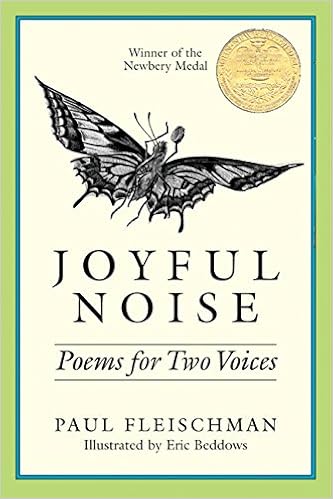
I don’t like to teach poetry for reading, but I like to teach writing poetry. When I was at the AVID conference last week, one of the writing strategies presented was a two-voice poem (page 139). This is not new information to me. I have taught this format before, but I have not used it in quite some time. I have already added it to my list of beginning lessons for August. My eighth grade classes will be a half-and-half mix of students I taught last year in seventh grade and students who are new to AVID for eighth grade. I am going to use the two-voice poem as a get-to-know you activity between my former students and my new students. 

I have also taught other types of poems in my class, such as diamante and acrostic, but one of my favorite poems to teach is a “Where I’m From” poem that I first learned about through AVID. The poem is based on a piece by George Ella Lyon. In the classroom, it provides an opportunity for students to explore their family backgrounds. I have also used the “I Am” poem that I first learned about through AVID. 
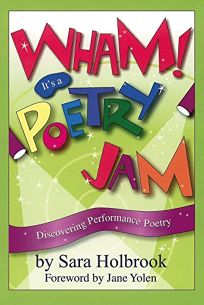
Ironically, despite thinking I do not like poetry at all, I have been a big proponent of spoken-word poetry. I purchased Wham! It’s a Poetry Jam in an attempt to try to build a poetry slam on my campus, but it never found it’s footing. I used a few of the poems with my students, but I was discouraged and gave up. It might be time to pull that book back out. 

This chapter also made me wonder what poetry is available in my school library. Silverstein and Prelutsky are staples, and I know exactly where they are on the bookshelf. I pulled up our online library catalog to see what other poets we have available for checkout. There are 228 titles categorized under poetry, including The Poetry Friday Anthology by Sylvia Vardell (I have debated about buying that book for years; I had no idea we had a copy at school). We also have titles from Paul Janeczko, Lee Bennett Hopkins (I didn’t know he was a big deal until reading this chapter), Carl Sandburg, and Pat Moon, to name a few. I honestly do not think I have ever seen a student walking around with a book of poems, however, unless it has been a requirement for an English class project. 

Based on my very informal analysis of titles, it does not look like our collection addressed the diversity of our school campus. Many of the books are about holidays or are compilations of silly poems. My campus has a new librarian coming in this year, and this is probably something I can discuss with her. 

This class continues to surprise me as I continue to discover how different genres of literature have shaped me. When I say I cannot remember not reading, I really know why. When you look back on the role of literature in your own life, what role did/does poetry play?
              

Sunday, June 4, 2017

NCTE Reads: Teaching Reading with YA Literature (chapter 1)

It's summer vacation, so I am sitting around doing absolutely nothing - said no teacher ever. I am tired just thinking about everything I am doing this summer - two graduate classes, two technology certifications, and an NCTE book study, to name a few.

For the book study, we are reading Teaching Reading with YA Literature: Complex Texts, Complex Lives by Jennifer Buehler. Now, I just finished up school yesterday (we had Saturday checkout), and our activities for the book study start today. Why no break? Because I am a teacher. And I strive to be the best possible teacher I can be. I don't need no stinkin' break! And of course, I will be sharing on my blog, as well.

_______________________________________________________________________


 _______________________________________________________________________

Week 1: MAKE

This week we’re going to create a curated list of YA novels with rationales for why they are complex texts. These lists may prove useful if you choose to use any of these novels in your class and are asked to justify your selection. Please share the title, author, and a few sentences explaining why a YA text of your choosing should be considered complex.

My response: The Hate U Give by Angie Thomas - Initially, I was not going to list this book, but I reconsidered. This book addresses topics and themes that are relevant to today’s youth. A young African American male is murdered by a police officer, an event witnessed by the story’s protagonist. The content invites natural discussion and real-world connections.
 _______________________________________________________________________

Week 1: TALK
 
How do you use YA literature in the classroom, and where does it fit in the larger context of all we’re meant to do in ELA?


My response: 

Due to a change in teaching assignments this past year, my focus on YA lit was put on the backburner. I moved from teaching eighth grade English to seventh and eighth grade AVID. Although AVID still incorporates reading and writing, I spent this year figuring out how to teach the class and bond with students who lost a beloved teacher to another position on another campus, some of whom resented me for coming in and leaving my classes and students behind. 

Personally, I did not discover young adult literature until sometime around 2007 or 2008. I know that most of the Twilight series had been published. I was teaching seventh grade at the time, and my girls were devouring the series. They wanted to talk to me about constantly, so I borrowed the set from a student to be able to reciprocate their discussions. 

I hate Twilight. Despise. Loathe. I found Belle to be a repugnant role model for young girls. To this day, I am quite vocal about my grievances with the series. It did, however, set me on a path of reading young adult literature in search of something worthy to share with my students. 

I abused my library card and read everything I could get my hands on. I recommended reads to my students, many of whom would go to the local library to find a book our school library did not carry. I started building a classroom library, thanks to a state literacy grant. 

I tend to showcase books in a display and talk about what I am reading, encouraging students to use my classroom library. This has been pretty successful, but I have not been able to reach every student in this manner.

During practice state testing situations, I will watch kids and try to determine what they might like to read. When they finish, I will bring them books from my shelves and see if I have hit on anything they might enjoy (I often do, which really surprises me).

Our middle school canon consists of young adult books. I have taught The Outsiders, The Westing Game, The Giver, Homecoming, Redwall, The Watsons Go to Birmingham, and A Wrinkle in Time. In reflection, my book and my mood probably had more to do with my students enjoying any of these books than my lessons did. For example, I dislike A Wrinkle in Time (a little less than I despite Twilight). I openly shared my frustration with my students regarding plot points, which may have been more entertaining for my kids than the story itself. 

For next year, I am considering having my AVID kids participate in independent reading activities with novels. As part of their college-readiness skills, I think they should know how to actively read novels in a particular time frame. I am in the early stages of this thinking and am not quite sure what to have my students do with those readings yet. I am hoping that throughout this book study and its discussions, I can create a meaningful reading environment for my students that carries over into their personal lives.


Wednesday, May 3, 2017

Critical literacy: Examining controversial and banned children's literature.

I was reading about controversial children's literature in an article or a book (I read so much that I cannot always remember), and being the ever rebellious teacher that I am decided that I needed to bring these books into my classroom. Including something controversial in my lessons is no big deal on my end, as I am always willing to push boundaries. I have used trade books in class previously, and the response was positive, so I decided to engage my students in a critical literacy/inquiry lesson involving the analysis of controversial and/or banned children's trade books.

The Books

The following books were chosen from different lists I found online while researching this topic. Every selection was available at my local public library:

  • Strega Nona by Tomie dePaola (witchcraft)
  • In the Night Kitchen by Maurice Sendak (nudity, phallic representation)
  • The Stupids Have a Ball by Harry Allard and James Marshall (intelligence)
  • White Socks Only by Evelyn Coleman (segregation, violence)
  •  Smoky Night by Eve Bunting (riots, violence, differences)
  • Friends from the Other Side/Amigos de otro lado by Gloria Anzaldua (illegal immigration)
  • The Amazing Bone by William Steig (witchcraft, robbery, violence, kidnapping)
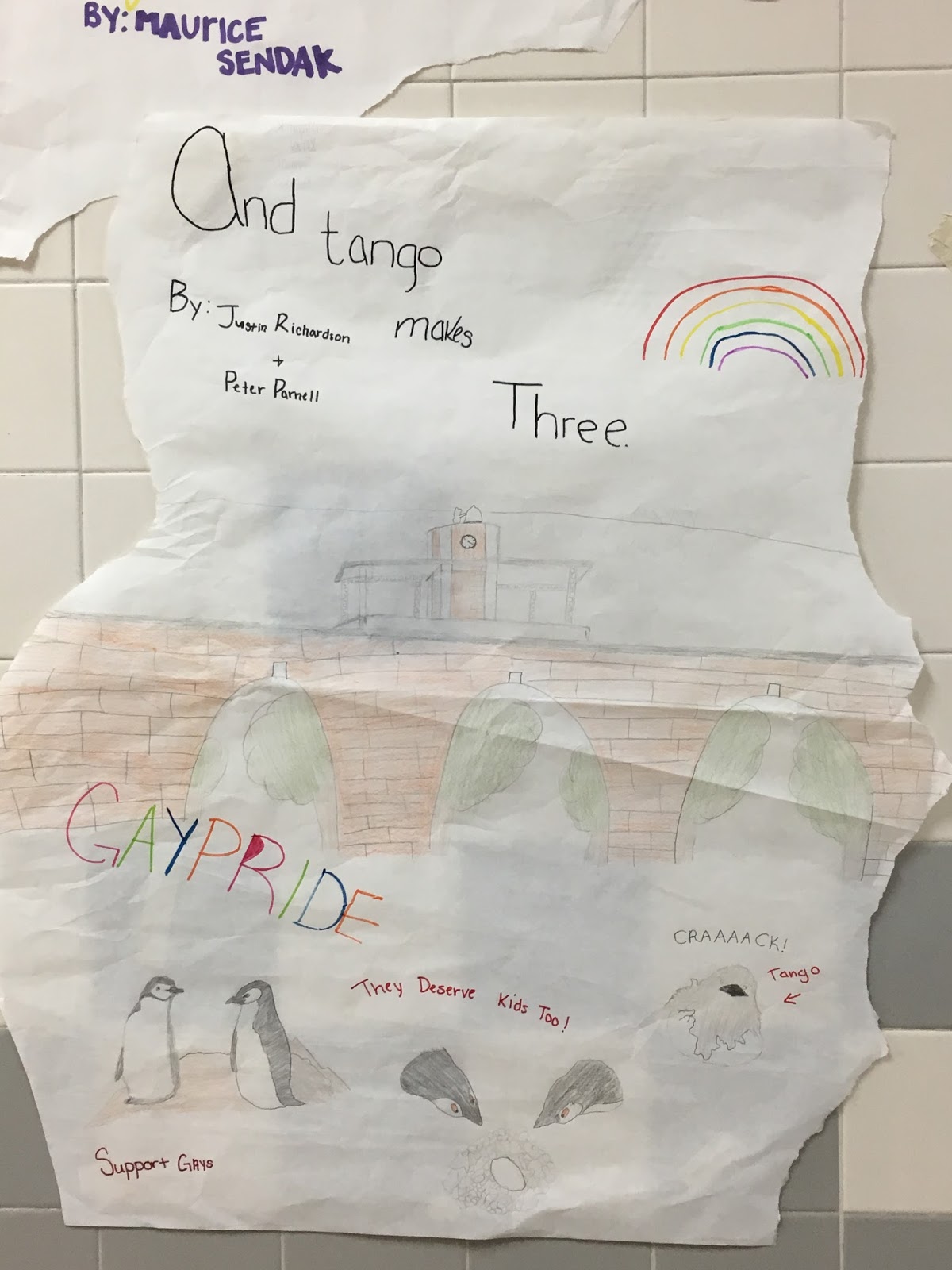
  • and Tango makes three by Justin Richardson and Peter Parnell (gay couples, gay parenting)
  • I am Jazz by Jessica Herthel and Jazz Jennings (transgender issues)
  • In Our Mother's House by Patricia Polacco (lesbian couples, lesbian parenting, discrimination)
  • Flabby Cat and Slobby Dog by Jeanne Willis and Tony Ross (fat-shaming)
Planning for the lesson

I read each of these books before bringing them into my classroom. After reading, I knew I would have students who were uncomfortable with some of the topics, but I did not want to censor the readings in my classroom. The book topics are all real-life issues, and I felt that my students must learn to critically analyze information regardless of personal beliefs as part of becoming informed citizens. I wanted them to think about why some of these books would be complained about to the point of being banned in addition to how they felt about the topics personally. 

Mentor Text

I began the lesson with my students using Strega Nona as our mentor text. I explained that the story was considered controversial. [Side note: It took me two class periods to realize that my students did not understand the meaning of controversial. This will be addressed first in future presentations of this lesson.]

We listened to a Tomie dePaola audio recording of the story, during which I directed my students to actively listen for and determine what might be controversial about the story. Many thought that priests and nuns in a children's book might offend people. Others thought Big Anthony was being treated like a slave. Only a few were able to determine that there are people in our society who find witchcraft to be offensive.


[Side note: We also discussed what the Caldecott Award is and why a book that wins awards can still be controversial.]

Grouping

I sorted my classes into diverse groups. I know my students pretty well and am comfortable saying I know what most of them believe about a lot of topics. I created groups that reflected a wide range of thinking in order to create some discussion among the students.

Book Selection
 
Initially, I planned on assigning specific books to my groups based on what I thought they would be comfortable with. I quickly changed my mind. I wanted the kids to be slightly unsettled and uncomfortable in order to get them thinking about the topic being presented. To randomize the process, I had one member of each group blindly draw a book from a basket. I kept the spine-side down to prevent any peeking.

Critical Literacy Questions

After reading the selected text, each group conducted a critical analysis. I provided my students with a list of questions (see below) I found online and left them to it. I told them I would answer and assist as needed, but I wanted to see what they could come up with on their own.

The biggest issues turned out to be with the power and interest questions. In one-on-one conversations, my students completely understood the questions and were able to present responses. They had never considered these to be power issues, however. This was quite eye opening to many.

____________________________________

Textual Purposes

  • What is this text about? How do we know?

  • Who would be most likely to read this text and why?

  • Why are we reading this text?

  • What does the author of this text want us to know?

Textual Structures and Features

  • What do the images suggest?

  • What do the words suggest?

Power and Interest

  • In whose interest is this text?

  • Who benefits from this text?

  • What knowledge does the reader need to bring to this text in order to understand it?

  • Which positions, voices, and interests are at play in this text?

  • How does the text depict age, gender, cultural groups?

Gaps and Silences

  • What views of the world is the text presenting?

Interrogating the Author

  • What kind of person, and with what interests and values, authored the text?

  • What view of the world and values does the author assume the reader holds? How do we know?

Multiple Meanings

  • What different interpretations of the text are possible? Who would support this text? Who would argue against this text?

Adapted from: http://wwwfp.education.tas.gov.au/english/critlit.htm

____________________________________

Graffiti Walls

The culminating piece to our analysis was to create graffiti walls. This is a connection response activity from Kathy Short:

 
This was a little too much freedom for my students. With most creative assignments, I hear, "Do we have to color? Does it have to be neat?" With this assignment, I said, "Be as messy as you want. You do not have to color. It does not have to be neat. You can make a great big mess." I even ripped pieces of butcher paper in odd shapes to help exemplify that the work could be messy. My kids could not handle it. They asked if they could cut the paper. They asked if they could color. They asked for more time. I got some of the neatest and most creative work ever. The silly part of me wanted to tell the kids I was taking off points for not being messy, but I was afraid of scaring my kids for life.


 Student Examples


Reflection

This is one of my favorite lessons of the year. From an AVID perspective, all elements of WICOR were included - writing, inquiry, collaboration, organization, and reading. From a proud teacher perspective, I heard some amazing conversations taking place in my classroom, and those conversations included understanding, tolerance, and acceptance, regardless of personal beliefs.  There was some disagreement about who should be reading the books and at what age, but my seventh and eighth grade students were incredibly mature in all aspects of the lesson.