Search This Blog

Showing posts with label close reading ritual. Show all posts

Thursday, November 21, 2013

Identifying Contrasts & Contradictions in The Giver (Chapter 1)

Before beginning The Giver, I explained to my students that we would be going through the first chapter slowly, as we often do not give enough thought to all the information being presented in this introductory piece. Since I have read the story, of course I know that there are certain things I want them to catch, so this was very much a baby-step assignment. 

I established the purpose of our reading of chapter 1: focus on identifying Contrasts & Contradictions, a skill we have been working on for weeks now. I liked them before, but I now believe I am head-over-heels in love with Contrasts & Contradictions. Adam Levine may be People's sexiest man alive, but he ain't got nothin' on 25 students asking some deep questions.

Before I present the list, let me preface by saying this: I helped point out some of the CCs, but any discussion afterward was left to my students. There was oohing, aaahing, and oh-my-goshing from them and a lot of shoulder shrugging and playing stupid from me. 

So here is what "we" uncovered in chapter 1:

  • Jets flying overhead is not frightening to us, especially since we live in proximity to the DFW airport, but this is not the same for the people in the community. 
  • We do not have speaker systems set up in our neighborhoods with unknown voices telling us what to do. We have a speaker system at school, but students often to not even pay attention when an administrator comes on because they deem it unimportant. In the community, these not only exist, but any directions are followed immediately. 
  • Being released from class is a good thing, but being released in the community does not appear to be a good thing at all. The kids did discuss what the possibilities might be. They suggested everything from death to banishment to the desert.
  • Jonas is concerned about word choice, but we say whatever they think whenever they think it. 
  • We do not tend to recognize when apologies are necessary, but in the community, they are required. (The kids also noted that the repetition of the apology was an Again & Again signpost.)
  • We don't share feelings with our parents. Eeeew! Jonas and family have to discuss feelings because it is a rule. 
  • Jonas and Lily do not know what animals are. (Although they identified this one, many of my students were quite confused about how this could possibly be. I am curious to see how they react when they learn why.)
  • Job roles are reversed in the story based on our stereotypical views (nurses are women; law enforcement workers are men). 
  • In our culture, we are not given spouses. (This did lead to some discussion of different cultures and religions around the world. I also started giving them classmates and spouses, and they were not happy.)
  • In our culture, there is not a limit on the number of kids or specified genders. (Some of the classes discussed that the babies must be given like the spouses because that's the only way this arrangement could happen. As they talked about this, they began to realize that the babies must be made in some unnatural way.)
I am proud of myself for a much better start to teaching this novel than I had last year, and I am proud of my students for showing that their brains do work right before a holiday. 

Sunday, November 17, 2013

The Giver: Chapter 1

While my Pre-AP students are reading Milkweed, my academic students will be reading The Giver. Last year, I will honestly admit that I did some of my worst teaching with The Giver. I was frustrated with my students. They refused to read outside of class, impeding the lessons I was trying to cover in class. For the most part, we listened to the book and did very little with it. Of course, when I was doing this, my newly-promoted secondary superintendent was brought to my classroom to view some of the finest teaching our school has to offer. (sigh) Not my best moment, but I refuse to let it happen again. 

Prior to beginning the novel, we will be going through our Texas Literacy Initiative vocabulary routine with the word release. Although I know my kids know this word, I want to put focus on it since it is such an important concept in the novel. We will be viewing the presentation with Nearpod so that I may assess understanding of the term. I am not expecting any issues here. We will come back to discuss this more after reading the first chapter of the book. 

Last year, I began by having my students create their own perfect societies, but it become more of a distraction and never truly connected to the novel the way I had initially intended. This year, I'm throwing that out the window. For chapter 1, we will focus on Contrasts & Contradictions from Notice and NoteThey are already familiar with Contrasts & Contradictions, but now we are going to shift away from characters and focus on the setting. I want them delving deeply into the differences between Jonas' world versus our own to see what this "perfect" world is like. 

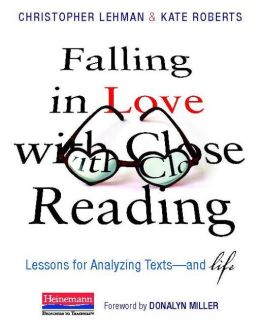
In preparing the Contrasts & Contradictions lesson, I incorporated Christopher Lehmans' Close Reading Ritual from Falling in Love with Close Reading. The lenses will be focused on the setting of the story. The patterns will be the Contrasts & Contradictions. We will then use this information to create a picture of Jonas' society. 

As with some of my previous lessons, I am going to have my students respond to the presentation questions using Nearpod. By using Nearpod, I ensure that every student submits a response, rather than letting another student answer on his/her behalf. I can skim through their responses and see who is understanding the text and the strategy, as well as who is not. This information is also saved in a report that I can use as needed.

This is definitely a better start from last year's teaching. Ain't nobody comin' back this year to say I ain't doin' my J-O-B!