Search This Blog

Showing posts with label fiction. Show all posts

Monday, September 28, 2015

Comprehension Processing Question (CPQ) - Fiction

This summer, I was introduced to a simple little strategy that has completely changed the way I have been teaching this year: the Comprehension Processing Question (or C.P.Q.). With one question, I was able to hand over much more responsibility to my students and take a lot of pressure off myself. 

My students struggle tremendously with making inferences. For many, many years of my teaching career, I pre-loaded all the information kids needs in regard to this topic: definition, parts, Total Physical Response moves, props... But not anymore. 

This year, as we sat down to read our first story, I gave my students a C.P.Q. to guide their reading and annotations. Our beginner question: What do we learn about the protagonist? That's it. Short. Sweet. To the point. 

I had my students write this question at the top of their story. Next, they worked in small groups to read the story, making notes in the margin that answered the C.P.Q. When called back together for quick checks, I learned that my students were making inferences without that academic-ness of the concept wearing them down. Once they finished reading and annotating, I went back and discussed how they were already professional inference makers. 

We were also able to transfer their responses to the C.P.Q. to characterization. With a minimal amount of teacher presentation, my students were able to sort through their notes to find both direct and indirect characterization about our protagonist. 

I am excited to continue using this process and providing more complex questions. We read a poem after our short story, and I should have used it then. This is a genre with which my kids struggle, and I had not considered using the C.P.Q. until after finishing the lesson. Next poem, it's on! 

Right now, my focus is incorporating the C.P.Q. into non-fiction reading and training my students to create a question on their own when reading independently. 

Saturday, November 16, 2013

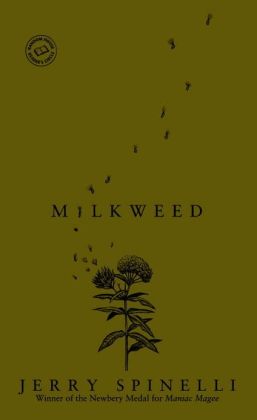
Milkweed, Chapters 1 - 4

My Pre-AP class is reading (or going to be) Milkweed to wrap up the first semester. I handed out the books Thursday and asked them to read chapters 1-4 by Monday. During an informal survey Friday, I learned that about a third of my students had already started reading the book, and many were well past chapter 4. All responded that they were finding the book very interesting. Since I have never taught this book (nor have I finished reading it), I am excited by their initial feedback. 

The biggest problem I have with novels is wanting to teach too much and not being able to finish. I think I have already  made too much work for the first few chapters, but better earlier than later. I would rather enjoy the end of the novel rather than cram too much in at the end. 

Our big assignment for the entire novel is going to be to create a blog for the main character Stopthief. Through this, I can reinforce a number of skills, including point of view and characterization. I have never done this before, but since I have started blogging, I figure I can handle it. I'm excited to see what happens with this. 

For their work, we are going to be using Kidblog. I have heard wonderful things about it and have been playing with it. The site is easy to use and understand, and all work is private. Once I see how things go with Pre-AP, I will decide whether or not to add my other classes to the site. 

For their first blog assignment, I modified a lesson I found on Read Write Think:


To make sure they have done the reading this weekend, I have a quick "higher level" assignment for them to complete on Edmodo. I believe this assignment will be a bit more challenging than a quick T/F or multiple choice did-you-read pop quiz. It should also show if they actually read. 


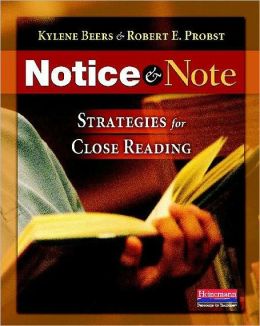
We will then return to chapter 1 to discuss the Memory Moment signpost from Notice and Note. This will be the third signpost added to our class discussions. I debated about whether or not to include this piece since the students are reading ahead, but I still think that it is important to cover. If the kids already know too much, they can discuss why the moment turns out to be important rather than predicting. 
I have then created an interactive lesson for chapters 1-4 using Nearpod. I made the basic presentation then added slides for my students to ask questions about the text. As we go through the questions they write, I am going to have them write down three that they want to discuss with their groups. They will take notes over this in their Google documents. This group discussion will be used to write their learning logs next week. 

After all this, I need to figure out how many days I actually have left to finish this novel before finals! 

Questions? Feedback? All is welcomed. 


Monday, November 4, 2013

Plot Analysis - Student Samples

Oh, note taking, how I dislike you sometimes. I look at some of these notes and wonder what goes on in the heads of my students during class. BUT, they all got it. I just wish every paper could look like the last sample I posted. Is this a consequence for too much focus on standardized testing, or are they truly apathetic about their educations? 

With our plot lesson for "The Tell-Tale Heart," we worked on two strategies: Cornell notes for notes and BME for writing fiction summaries. We talk a lot about strategies because I want them to have a brain full of tools that can carry over to other lessons. When we isolate a strategy to a particular lesson, kids do not always realize that there are skills that can be used in other lessons. They need to understand how to transfer information. These strategies can be. 

Overall, the lesson actually worked out much better than I anticipated. The kids were hooked from the second they saw the dancing H&R guy.