Search This Blog

Showing posts with label ESL. Show all posts

Wednesday, November 21, 2018

My path to English language teacher

For the #Ellchat_bkclub, we have been reading The 6 principles for exemplary teaching of English learners. Chapter 4 mentions that English language teachers "come to the profession by many different pathways" (67), making me wonder how we all got here, contributing to this book club that has grown exponentially in the past year and a half since I joined. Evelyn is the reason I am here. Evelyn and a district decision back in 2010.

Evelyn was one of my seventh-grade English students. She and I bonded quickly. School was not the biggest priority for her, as it is not for many junior high students. Her Mexican family expectations were stereotypical - find a boy, have his babies. Finish school or don't. No big deal. At least that's how I remember it.

Aside from boys, Evelyn was always mixed up in drama. I once pushed my way through 200 students (I swear I am not exaggerating; I even earned the nickname Ninja Foti for how I worked my way through those kids) to get into the bathroom to break up a fight with her and another student. I ran in just in time to see her slam the other girl's head into a sink.

I wanted more for Evelyn, and I do believe part of her wanted more, too. We worked hard on her classes, more than just mine. Until the day she was removed from my class.

The district made a decision to place all ESL students together with an ESL certified teacher. Despite having a masters with an ESL focus, I really did not know much about how things worked with these students at that time, including any laws or regulations that may affect their class placement. The only thing I knew for sure was that Evelyn was taken from my class and placed with another teacher, one whom we both resented.

Things did not go well for Evelyn in the new class. She and the teacher did not get along. Evelyn's ability to see me, talk to me, and work with me became more and more limited. We would only have a couple of minutes here and there to talk, for me to keep tabs on her. And it was then that I decided that I would never allow a situation like that to happen again.

I became ESL certified within a year, and doors and opportunities opened up for me like crazy after that. Years later and I have earned a local ESL teacher of the year award and been named the best of the best presenters for my region at a state TESOL conference. The ESL kids on my campus, those I teach and those I do now, are my kiddos, whether they like it or not. I am territorial and want the best for them.

Evelyn is a grown woman. She has three kids now. I'm not sure if she finished school. The last I knew, she had not. In the middle of writing this, I stopped to send her a thank you on Facebook for transforming my life. Because she did.

So now I want to know about your story. How did you get here?

Sunday, August 23, 2015

Community Building Activity: Hands On

Tomorrow is the first day of school with my 2015-2016 students. I will have 118 (at last count) new bodies in my classroom, some of whom I know a bit better than others. Some I do not know at all, as we have had many students transfer in from other junior highs, districts, cities, and states. 

With so much newness, it is important for everyone to get to know one another. It is my responsibility to build a healthy and safe classroom community. Our first assignment is going to be an introductory activity called Hands On, another  steal from the AVID Culturally Relevant Training I attended this summer (see Poker Time seating/grouping strategy)


We will be hanging the hands in the hallway to show everyone that we are going to work together. When this year's parents come in Thursday night to meet the teachers, I want them to see that we have been building a community from day one. I am a big preacher about my classroom being accepting of all people, regardless of any type of differences, and the Hands On activity is just one way to begin expressing that. 


In addition, my students will be reading, writing, listening, and speaking with this lesson, all of which are essential components of both English language arts and English language learner instruction. 

There is another, more secret reason that I am using this as my first day lesson. How many of you are still preaching procedures, expectations, rules, consequences, and the like on day one? How does your mouth and throat feel by the end of the day? It took me ten years to realize that coming home with a sore throat was not the way to start my school year, so I stopped that a few years ago. The kids will listen to me a little bit, but for the most part, I get to walk around, monitor, listen, and smile (yes, I smile before December). 

How will you build a safe and welcoming classroom environment?

Wednesday, July 8, 2015

It's poker time!

Well, not really, but now that I have your attention, let me share a seating/grouping strategy that I learned about this summer at AVID Culturally Relevant Training: Empowering Students. It involves elements of poker!

Upon entering my second day of the conference, I was instructed to draw a card from a deck. I then had to sit at a table the held a sign of the same suit as my playing card. This forced me to sit with (mostly) different people from the first day of the conference. You know that as teachers, we become very territorial very quickly. We find a comfort zone and stick with it. This training was not allowing that, and I am grateful for the push. 

I like this idea for the classroom. My environment is set up in groups every day. I usually make a seating chart the second week of school for the sole purpose of splitting up friends. Being friends, however, does not mean that students can not learn from one another. After thinking about it, shouldn't students be offered this same opportunity by random draw? 

My intention is to use this method on the first day of the 2015-2016 school year. Students may end up with friends; they may not. Either way, that should not take away from the group-building activity that I am planning on using (keep checking back for future blog post). I am considering using it every day for the first week, just to get the kids familiar with all of their classmates. [One of my biggest issues is always when students do not know the names of classmates after a couple of months. Heck, if I can learn them in a week, they should be able to learn them, too.]


__________________________________________

Resource: Table Signs

  • I have doubled the symbols on each page in order to fold them in half to get them to stand up. I am considering using the four-suit image for the last students who come in who may not fit into other full groups. This will depend upon class sizes. 

__________________________________________

At the conference, we took the playing cards a step further. Although we sat with one group, we created poker hands to mix-and-mingle with other classmates to answer questions. We took our cards, then paired up by a poker hand that was called out: two of a kind, three of a kind, flush, straight. For each round I participated in, I managed to meet someone new. Sometimes I was with one other person; sometimes four. 

This has unlimited possibilities for the classroom. For the first week, I am considering using this method with a 3-2-1. Students will write down three things they learned (it probably will not actually be about my class), two things they like, and one question they have. Then I will have them create their poker-hand groups to discuss what they have written. My goal is to always to incorporate reading and writing with listening and speaking to address ESL needs. And after twelve years of teaching, it becomes easier and easier to blend different strategies, so why not! 

__________________________________________

  • Because I am not terribly familiar with poker, and because I really hope that my students are also clueless (yes, naive), I made myself a display cheat sheet. I will post this to assist with students making their groups. 
__________________________________________

The AVID site team is hoping to present these playing card strategies during our in-service week in conjunction with some team-building activities. I only share what I see value in, and I am excited about adding this to by classroom management repertoire. Plus, I can definitely get cheap decks of cards at the dollar store (a teacher's best friend). 

What are your thoughts? How can you use this with your students (aside from teaching them how to play poker)?

Tuesday, March 24, 2015

My BEAM Symposium Workshop: Teaching Poetry with the ELPS

Years ago, I was asked to present an in-service workshop for other ELA teachers in my district, and I did it because I do not like (or know how) to say no. Years and years later, this is becoming a thing, and I am really starting to enjoy this thing. I have now presented at my school and in-district for ELA and district-adopted instructional model workshops, as well as at two state ESL/bilingual conferences for English language learner strategies. Last weekend, I presented my first ever, out-of-district, solo workshop presentation at the 31st BEAM Symposium (Bilingual/ESL Education Association of the Metroplex, Texas). 

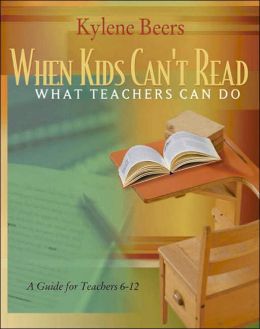
For my BEAM proposal, I actually reworked that very first workshop. After winning a copy of Kylene Beers' When Kids Can't Read at  a district training, I was asked to present one of her strategies. I conducted a Tea Party experience with the poem "Grandmother Grace" by Ronald Wallace. Because it has been so long, all I remember about this presentation is that it was my birthday, I brought cookies, I made people cry with the poem, and the feedback was good. 

For the English Language Learner presentation, I started with the basic premise - Tea Party with the poem. This is an activity I use frequently in my classroom in various ways, and it is always a success. It gets kids thinking and engaged with poetry (and other genres) before they even see the poem. And getting middle school students to do anything but glaze over at the mention of poetry is success in my book. 

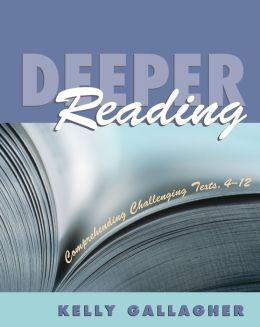
In my revisions of the presentation, I added more activities: Get the Gist from ReadWriteThink, understanding metaphor from Kelly Gallagher's Deeper Reading, and a final word activity, again from Kylene Beers. Although these strategies are not written specifically for English language learners, they work very well for this specific population. 

I did modify the activities to focus specifically on reading, writing, listening, and speaking, the four components of Texas' ELPS (English Language Proficiency Standards). The reading was a given; we had a poem. For writing, I worked with sentence stem responses to the different activities throughout the lesson. Participants shared their sentence stem writing with partners, allowing them to work on both listening and speaking skills. 

Overall, the workshop went very well. I received positive written and verbal feedback. The teachers in attendance were appreciative of the ability to take something directly back to their classrooms. As a teacher, I know that is something that I always want from sessions I attend. 

I have submitted a proposal to present this same workshop at another state organization conference, and it looks like it could be going to a third based on my ESL Teacher of the Year award. My goal is to wear the mess out of it as I practice my presenter skills, and then I will start working on a new one. Because I believe in sharing/stealing in teaching, it is all here for you, as well. 

I considered leaving the classroom last year, but I am glad I did not. I feel like I am in the best possible place. I get to do what I love and work with goofy children every day, plus I get to go outside of the classroom and share what I do with other teachers. Watch out world. I'm comin' to get ya! 

Saturday, March 21, 2015

May I now present myself as...

Until this week, winning and acknowledgement were in no way synonymous in my brain. As a teacher, I have never been concerned with winning something. I have always possessed expectations of being acknowledged for doing a good job. Despite the ego many think I walk around with, I am much more modest and humble than I often present myself to be, and I am quite content with a quick thank you and you did great. I have never really been comfortable being in the stage spotlight, unless it has been by my own doing. 

A few months ago, my district ESL/bilingual representative/mentor asked if she could nominate me for a teacher of the year award. She is affiliated with a local bilingual/ESL organization, and she told me that she felt that I was the perfect candidate for the award. I agreed, without much thought, thinking it would make her happy and would amount to nothing. 

The first thing I learned is that there is a lot of work involved in being nominated. You have to put together an entire portfolio!  Granted, my mentor did most of the work. I helped find some people to write letters of recommendation, and I wrote a biography and a philosophical statement - and put together a presentation proposal for the upcoming symposium. 

My focus for the symposium was always entirely upon the presentation. I have been presenting for many years now, and under the guidance of my mentor, I have been moving beyond district presentations. For the BEAM Symposium, I was modifying and updating a workshop that I conducted years ago within my school district (I believe it was from my very first time facilitating) to make it more strategically focused on ELL strategies. 

Last Monday, as my student teacher and I were walking back to class after lunch, I was checking my email on my phone, looking for something that I was afraid I would forget to check if I did not do it right then. As I walked to my desk, I opened a message informing me that I had won the 2015 BEAM ESL Teacher of the Year award:


Now let me tell you something: I don't cry. I. DO. NOT. CRY. Especially in front of people. Especially in front of my students. But I started crying. My student teacher looked at me with confusion as I handed her my phone. I am getting teary and turning red, she is high-fiving and hugging me, and my students are crying out different variations of "Oh my gosh! What happened? Is it something bad?". I was shaking my head that it was not and yelling at them to get out of my way because I DON'T CRY, and I needed to get to the restroom for a minute. 
I wish I had a logical reason for my initial reaction, but there is not much normal about me. I have won awards in the past, but they are student-chosen awards. There have not been many days in the past eleven and a half years, however, that my students have let me feel unappreciated for what I do with and for them. If they had it their way, I would win everything ever because I am just the best teacher ever (teens do have their shining moments). 

With my peers, I have never needed to win anything, but I have often felt that I do not get acknowledged for much of the work that I do that affects my entire campus (disclaimer: this does not apply to everyone I work with because some of them will be reading this). The email did not feel like a win; it felt like the most gigantic acknowledgement regarding almost twelve years of continuous development and growth as a teacher. 

Aside from telling my students what was going on to ease their concerns, I did not run down the halls yelling my good news at the top of my lungs. I informed my administrators, and I let my principal do the rest. Yes, I posted to my social media pages, but I knew the news would still take some time to get out there. 

I have been completely overwhelmed by both the acknowledgement and the win. My campus colleagues have emailed, texted, hugged, and spoken some of the kindest words I have heard in my entire teaching career, and I think the flattery is enough to tide me over for another twelve years. 

Last night, I was acknowledged at a pre-symposium dinner. I brought my daughter as my date. She was 11 1/2 months old when I started teaching, and she has grown up extremely patient and tolerant of all that I give to my students, many of whom she understands do not have the same support and opportunities as she. 

Yes, she is a few inches taller than me, but she also has on wedges. 
Oh, captain, my captain. 
Today, I was presented to the entire symposium as the ESL Teacher of the Year. 
We are forgiving them for misspelling my name here...

because they spelled it correctly here. 


Once all was said and done this afternoon, I was told that I am now moving along to the next round (I had no idea that I was in a beauty pageant). In May, my portfolio and presentation proposal will be presented to the Texas Association of Bilingual Education, and next October, I will travel to El Paso for the TABE conference. 

On a side note, I was also endowed with a Spanish dictionary and two sets of Texas Rangers baseball tickets, one set being for opening weekend. 

I almost left the classroom this year. I explored other options in education outside of the classroom. It was not meant to be, and part of me knew that even prior to my attempt to try something different. I feel like life is letting me know that I am still meant to be in the classroom with my zany, hormonal, pre-adults, and sharing my classroom lessons and adventures with other teachers is an added bonus to what I give to my kids. 

I am humbled. I am overwhelmed. I keep finding myself tongue-tied, and I promise you, that does not happen often. I did not need to win, but it sure does feel good to be acknowledged on such a grand scale. 

Monday, December 8, 2014

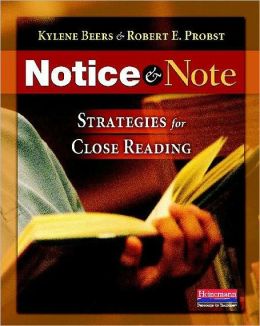
Using Notice and Note with Dialectical Journals

I have discovered my favorite thing with Notice and Note: it goes with everything! I had been planning on teaching The Giver this year, as I have for the past few years. When I went to get copies of the book from our storage room, however, I discovered we did not have enough for me to provide each student with a copy. I did not want to work with a class set because I often have students who want to read ahead. I already had my Notice and Note lesson prepared, but since it works with everything, I did not have any issues with changing novels to work with. 

After much scrambling, I decided to teach Milkweed, a novel I used only with my Pre-AP students last year. My students will be studying World War II later this year, and after reading this book last year, I realized that even my knowledge was limited to a concentration camps (I still remember the paper I wrote in my eighth grade English class about Auschwitz). This easy-to-read novel gives my students a perspective that is not taught in most history classes. 

Coming back from Thanksgiving break last week, I had my students do nothing but copy my Notice and Note mini-posters. Ok, ok. I was really tired and did not want to have to work too hard the first day back, but...but... I am human, too! 

When I distributed student novels, I also gave them a Notice and Note bookmark. Aside from that, I have not mentioned one thing about the mini-posters until today (I actually had one kid try to talk to me about when we discussed the signposts earlier but we had not; I must be really good). 

Today I taught my students how to create a dialectical journal, using the signposts as a guide. We analyzed the text for signposts, using our bookmarks as a cheat-sheet. After identifying a signpost, we used the accompanying question from the bookmark and our posters to guide our class discussion and to write our responses. I never stopped to teach each the signposts individually. I simply jumped right in, and the kids reacted. This is what my classes came up with today for chapters one and two of the novel:


Tomorrow, the kids will start working in groups to identify signposts in the text. Some want more support before having to work on their own. Since dialectical journals are new to 76 of my 77 students, I do not have any problems with this. 

On a side note, many of my students are close to finishing the novel. Since I never even assigned a specific reading, this is a thrilling thing to see. 

Skills targeted:

  • ELPS - listening, speaking, reading, writing
  • using text evidence
  • monitoring comprehension
  • collaboration
  • inference
  • reader response


Friday, March 14, 2014

I really hope this takes a week: A poetry lesson

We are just about two weeks away from our eighth grade state reading test. As much as I hate standardized testing, it is currently part of the job, and it is still my responsibility to prepare my students for the exam. Before spring break, my department met to analyze data, and we discovered that the only real need to have for the test is more poetry. So, the next two weeks will be poetry. 

But I have an issue. One, I am writing lessons for a long-term sub in another class. Two, I am out of my classroom for three days next week for the ESL state reading exam. So I am essentially writing a test-prep lesson for two (very reliable and hardworking) subs to teach over the course of a week. 

I know my own pacing. I know how I would teach this in the classroom. I know the conversations I would have. How do I write all of that into lesson plans for other people? Why, a PowerPoint presentation, of course!

I have been studying for the high school certification exam and have been doing a lot of reading. Fortunately, there is a great deal of information in these texts regarding poetry, particularly regarding reader response,  and I am trying to incorporate as much of it as possible into the lesson. There is even more I would like to add, but I am trying to balance what the subs can handle without completely overdoing it. 


So here is the breakdown:

  • For the lesson, I am using the poem "Midnight" by Sara Holbrook. This poem was on last year's state exam. By using the poem and state questions, I am hoping to give my students a bit of familiarity with the exam format (our district assessments are honestly much harder). 
  • I am starting with a Quick Write simply to get the kids thinking prior to the reading, especially since this lesson is coming directly after spring break. 
  • The kids will be reading the poem on their own first. I do not expect them to understand
    everything about the poem, but they need the independent practice. During this reading, they will identify any words for which they need clarification. 
  • I (or the subs) will read the poem out loud. The kids need to hear fluent reading, particularly when it comes to poetry. In eleven years of teaching middle school, this has always been an issue. 
  • We will then break into a Think-Pair-Share activity. Based on the above readings, I am going to have the students write their thoughts about what they have read, whether it be questions, personal connections, or understanding. I want them to get the thoughts on their papers before we discuss. Not all students will speak up in a large group setting, and they all need a chance to express themselves. This also helps to meet the needs of my ESL students by giving them an opportunity to write and to speak. Hopefully, the subs can guide this discussion for a few minutes without too much pressure. 
  • The next step is to take Cornell notes over terms associated with the poem - speaker, stanza, simile, metaphor, personification. Based on previous test results, my students do not have too many issues with figurative language. I am more concerned with making sure that they understand that the speaker is not the poet. 
  • Although this is not necessarily what I would do if I was in class with the kids, I have added a section on paraphrasing. My own observations tell me that my students often get distracted by the format of a poem and lose focus of the meaning. I have written in a section with guiding questions to help them interpret the poem, then they will work collaboratively on the rest. 
  • As part of the reader response focus of this lesson, I am going to have them do a short writing assignment from the Teaching Reading book above. They will identify what they deem to be the most important word, phrase, and element, explaining why. This is an opportunity for them to reflect upon the meaning in a personal manner. 
  • At this point, the students will be answering the questions from last year's state test (blah). I rarely test in this manner in my classroom. Most of my assessments are much more holistic in nature and usually involve writing. But, this is the first exposure that they are going to have to questions from the state itself. 
  • The last part of the lesson involves test-taking strategies - breaking down the answer choices to determine why three answers are wrong and one is correct. The students tend to look for the right answer and do not take the time to effectively eliminate the wrong answers. I have done this since I started teaching, and it seems to help. I have added everything to the PPT that I think I would discuss in class. It's like me in clip art format!

If I was in the classroom, and it was not testing time, I would be doing this much differently. Sometimes, however, my hand is forced. Here's to hoping that this actually takes a week.