Search This Blog

Showing posts with label tell tale heart. Show all posts

Tuesday, October 21, 2014

Deepening Vocabulary Understanding

This year, I am getting much better about reusing lessons that work, rather than reinventing the wheel for everything I do. For the past two days, my students have been working on our vocabulary for "The Tell-Tale Heart." This has included a Texas Literacy Initiative vocabulary routine and a sketch-to-stretch assignment. 

Today I had a follow-up vocabulary booster training to last year's vocabulary routine training. Although I have been using the routine, I realized that I have not been moving through the entire process. I introduce the words, but I have not been working to deepen understanding as much as I should. I put the words on a word wall and often refer to them, but I have not really had my students doing much with them. 
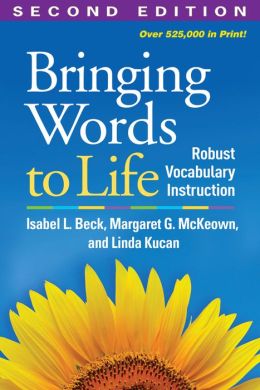
So guess what's happening now.  With some guidance from Bringing Words to Life, I am creating daily review lessons for the rest of this week to deepen understanding of our vocabulary words. 

Deepening Understanding Lesson #1: Find the Missing Word 

This strategy is essentially a fill-in-the-blank. Since I have been out for a day and a half, this will help show me how much my students have learned without my presence. In order to ensure feedback from all students, I am creating the review as a Kahoot lesson. Kahoot creates high engagement, and my students often ask if we are ever going to use it in class. This will be the first time in my class this year. 

Deepening Understanding Lesson #2: Making Choices 

For this strategy, students will be given examples and non-examples for each word. If the information given is correct example, the students will say the word. If it is not, they will not say anything at all. 

For example: If I say something you think is truly hideous (and not just your personal opinion), say hideous. If you do not think it is hideous, do not say anything at all. 

  • Adam Levine
  • Freddy Krueger
  • a puppy dog
  • maggots on rotting food

Deepening Understanding Lesson #3: Putting the Words to Use

On Friday, I am going to have my students complete a timed writing with the words. In an effort to get them to apply our vocabulary words to other disciplines, they will have to write about what they are doing in another class, using at least four of the nine words. This week I introduced Seven-Up Sentences, writing with a minimum of seven words per sentence, to make their writing more powerful. They will need to incorporate this into their work (to the best of their ability under timed writing circumstances). 

I am looking forward to seeing how things go this week. The district goal is to focus on 4-5 words per week. I have more for this week because I am using a district-created lesson. Once I see how things go for the next week days, I will determine if I continue using this set for another week, and if not, I have to figure out what to next. 

Stay tuned. 

Monday, November 4, 2013

Plot Analysis - Student Samples

Oh, note taking, how I dislike you sometimes. I look at some of these notes and wonder what goes on in the heads of my students during class. BUT, they all got it. I just wish every paper could look like the last sample I posted. Is this a consequence for too much focus on standardized testing, or are they truly apathetic about their educations? 

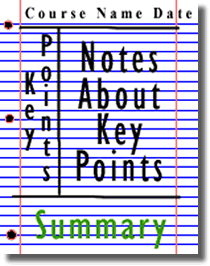
With our plot lesson for "The Tell-Tale Heart," we worked on two strategies: Cornell notes for notes and BME for writing fiction summaries. We talk a lot about strategies because I want them to have a brain full of tools that can carry over to other lessons. When we isolate a strategy to a particular lesson, kids do not always realize that there are skills that can be used in other lessons. They need to understand how to transfer information. These strategies can be. 

Overall, the lesson actually worked out much better than I anticipated. The kids were hooked from the second they saw the dancing H&R guy. 


Saturday, November 2, 2013

"The Tell-Tale Heart" - Analyzing Plot (Updated 11/3)

As much as I love to entertain my students, I always struggle with a way to make plot analysis interesting (although I can never be too serious no matter how hard I try). This is a tested skill that my students generally struggle with, but I know that I have to capture their attention in some way. My solution: lots and lots of graphics! 


I ran across a plot analysis handout  online that I used as a model for taking Cornell notes. As an AVID school and AVID classroom/site team member/mentor, this is a requirement for my AVID students (and the rest just have to suffer). We have not worked on this skill in some time, and the kids are due for a refresher. 

For the presentation, I began by adding animated gifs. Until this summer, I did not realize I could even place these in a presentation, but they save and insert like any old picture. You can search for just about anything and add "+ gif". They make relatively dry material a bit more light-hearted. 

I also added a teacher character to my presentations as I often do. This time, I used DoppelMe to create my mini-me. DoppelMe is also good for students to use to create Edmodo avatars. Rather than setting up an account, I created my character and then used the Windows Snipping Tool to copy and save the image.

I have also used a lot of graphics to guide the note-taking. I could have typed up all the notes for the kids to copy. Instead, I am using the pictures to help them identify the pieces. This way, they are still working. They will add those thoughts to their notes as we discuss them. 

We will see how everything goes Monday. If I get a couple of laughs and quite a few groans, I know that I have done well. 

______________________________________________________________________

Update: Stop the presses! Another blogging teacher posted an entry about an app called Tellagami. It's cute, it's fun, and I'm playing! My apologies to my mini-me, but my DoppelMe had to go. My Gami is now posted on slide 3. The more of these I can make, the more I won't have to speak. 

Tuesday, October 29, 2013

Notice and Note Reflections: "The Tell-Tale Heart"

Today was day two of my lesson over "The Tell-Tale Heart." Yesterday was all about modeling and explicit teaching. I built upon our Contrasts & Contradictions and Sketch to Stretch lessons, then added in the new signpost, Again & Again. 

I am always concerned when I start a new text with close reading strategies. I went through the first three paragraphs one at a time, and I was afraid that it was going to take away from the overall suspense of the story. Wrong! It actually seems to have helped. By the end of class, there were a number of comments from the kids regarding what was going to happen next and how much they wanted to continue the story. 

The text itself also led to some confusion with Contrasts & Contradictions that I was not expecting. Because the narrator is already doing things that are contrary to our personal selves, some of the students were having difficulties identifying the CCs. My informal assessment of the situation is that they were overthinking it, but it was something to note for future reference. 

Today we started collaborative work on identify CCs and AAs. The students listened to a chunk of the text (through the murder), focused on identifying the elements we have been focused on. Right away, I knew there was an issue. As I walked about the classroom, I saw that the only thing being noted on the text was the vocabulary words. 

The first thing I did was address comprehension issues. We went through a simple who/what/when/where/why routine to make sure they understood the text to be able to identify the elements. No big issues. I did have to explain the difference in mattresses from the mid-1800s until now, but that certainly didn't impede their ability to locate information. 

In reflection, I think I need to allow them to listen/read first, then go back and listen/reread a second time. I believe I was asking them to do too much at the same time. Or maybe they were simply engrossed in the story. 

Their next step was to work with their groups to discuss what they had (had not) identified and add it to their reading log. As they worked together, I wandered the classroom, stopping to ask and answer questions. 

On the positive side, some of the students made Contrast & Contradiction connections that I had not even considered. For example, one student noted that despite the narrator's attempts to be stealthy, slow, and cautious, when it came to the actual murder, he leaped into the room. The student determined that this went against everything the character had done up until that time. (I <3 when I learn from my knuckleheads.)

I also noted that there were some great conversations taking place, even when the kids were not quite getting the particular skills. The groups were debating ideas and why they did or did not work. Oh my gosh! Students focused on the actual lesson! A group of my girls was very interested in the narrator's discovery of his own powers. 

Of course, we also had some negatives. I did an informal assessment on the work they did today to determine if they were understanding what I was asking them to do. These are some of the issues I saw:


  • The kids were easily able to recognize the Again & Again moments, since "TTH" is full of it. Explaining it, however, is not going well. The focus question for AA is, "Why does this keep showing up again and again?" Most of the responses stated that a word or phrase was repeated by did not address the why


  • There were also some issues regarding specificity and clarity. Take the following example. I discussed this with the group. They explained their idea in great detail. When it came to putting the thought on paper, some details were left out. 


The next step in my lesson is to have them create individual entries to show understanding. I do not think we are ready for that yet. When we pick back up with the lesson, we will need to return to their notes from today and work on elaboration and clarification, a skill we just used for our personal narrative. I will use some of their examples to model my expectations and allow them to make revisions to their work. The students who caught on quickly and completed exemplary work will become my back-up teachers (I do this frequently). 

Despite the negatives, I feel we are headed in the right direction. This was new for them, but it is also new for me. Today's work showed me where I can be more explicit in my own teaching to create an even better learning experience. 


Saturday, October 26, 2013

Close Reading Strategies with "The Tell-Tale Heart" (Planning)

It has taken hours, and my back is killing me, but I believe I have put together a quality close reading lesson for "The Tell-Tale Heart" using two of the signposts from Notice and Note: Contrasts & Contradictions and Again & Again. 

My goals for this lesson were to:

  • have students connect our Sketch and Stretch vocabulary lesson to the words within the text
  • connect our introductory lesson for Contrasts & Contradictions in "The Horror" to "The Tell-Tale Heart"
  • teach a second signpost, Again & Again
  • be EXPLICIT in all teaching
I began by reading "The Tell-Tale Heart," marking up my text, identifying the above elements and making some teaching notes:


As I was reading, I was making a sample CC/AA reading log. You can see that I do not always think in order. 


Using all of my notes, I created my presentation, adding my nerdy sense of humor throughout. I have an underlying goal to educate on all things 1980s. If I had to endure the torture, so should they!

I am definitely going to have to do some proofreading tomorrow. I am a bit delirious at this point (and not Eddie Murphy style), but I was determined to crank this baby out tonight. Any and all feedback is welcomed. 

As always, I will post feedback from the lesson as we progress through the next week. 

Wednesday, October 23, 2013

Midnight Lesson Planning: Close Reading with Contrasts & Contradictions

I tend to do my greatest lesson planning in the middle of the night. For some of you, midnight might be bedtime, but for me, it is usually hours into sleep. Unfortunately, I'm a light sleeper, and most everything wakes me up, including my constantly working brain. 

A few days ago, I posted about a passage I found to connect to "The Tell-Tale Heart." I was excited about the prospect of the piece, but in my rush to incorporate it into class, I had not thoroughly processed the potential - at least not until waking up in the wee hours of the morning. 


My new favorite book (Don't I say that about every book?) for reading comprehension strategies is Notice & Note by Kylene Beers and Bob Probst. The strategies are almost so simple, one wonders why one didn't think of it on her own (her being me). 

With my midnight genius, I realized that "The Horror" is a perfect piece to introduce the signpost Contrast & Contradictions, especially as a contrast piece itself to "The Tell-Tale Heart." I already had my presentation for this strategy created, and a first period conference time allowed me to do some quick editing and revising to teach this concept today. 

The idea behind the strategy (and the others in the book) is for students to look for repetitive patterns to help understand text. With Contrasts & Contradictions, the kids look for (notice) character actions that are the opposite of what we expect. 


We began the lesson by discussing the concepts in the slide - everything from the stop sign, what notice and note mean, and examples of contrasts and contradictions. Now, as an edutainer, I have no problem making fun of myself, so coming up with real-life examples to teach this was easy:

  • If Ms. Foti came to school in a dress, you would be asking... (this is where they all chime in with, "Why?"). 
  • If Ms. Foti was mean to you for a day, you would be asking...
  • If Ms. Foti got married this weekend, you would be asking...
Hook, line, and sinker, all in one. 

Before reading the piece, I set the mood. I turned the lights off (I have a big window). I got everyone quiet. I reminded them that we were focused on identifying contrasts and contradictions within the reading. Then I read "The Horror" as if it was the scariest, most frightening, terrifying work ever written. 

I didn't even have to teach after that. Each class period, the kids were already commenting about everything that was "not right" with the passage. The contrasts and contradictions stood out like me in a dress (for those readers who do not know me personally, I am a bit of a tomboy and do not even own a dress). Of course, we did discuss afterward, identifying and labeling (noting) the CCs. But I would not call what I had to do at that point work. It certainly helps to have middle school students who are horror movie connoisseurs. 

I have to give a genius student credit for pointing out an obvious CC that I completely overlooked. At the beginning of the text, Eggers sets up Sandra as fearful, yet by age thirty, she is ready to write a horror novel. Can Ms. Foti say contradiction?

It always feels fantastic when students grasp a concept (and quickly), but the best reward is watching them enjoy education. Today ranks as one of the best learning days of the year. 

Sunday, October 20, 2013

Vocabulary Strategies for "The Tell-Tale Heart"

I will begin teaching "The Tell-Tale Heart" later this week. I am working on two vocabulary strategies for this lesson to mix things up: the Texas Literacy Initiative vocabulary routine and another strategy called Sketch to Stretch. 

I will start the vocabulary work with the vocabulary routine for the word vex. I chose this word because it ties in well with our last vocabulary routine for the word gripe. I want my students to be able to view words in connection to one another, rather than isolated pieces from different readings. I have heard my students using the word gripe - correctly - in conversation with one another, so I will be curious to see if they pick up on vex the same way. 

The second strategy, Sketch to Stretch, comes from Vocabulary Strategies that Work, a book provided by the Texas Literacy Initiative as part of our vocabulary focus. Sketch to Stretch was originally created as a reading comprehension strategy for visualization (I am going to use that as a connection piece at the end of the reading). In this process, students read a section of text, then create a reaction drawing. By the end of the reading, they have a series of drawings to help them recall information. [If you search this strategy online, you will find a great deal of information.]

Wilfong has adapted this strategy for vocabulary study. Students read a chunk of text, then they choose a word from that section that they feel is vital to the meaning of the selection. They then draw what they think the word means in the given context. 

Since this is the first time I will be using this strategy, and because "TTH" tends to be complicated enough for my students to understand, I have modified Wilfong's strategy to suit my own needs. Rather than use Poe's text, I am giving my students modern-language sentences with selected words from the story. They will create their drawings and definitions based on this information to help them apply it to "TTH".

Follow-up to come after I teach this Thursday or Friday. Stay tuned.