Winter break was a long 18 days, and I did not think about school one time, as I was in the process of selling one house and buying another. Fortunately, the AVID community on Facebook came to my rescue as I scrambled to figure out what I was going to teach the first day back to school with everyone suffering from back-to-school-itis.
Another AVID teacher posted that she uses random word generators to spark collaborative writing. Easy enough! I set up the lesson by explaining to my students that I would be providing them with six words from the generator. After discussing word meaning, I would provide them with six minutes to write a VERY short story with their table mates, using all of the provided words. We would then share out to practice listening and speaking skills.
Apparently, there are a significant number of random word generators online. I clicked on the first one. I generated a different list for each class period. For some of the classes, I had to click through a few times, as there were words that I did not even know popping up. Sure, I could have used those words as an opportunity to model my own learning, but I was tired!
The lesson went quite well. The time limit helped to keep students engaged. Many of the groups were amused with themselves for what they had created. Some wrote a couple of sentences, working in the words as quickly as possible. Others managed to write short novels in the time provided. If I had not been discussing new procedures for the second semester, I probably could have worked in a second round of this activity. I did have requests from many students to do this again, and I am pondering how to use this to inspire my seventh grade students for their STAAR writing test in a couple of months.
If you find yourself in need of a fifteen to twenty minute time filler (or you are having an off /I-can-barely-keep-my-eyes-open day and need to improvise), this requires little energy and planning on the part of the teacher. Give it a shot.
Search This Blog
Showing posts with label collaboration. Show all posts
Thursday, January 11, 2018
Saturday, August 6, 2016
Oh my goodness! I have never taught my kids to collaborate.
As a member of my school's AVID site team, I put a great deal of emphasis on the WICOR strategies in my classroom and lessons:
I can guarantee that I explicitly teach WICOR strategies. While reading Peter H.
Johnston's Choice Words, however, I realized that I am not doing a very good job at truly teaching my students how to collaborate. Johnston writes, "Even when they work in groups, [students] rarely work as a group, sharing ideas and working toward a common goal" (65).
This really caught my attention. Do I really think my eighth graders know how to do this? We usually get there, but I am very aware that I have left out critical information regarding this process, and in order for my students to truly participate in group activities, I need to do a much better job if my students are going to "have some shared understanding of the situation and activity in which they are jointly engaged" (65).
So time for a new approach to collaboration, especially with a new state teacher assessment beginning this year that focuses heavily on student-centered learning. From now on, when my students are going to be engaged in group activities, there will be a discussion ahead of time focused on the work to be done:
Classes do not start for two more weeks, so I do not know how this approach will work until I try it out. It is a small component, but I have a feeling it may pay off with huge dividends. More to come once we get started.
Sunday, February 21, 2016
Adventures in Technology: TodaysMeet in the Classroom
During our English PLC, Susan Anderson from our Instructional Technology Department came by to share some online sites to help us with formative assessments. Although I was familiar with some of the tools, Susan provided some alternate uses that I had not previously considered with those both known and unknown to me.
My students recently worked on a collaborative story writing assignment in Google Docs. In order to discuss their work without speaking while some students were finishing a district exam, I allowed them to use the chat box within the document to communicate with their partners about what they were writing. As I walked around glancing at their work, I was pleasantly surprised that no one was talking about anything more inappropriate than wanting to see the Deadpool movie.
In order to communicate with me without blurting out and calling my name, I set up a Today's Meet forum. This is a site that Susan showed my department. I have used TdoaysMeet in meetings containing over one hundred people, but I never even thought about using it in class. Susan talked to us about using it as a backchannel for conversations while other things are taking place in class, and this was the perfect opportunity for me to try it out. Well, let me just say, best made plans...
My first Pre-AP class is definitely a gifted group. So gifted in fact, that when asked to type a name to identify themselves to others, they started using my name as well as the names of their classmates. No one knew who anyone was. Fake versions of me were threatening to write referrals, and a very strange rap battle took place (I think one version of me may have won).
My students recently worked on a collaborative story writing assignment in Google Docs. In order to discuss their work without speaking while some students were finishing a district exam, I allowed them to use the chat box within the document to communicate with their partners about what they were writing. As I walked around glancing at their work, I was pleasantly surprised that no one was talking about anything more inappropriate than wanting to see the Deadpool movie.
In order to communicate with me without blurting out and calling my name, I set up a Today's Meet forum. This is a site that Susan showed my department. I have used TdoaysMeet in meetings containing over one hundred people, but I never even thought about using it in class. Susan talked to us about using it as a backchannel for conversations while other things are taking place in class, and this was the perfect opportunity for me to try it out. Well, let me just say, best made plans...
In my academic classes, I can guarantee that Student E. finds some way to work my nerves on a daily basis, and for some reason, I still love him. I figured that without being able to speak out loud, it would be a peaceful day in Student E. land. Wrong! He did not understand my response to his request to go to the restroom, despite four other students typing for him to go. He did not believe them, as he thought I was correcting his grammar - which I had done initially.
My last class of the day actually used the site as I had intended: by asking questions about their assignment. Do we need paragraphs? Can I add the title to the slide? How do we get our work back if it was lost? This group is often quite unfocused as they come to me after lunch, but using TodaysMeet actually seemed to help them.
Out of my five classes, only one pushed the boundaries. This class is always on warning with technology, but I want them to have the exposure and always give them a "second" chance. They used TodaysMeet to say hello to one another, to tell jokes, to ask to go to the bathroom, to ask to go to the bathroom, and to ask to go to the bathroom. They were, however, working on their assignment, so I did not go to hard on them. Because we had not had a formal conversation about how to use the site, I took responsibility for the situation and know that in the future, I will need to set firmer ground rules.
Although this was a trial run, I can see myself using the site again in the future. I want to put some more thought into how I can use it effectively in a blended lesson. Stay tuned.
Sunday, February 7, 2016
And just like that, we were in a blended learning environment!
I use technology as often as possible in my classroom. I am fortunate to have a 2:1 situation - one Chromebook and one iPad per student. I have to admit, though, that the work we do online is not terribly original. We tend to stick to basics. I do try, however, and I am slowly branching into new territories with my kids that I have not thought they would be able to handle previously. Right now, my focus is on how I can get students working collaboratively in a digital environment.

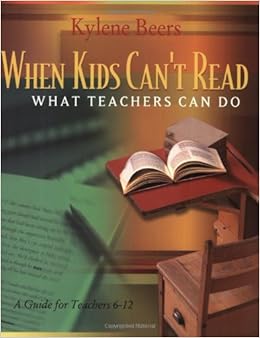
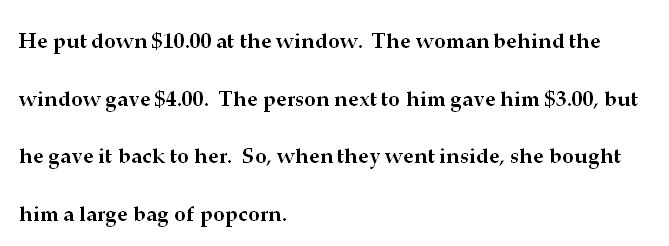
In my graduate reading class this week, we were discussing the following passage from Kylene Beers' When Kids Can't Read. I want you to try to figure out what the passage is about before moving on. The struggle, if you have one, is part of the process.
For the first time ever (insert drumroll here), I have students working collaboratively in a Google Doc. They are writing the full-length story of the initial few sentences. My students are sitting face-to-face in order to discuss what they want to write, then they are writing together in a single document. I walked them through setting up the document step-by-step, and you would have thought I had performed a spell straight out of Harry Potter. They oohed and aahed like I was the greatest wizard to ever live.
In my graduate reading class this week, we were discussing the following passage from Kylene Beers' When Kids Can't Read. I want you to try to figure out what the passage is about before moving on. The struggle, if you have one, is part of the process.
______________________________________
______________________________________
Are you ready? Did you figure it out? Then keep on readin'.
In my class of adults, there was a great deal of discussion about the information in the passage. I own the Beers book and have used this particular passage in a number of workshops, so I did not have any original thoughts to contribute. I sat back and listened to what my peers had to say. One classmate got hung up on the numbers from the beginning, thinking it was a math problem. Most everyone got past that stage and pieced together a general idea of what is happening, but we were all making up completely different stories about who the people are - a married couple, a first date, friends, a brother and sister.
Back in my eighth grade classroom, I knew I had some time to fill. We recently finished a unit, and I had a couple of days open prior to a district test. Why not see what the kids think of this passage?
I started by giving my students the passage and asking what it was about and how they figured it out. Quite a few thought it was a math problem and could not get past that idea. I actually had to have kids act out the scene in one class to try to get the kids to see it as a mini story. Once we walked through the passage, like my college peers, my students immediately began making up stories about who the people were and what the situation was. So I ran with it.
Since I have not done this type of assignment before, I was concerned that the kids would be off-task, but I can honestly say that not one single student was discussing anything but the story. Two of my girls are writing the world's greatest love story, and when class ended the other day, one told me that she could not leave her characters hanging all weekend; she needed to know what was going to happen with them. Two of my boys are writing a fantasy version. Two others have turned the passage into a story about my date with John Cena (currently my imaginary boyfriend who doesn't know we are involved). Many students could not believe that I was having them stop because class was ending. They were completely engaged in what they were doing.
In addition to all of these wonderful moments, the best thing I realized about this impromptu lesson is that I have blended learning taking place. Blended learning is an important component of the new Texas teacher evaluation system that will be put in place next year, and I feel like I am working through some practice rounds to prepare for that. My students are working together both face-to-face and online. They have control over the content of their story. They are determining the structure of their collaboration, and each partnership is quite different.
This might not be a giant step for mankind, but it is a step for my classroom and for my own thinking. Sometimes I do not think I give my students enough credit for all that they are capable of, but I am determined to continue pushing myself to break out of my safe zones in order to challenge them, even if it's only one baby step at a time.
Thursday, April 3, 2014
Tableaux: Part 1
I woke up excited about this lesson, and after today, I am even more excited for tomorrow. In my bones, I knew this was going to be good, and it has been so far.
After days of state testing, I wanted a lesson that allowed my students to move and speak. Sitting still and being quiet just ain't our thang! I was flipping through Texts and Lessons for Content-Area Reading and found the perfect lesson: Tableaux. This lesson contains everything I wanted for today and tomorrow - reading, collaboration, inquiry, presentation, speaking, and moving.
I put together a brief presentation to introduce the article and give instructions. I told them we were reading "Are you driving your boss crazy?" because I couldn't find "Are you driving your teacher crazy?" I used this as a springboard to discuss their future employment (some of my eighth graders are already old enough to work) and what not to do. I even talked about all of my former students I saw working at Six Flags last Sunday and how I believed some of them would make the mistakes in this article and not be employed long. Hook!
We then looked discussed the word tableaux and analyzed the Iwo Jima statue. My students, without prompting, told me that this is a French word because of the ending (and this is a Spanish-speaking school). I was also surprised that many of them knew the statue by sight. It's always a shock when I don't have to spend too much time on background knowledge.
Most of our class time was spent planning, preparing, and practicing (PPP). Within four classes, I only had one group off task . I may not always realize it, but my kids are usually following instructions and participating in class activities. For the most part, I stood back and watched the show. Isn't this how it should be?
I did have to leave early from one class, and a colleague covered for the PPP part of my class. Her feedback: My goofballs were being funny trying to figure out facial expressions and poses. I am filled with anticipation for their presentations tomorrow.
I put together a brief presentation to introduce the article and give instructions. I told them we were reading "Are you driving your boss crazy?" because I couldn't find "Are you driving your teacher crazy?" I used this as a springboard to discuss their future employment (some of my eighth graders are already old enough to work) and what not to do. I even talked about all of my former students I saw working at Six Flags last Sunday and how I believed some of them would make the mistakes in this article and not be employed long. Hook!
We then looked discussed the word tableaux and analyzed the Iwo Jima statue. My students, without prompting, told me that this is a French word because of the ending (and this is a Spanish-speaking school). I was also surprised that many of them knew the statue by sight. It's always a shock when I don't have to spend too much time on background knowledge.
Most of our class time was spent planning, preparing, and practicing (PPP). Within four classes, I only had one group off task . I may not always realize it, but my kids are usually following instructions and participating in class activities. For the most part, I stood back and watched the show. Isn't this how it should be?
I did have to leave early from one class, and a colleague covered for the PPP part of my class. Her feedback: My goofballs were being funny trying to figure out facial expressions and poses. I am filled with anticipation for their presentations tomorrow.
Subscribe to:
Posts (Atom)