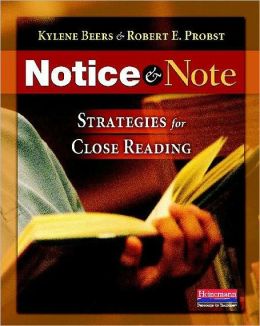
I have discovered my favorite thing with Notice and Note: it goes with everything! I had been planning on teaching The Giver this year, as I have for the past few years. When I went to get copies of the book from our storage room, however, I discovered we did not have enough for me to provide each student with a copy. I did not want to work with a class set because I often have students who want to read ahead. I already had my Notice and Note lesson prepared, but since it works with everything, I did not have any issues with changing novels to work with.
 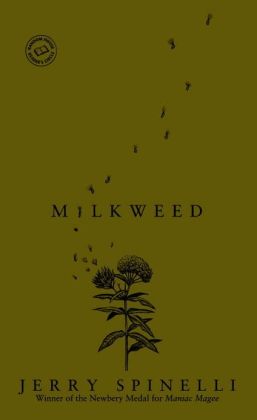 After much scrambling, I decided to teach Milkweed, a novel I used only with my Pre-AP students last year. My students will be studying World War II later this year, and after reading this book last year, I realized that even my knowledge was limited to a concentration camps (I still remember the paper I wrote in my eighth grade English class about Auschwitz). This easy-to-read novel gives my students a perspective that is not taught in most history classes.
 Coming back from Thanksgiving break last week, I had my students do nothing but copy my Notice and Note mini-posters. Ok, ok. I was really tired and did not want to have to work too hard the first day back, but...but... I am human, too!
When I distributed student novels, I also gave them a Notice and Note bookmark. Aside from that, I have not mentioned one thing about the mini-posters until today (I actually had one kid try to talk to me about when we discussed the signposts earlier but we had not; I must be really good).
Today I taught my students how to create a dialectical journal, using the signposts as a guide. We analyzed the text for signposts, using our bookmarks as a cheat-sheet. After identifying a signpost, we used the accompanying question from the bookmark and our posters to guide our class discussion and to write our responses. I never stopped to teach each the signposts individually. I simply jumped right in, and the kids reacted. This is what my classes came up with today for chapters one and two of the novel:


Tomorrow, the kids will start working in groups to identify signposts in the text. Some want more support before having to work on their own. Since dialectical journals are new to 76 of my 77 students, I do not have any problems with this.
On a side note, many of my students are close to finishing the novel. Since I never even assigned a specific reading, this is a thrilling thing to see.
Skills targeted:
- ELPS - listening, speaking, reading, writing
- using text evidence
- monitoring comprehension
- collaboration
- inference
- reader response