Search This Blog

Showing posts with label Quick Write. Show all posts

Sunday, September 28, 2014

Hooked: How I suckered my kids into a poetry lesson

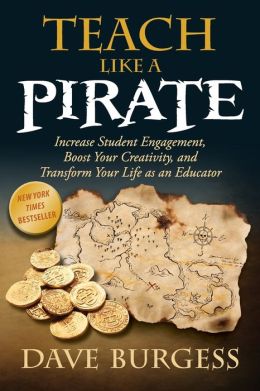
One of my summer reads was Teach Like a Pirate. Reading this book showed me how much I already do to engage my students, while also emphasizing the need to really contemplate ways to hook my students into a lesson. 

As I prepared to teach my first poem of the year, I found myself conceiving ways in which I could draw my students in to reading poetry without them immediately shutting down at the thought of poetry. And because we were going to use the poem for inferences, a very weak skill for my students, I knew I was really going to have to keep them as engaged as possible. 


Hook #1: As we wrapped up our informational text lesson, I casually mentioned that we were going to be reading a poem next. [Insert groans here.] Knowing that I had their attention, I told them that we don't read sappy poems in my classroom (only one girl complained). I know how to find the good stuff that is much more enjoyable. Hooked! I was getting lots of questions regarding the topic, but I said nothing more than it was a secret and they would have to wait until the next day. 

Hook #2: To introduce the lesson, I showed this picture and asked my students to complete a Quick Write: 


I let them know that we are a safe environment and that they would not have to share their thoughts verbally (although many of them did opt to share when given the opportunity). By the end of this activity, my kids were desperate to know just what kind of poem we were going to be reading. But they had to wait another day. 

Hook #3: We read "Fat Man" by Niall Janney - or so they thought. What I actually gave them was the first sixteen lines of the poem. We had great discussions about being judgmental (huge issue in the classroom this year), I made the speaker of the poem appear to be incredibly unlikable, and just as the lesson appeared to be coming to a close, I told them I had a secret to tell them: "This isn't the whole poem." I honestly did not expect the reactions to Hook #3 that I got. Anger, confusion, shock, and lots of whaddya-mean! And then I made them wait until the next day - again. 

This is the second year that I have used this poem, and not once in using it have I heard anything negative about poetry. My students were truly engaged and interacting with the poem, and I believe that using hooks throughout the lesson contributed to the overall success of the lesson. 


Monday, June 23, 2014

Quick Write - Enhanced with Natural Supplements for Increased Brain Size

For this year's AVID Conference in Dallas, I am enrolled in a strand focused on English language learners. I am the ESL lead teacher at my school, and with an ever increasing need for ESL strategies on campus plus my love for AVID, this was the ideal choice for moving into the 2014-2015 school year. 

We started today's strand with a Quick Write. Unfamiliar with Quick Writes? They are exactly as they sound. In my classroom, they look like this:

  • I assign a prompt. 
  • I set the timer for two to five minutes. 
  • Students are expected to write the entire time. 
  • There is no focus on writing rules. The goal is to get any thoughts down on paper. 
  • If students get stuck, they write the last word they wrote over over over over over over over until they get unstuck. 

I love this strategy because it get students thinking and provides an opportunity to write without the pressure of rules and regulations like spelling and punctuation. 

Our AVID Quick Write assignment was to discuss something difficult we learned how to do. Prior to our writing, the instructors shared their own writing  and stories. Modeling is essential for all students, not just ELLs. I usually write for my classes because I never know what random ideas will pop in my brain, and I often try to show frustration and thought processes for them. 

The way we wrote and used the writing today reminded me of drinking a protein shake after a hardcore work out. It was refreshing and rejuvenating. 

Enhancement #1: Sentence Frames 

  • I use sentence frames and starters in my classroom all the time, but I never thought about using them for a Quick Write. The frame provided, however, clearly provides structure for those who do not know where to begin or end:

  • Frames are designed to provide structure but are not necessarily meant to be followed word for word. Students, like me, can modify for personal needs. Having just blogged about my frustration with Zumba, I was able to describe my ongoing learning and desire to accomplish the flamenco. 
  • This enhancement helps meet the writing needs for ELA, ESL, and AVID. 
Enhancement #2: Discussion
  • Steps:
    • Pick a partner. 
    • Choose who will be Partner A and Partner B.
    • Partner A reads his/her Quick Write while Partner B actively listens. Active listening instructions- maintain eye contact, nod your head, communicate interest non verbally - and speaking skills - adjust volume for the listener, maintain eye contact - were provided by the instructors. 
    • Partner B has 30 seconds to ask for clarification and/or paraphrase. 
    • Partner B then writes down a few notes about Partner A's story. 
    • The partnership is reversed and repeated. 
    • The Partner As then stand, move around the room, and find a new partner B. 
    • The steps are repeated. 

  • I have used Quick Writes for discussion but not like we did in today's strand. I have not considered giving instructions regarding speaking and listening skills, but once we practiced this routine, I realized how much our students actually need it. Most have no idea how to be effective listeners and speakers because no one has ever told them that they need to be. 
  • One participant asked, unconnected to Quick Writes specifically, how we can use the AVID ELL strategies in all content areas. Quick Writes are incredibly flexible. You can have students write about anything to share prior knowledge or to review what they are learning. I see numerous possibilities with this routine. 
  • This enhancement meets writing, listening, and speaking skills for ELA and ELLs, in addition to collaboration for AVID. 

  • In addition to meeting ELA, ELL, and AVID essentials, I jotted down a few things that came up in the debriefing discussion that I found to have great value in the classroom: 

    • The Quick Write process allows students to take ownership of their ideas and thoughts. Simply by putting them on paper, students are learning that their thoughts are valuable. 
    • By sharing with classmates, we are building classrooms of trust and honesty and showing respect for others. These are not the easiest concepts to "teach" because they do not come listed in a textbook. 


    The whole reason I started this blog was to reflect (an AVID skill) upon my own growth and learning. I particularly want to share in instances like this, when a simple idea like a Quick Write can become so much more meaningful than a two to five minute writing exercise. 


      Friday, March 14, 2014

      I really hope this takes a week: A poetry lesson

      We are just about two weeks away from our eighth grade state reading test. As much as I hate standardized testing, it is currently part of the job, and it is still my responsibility to prepare my students for the exam. Before spring break, my department met to analyze data, and we discovered that the only real need to have for the test is more poetry. So, the next two weeks will be poetry. 

      But I have an issue. One, I am writing lessons for a long-term sub in another class. Two, I am out of my classroom for three days next week for the ESL state reading exam. So I am essentially writing a test-prep lesson for two (very reliable and hardworking) subs to teach over the course of a week. 

      I know my own pacing. I know how I would teach this in the classroom. I know the conversations I would have. How do I write all of that into lesson plans for other people? Why, a PowerPoint presentation, of course!

      I have been studying for the high school certification exam and have been doing a lot of reading. Fortunately, there is a great deal of information in these texts regarding poetry, particularly regarding reader response,  and I am trying to incorporate as much of it as possible into the lesson. There is even more I would like to add, but I am trying to balance what the subs can handle without completely overdoing it. 


      So here is the breakdown:

      • For the lesson, I am using the poem "Midnight" by Sara Holbrook. This poem was on last year's state exam. By using the poem and state questions, I am hoping to give my students a bit of familiarity with the exam format (our district assessments are honestly much harder). 
      • I am starting with a Quick Write simply to get the kids thinking prior to the reading, especially since this lesson is coming directly after spring break. 
      • The kids will be reading the poem on their own first. I do not expect them to understand
        everything about the poem, but they need the independent practice. During this reading, they will identify any words for which they need clarification. 
      • I (or the subs) will read the poem out loud. The kids need to hear fluent reading, particularly when it comes to poetry. In eleven years of teaching middle school, this has always been an issue. 
      • We will then break into a Think-Pair-Share activity. Based on the above readings, I am going to have the students write their thoughts about what they have read, whether it be questions, personal connections, or understanding. I want them to get the thoughts on their papers before we discuss. Not all students will speak up in a large group setting, and they all need a chance to express themselves. This also helps to meet the needs of my ESL students by giving them an opportunity to write and to speak. Hopefully, the subs can guide this discussion for a few minutes without too much pressure. 
      • The next step is to take Cornell notes over terms associated with the poem - speaker, stanza, simile, metaphor, personification. Based on previous test results, my students do not have too many issues with figurative language. I am more concerned with making sure that they understand that the speaker is not the poet. 
      • Although this is not necessarily what I would do if I was in class with the kids, I have added a section on paraphrasing. My own observations tell me that my students often get distracted by the format of a poem and lose focus of the meaning. I have written in a section with guiding questions to help them interpret the poem, then they will work collaboratively on the rest. 
      • As part of the reader response focus of this lesson, I am going to have them do a short writing assignment from the Teaching Reading book above. They will identify what they deem to be the most important word, phrase, and element, explaining why. This is an opportunity for them to reflect upon the meaning in a personal manner. 
      • At this point, the students will be answering the questions from last year's state test (blah). I rarely test in this manner in my classroom. Most of my assessments are much more holistic in nature and usually involve writing. But, this is the first exposure that they are going to have to questions from the state itself. 
      • The last part of the lesson involves test-taking strategies - breaking down the answer choices to determine why three answers are wrong and one is correct. The students tend to look for the right answer and do not take the time to effectively eliminate the wrong answers. I have done this since I started teaching, and it seems to help. I have added everything to the PPT that I think I would discuss in class. It's like me in clip art format!

      If I was in the classroom, and it was not testing time, I would be doing this much differently. Sometimes, however, my hand is forced. Here's to hoping that this actually takes a week.