Search This Blog

Showing posts with label nearpod. Show all posts

Sunday, December 8, 2013

"Forgotten Language" by Shel Silverstein

My students took their first curriculum assessment of the year a few weeks ago. I intentionally set the test aside and saved it for our fall semester exam review. I am also hoping that the kids will have forgotten most of their thinking from before Thanksgiving, and we can look the reading passages with a fresh perspective..

Review for me is not just looking at answer choices. I will teach the passages from the test in an effort to model how they should be thinking about any reading, not just to answer test questions, but to gain something from the reading. Hefty goal on my part, I know. To them, it is simply a test with stuff to read.

The first passage we are going to look at is Shel Silverstein's "Forgotten Language." There were only three questions on the test regarding this poem, but my students struggle with poetry, and three questions failed are three questions failed. 


To teach this poem, I have incorporated a number of strategies:


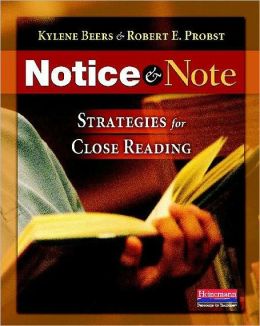
  • From Notice and Note, I will be using the Again & Again signpost to focus on the meaning of Once and the significance of the repeated last line in connection to the rest of the poem. 
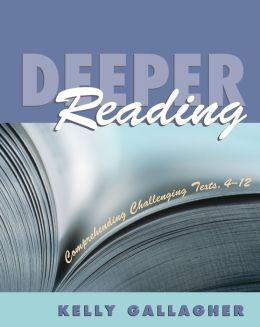
  • From Kelly Gallagher's Deeper Reading, I am using two strategies. For the second reading, we will focus on answering three questions: What does it say? What does it mean? What does it matter? I have also added the reflective question, What is the most valuable idea that you can take from this poem?
  • I am going to be using Nearpod for students to respond to all questions in the lesson. Because this review is also helping them prepare for their fall final exam, I need all students thinking and showing their thinking. I do not want them being passive and allowing others to answer questions for them. By being able to see their responses (thinking), I will be able to determine who is understanding or not understanding what. (Plus I just got Chromebooks and the kids are anxious to start using them.)
The only thing that makes this a test-related lesson is the incorporation of the test questions. I loathe multiple-choice questions, but such is the mandate of federal regulations; therefore, they must be taught at some point in time. More importantly, though, I hope they discover that Shel Silverstein is much more than a goofy poem writer. 

Sunday, November 17, 2013

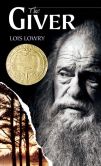
The Giver: Chapter 1

While my Pre-AP students are reading Milkweed, my academic students will be reading The Giver. Last year, I will honestly admit that I did some of my worst teaching with The Giver. I was frustrated with my students. They refused to read outside of class, impeding the lessons I was trying to cover in class. For the most part, we listened to the book and did very little with it. Of course, when I was doing this, my newly-promoted secondary superintendent was brought to my classroom to view some of the finest teaching our school has to offer. (sigh) Not my best moment, but I refuse to let it happen again. 

Prior to beginning the novel, we will be going through our Texas Literacy Initiative vocabulary routine with the word release. Although I know my kids know this word, I want to put focus on it since it is such an important concept in the novel. We will be viewing the presentation with Nearpod so that I may assess understanding of the term. I am not expecting any issues here. We will come back to discuss this more after reading the first chapter of the book. 

Last year, I began by having my students create their own perfect societies, but it become more of a distraction and never truly connected to the novel the way I had initially intended. This year, I'm throwing that out the window. For chapter 1, we will focus on Contrasts & Contradictions from Notice and NoteThey are already familiar with Contrasts & Contradictions, but now we are going to shift away from characters and focus on the setting. I want them delving deeply into the differences between Jonas' world versus our own to see what this "perfect" world is like. 

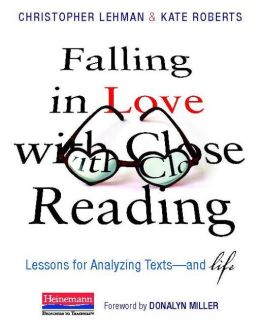
In preparing the Contrasts & Contradictions lesson, I incorporated Christopher Lehmans' Close Reading Ritual from Falling in Love with Close Reading. The lenses will be focused on the setting of the story. The patterns will be the Contrasts & Contradictions. We will then use this information to create a picture of Jonas' society. 

As with some of my previous lessons, I am going to have my students respond to the presentation questions using Nearpod. By using Nearpod, I ensure that every student submits a response, rather than letting another student answer on his/her behalf. I can skim through their responses and see who is understanding the text and the strategy, as well as who is not. This information is also saved in a report that I can use as needed.

This is definitely a better start from last year's teaching. Ain't nobody comin' back this year to say I ain't doin' my J-O-B!

Saturday, November 16, 2013

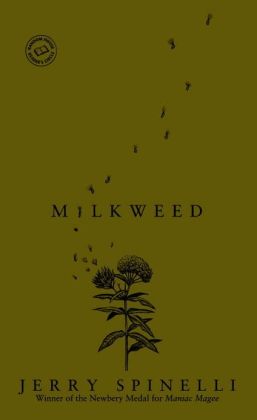
Milkweed, Chapters 1 - 4

My Pre-AP class is reading (or going to be) Milkweed to wrap up the first semester. I handed out the books Thursday and asked them to read chapters 1-4 by Monday. During an informal survey Friday, I learned that about a third of my students had already started reading the book, and many were well past chapter 4. All responded that they were finding the book very interesting. Since I have never taught this book (nor have I finished reading it), I am excited by their initial feedback. 

The biggest problem I have with novels is wanting to teach too much and not being able to finish. I think I have already  made too much work for the first few chapters, but better earlier than later. I would rather enjoy the end of the novel rather than cram too much in at the end. 

Our big assignment for the entire novel is going to be to create a blog for the main character Stopthief. Through this, I can reinforce a number of skills, including point of view and characterization. I have never done this before, but since I have started blogging, I figure I can handle it. I'm excited to see what happens with this. 

For their work, we are going to be using Kidblog. I have heard wonderful things about it and have been playing with it. The site is easy to use and understand, and all work is private. Once I see how things go with Pre-AP, I will decide whether or not to add my other classes to the site. 

For their first blog assignment, I modified a lesson I found on Read Write Think:


To make sure they have done the reading this weekend, I have a quick "higher level" assignment for them to complete on Edmodo. I believe this assignment will be a bit more challenging than a quick T/F or multiple choice did-you-read pop quiz. It should also show if they actually read. 


We will then return to chapter 1 to discuss the Memory Moment signpost from Notice and Note. This will be the third signpost added to our class discussions. I debated about whether or not to include this piece since the students are reading ahead, but I still think that it is important to cover. If the kids already know too much, they can discuss why the moment turns out to be important rather than predicting. 
I have then created an interactive lesson for chapters 1-4 using Nearpod. I made the basic presentation then added slides for my students to ask questions about the text. As we go through the questions they write, I am going to have them write down three that they want to discuss with their groups. They will take notes over this in their Google documents. This group discussion will be used to write their learning logs next week. 

After all this, I need to figure out how many days I actually have left to finish this novel before finals! 

Questions? Feedback? All is welcomed. 


Thursday, November 14, 2013

Playing with Nearpod

I am a lifelong learner. I will never know everything I would like to know, but every opportunity I have to learn something, I jump at it. 


Last night, I had the opportunity to work with our district Texas Literacy Initiative technology representatives. They came to campus and conducted a workshop on educational apps to use in the classroom. My favorite of the night was Nearpod, especially since I make PowerPoint presentations for everything. 

With Nearpod, I can upload my presentations, then edit them to include polls, short answer responses, draw responses, quizzes, and videos. My presentations now go from discussion to complete interaction. Not only can you have the students respond, you can show their responses anonymously to discuss (or laugh at, as we did with the drawings today). The program will also save a report of all the responses to whatever you have within the presentation. 

Today was a district testing day for us, so I only had two afternoon classes. I decided to throw together a quick test run. I did tell the kids we were playing today, so you'll see some of the non-seriousness. 

This was a hit from the very beginning. There was so much smiling going on in my classroom, and that doesn't usually happen after three hours of testing. They were 100% engaged. The only complaint I heard was, "I don't wanna put this on my phone. It takes up memory!" Teenagers. 


I have pasted each slide with some of the student responses:

SLIDE 1


SLIDE 2
SLIDE 2 RESPONSES


SLIDE 3
SLIDE 3 RESPONSES


SLIDE 4
SLIDE 4 RESPONSES

SLIDE 5

SLIDE 5 - RESPONSE 1

SLIDE 5 - RESPONSE 2

SLIDE 5 - RESPONSE 3

SLIDE 5 - RESPONSE 4
(NOT SURE WHAT TO THINK ABOUT THIS SINCE I AM BLOND)