Sometimes I have to wonder if the statements my students make are incredibly odd or insightfully genius. Today, I am going with genius.
I was using The Walking Dead (among other shows/movies) to help students understand rising action, climax, and falling action. I was explaining that as we move through the rising action, things start relatively calm, but we suddenly find our hands making tight fists and our breathing becoming shallower. As the story reaches its climax, we are often holding our breath because the storyline becomes so intense. With the falling action, we start breathing again and our fists release as things calm back down.
"That's like when you have to pee really bad!" a student blurted out.
Yes, I was filled with confusion, but I had to allow her to explain.
This is what she shared: Rising action is like when you have to pee a little bit, and the longer you wait, the more intense it becomes. The climax is when the teacher lets you out of class and you experience the moment of urination. The falling action is the moment of relief that follows the entire process.
Linear plot and the process of urination. Who would have thunk it?
Search This Blog
Tuesday, October 28, 2014
I'm Ready for My Close Up...?
Today was the day. After days of anxiety and nervous tension, I was filmed presenting the vocabulary routine that is part of my campus Data Improvement Plan through the Texas Literacy Initiative. (If you look over there on the right, you will see my tag list. Vocabulary Routine is one of the bigger ones. I write about it a lot if you are interested in reading more.)
The overarching lesson for today focused on the elements of linear plot - exposition, rising action, conflict, climax, falling action, and resolution. For the most part, these words were review for my students. The bigger goal, however, based on our state standards, is to understand the connection between resolution and the conflict of the story.
Because we are focusing so heavily on vocabulary, we use a lot of choral techniques and deepening comprehension activities - like the vocabulary routine. I built two routines into the lesson linear plot lesson - one for conflict and one for resolution.
Under different circumstances, I probably would not have used the word conflict in a routine. My students know what a conflict is. I did, however, want them thoroughly focused on its meaning to understand its connection to resolution. The vocabulary routine focuses more on tier 2 words that students are unfamiliar with but are likely to encounter in multiple situations.
One of my district curriculum specialists came in to observe and to film the vocabulary routines. At the same time, I had my student teacher film the entire lesson for me. Who doesn't love seeing themselves on film and thinking, "Do I really talk and move like that? I teach students AND teachers for goodness sake!"
So, for those of you who are wondering what exactly this routine looks like in action, I present...ME and my wonderful third period class (and before you look around and wonder where the rest of the class is, I am blessed to have one class that consists of only twelve students).
The overarching lesson for today focused on the elements of linear plot - exposition, rising action, conflict, climax, falling action, and resolution. For the most part, these words were review for my students. The bigger goal, however, based on our state standards, is to understand the connection between resolution and the conflict of the story.
Because we are focusing so heavily on vocabulary, we use a lot of choral techniques and deepening comprehension activities - like the vocabulary routine. I built two routines into the lesson linear plot lesson - one for conflict and one for resolution.
Under different circumstances, I probably would not have used the word conflict in a routine. My students know what a conflict is. I did, however, want them thoroughly focused on its meaning to understand its connection to resolution. The vocabulary routine focuses more on tier 2 words that students are unfamiliar with but are likely to encounter in multiple situations.
So, for those of you who are wondering what exactly this routine looks like in action, I present...ME and my wonderful third period class (and before you look around and wonder where the rest of the class is, I am blessed to have one class that consists of only twelve students).
Tuesday, October 21, 2014
Deepening Vocabulary Understanding
This year, I am getting much better about reusing lessons that work, rather than reinventing the wheel for everything I do. For the past two days, my students have been working on our vocabulary for "The Tell-Tale Heart." This has included a Texas Literacy Initiative vocabulary routine and a sketch-to-stretch assignment.
Today I had a follow-up vocabulary booster training to last year's vocabulary routine training. Although I have been using the routine, I realized that I have not been moving through the entire process. I introduce the words, but I have not been working to deepen understanding as much as I should. I put the words on a word wall and often refer to them, but I have not really had my students doing much with them.
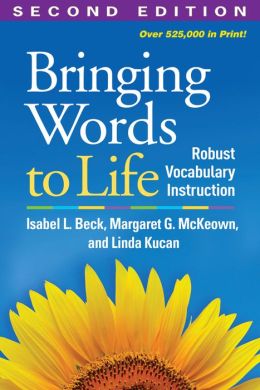
So guess what's happening now. With some guidance from Bringing Words to Life, I am creating daily review lessons for the rest of this week to deepen understanding of our vocabulary words.
Deepening Understanding Lesson #1: Find the Missing Word
This strategy is essentially a fill-in-the-blank. Since I have been out for a day and a half, this will help show me how much my students have learned without my presence. In order to ensure feedback from all students, I am creating the review as a Kahoot lesson. Kahoot creates high engagement, and my students often ask if we are ever going to use it in class. This will be the first time in my class this year.
Deepening Understanding Lesson #2: Making Choices
For this strategy, students will be given examples and non-examples for each word. If the information given is correct example, the students will say the word. If it is not, they will not say anything at all.
For example: If I say something you think is truly hideous (and not just your personal opinion), say hideous. If you do not think it is hideous, do not say anything at all.
Deepening Understanding Lesson #3: Putting the Words to Use
On Friday, I am going to have my students complete a timed writing with the words. In an effort to get them to apply our vocabulary words to other disciplines, they will have to write about what they are doing in another class, using at least four of the nine words. This week I introduced Seven-Up Sentences, writing with a minimum of seven words per sentence, to make their writing more powerful. They will need to incorporate this into their work (to the best of their ability under timed writing circumstances).
Today I had a follow-up vocabulary booster training to last year's vocabulary routine training. Although I have been using the routine, I realized that I have not been moving through the entire process. I introduce the words, but I have not been working to deepen understanding as much as I should. I put the words on a word wall and often refer to them, but I have not really had my students doing much with them.
Deepening Understanding Lesson #1: Find the Missing Word
This strategy is essentially a fill-in-the-blank. Since I have been out for a day and a half, this will help show me how much my students have learned without my presence. In order to ensure feedback from all students, I am creating the review as a Kahoot lesson. Kahoot creates high engagement, and my students often ask if we are ever going to use it in class. This will be the first time in my class this year.
Deepening Understanding Lesson #2: Making Choices
For this strategy, students will be given examples and non-examples for each word. If the information given is correct example, the students will say the word. If it is not, they will not say anything at all.
For example: If I say something you think is truly hideous (and not just your personal opinion), say hideous. If you do not think it is hideous, do not say anything at all.
- Adam Levine
- Freddy Krueger
- a puppy dog
- maggots on rotting food
Deepening Understanding Lesson #3: Putting the Words to Use
On Friday, I am going to have my students complete a timed writing with the words. In an effort to get them to apply our vocabulary words to other disciplines, they will have to write about what they are doing in another class, using at least four of the nine words. This week I introduced Seven-Up Sentences, writing with a minimum of seven words per sentence, to make their writing more powerful. They will need to incorporate this into their work (to the best of their ability under timed writing circumstances).
I am looking forward to seeing how things go this week. The district goal is to focus on 4-5 words per week. I have more for this week because I am using a district-created lesson. Once I see how things go for the next week days, I will determine if I continue using this set for another week, and if not, I have to figure out what to next.
Stay tuned.
Sunday, September 28, 2014
Hooked: How I suckered my kids into a poetry lesson
As I prepared to teach my first poem of the year, I found myself conceiving ways in which I could draw my students in to reading poetry without them immediately shutting down at the thought of poetry. And because we were going to use the poem for inferences, a very weak skill for my students, I knew I was really going to have to keep them as engaged as possible.
Hook #1: As we wrapped up our informational text lesson, I casually mentioned that we were going to be reading a poem next. [Insert groans here.] Knowing that I had their attention, I told them that we don't read sappy poems in my classroom (only one girl complained). I know how to find the good stuff that is much more enjoyable. Hooked! I was getting lots of questions regarding the topic, but I said nothing more than it was a secret and they would have to wait until the next day.
Hook #2: To introduce the lesson, I showed this picture and asked my students to complete a Quick Write:
I let them know that we are a safe environment and that they would not have to share their thoughts verbally (although many of them did opt to share when given the opportunity). By the end of this activity, my kids were desperate to know just what kind of poem we were going to be reading. But they had to wait another day.
Hook #3: We read "Fat Man" by Niall Janney - or so they thought. What I actually gave them was the first sixteen lines of the poem. We had great discussions about being judgmental (huge issue in the classroom this year), I made the speaker of the poem appear to be incredibly unlikable, and just as the lesson appeared to be coming to a close, I told them I had a secret to tell them: "This isn't the whole poem." I honestly did not expect the reactions to Hook #3 that I got. Anger, confusion, shock, and lots of whaddya-mean! And then I made them wait until the next day - again.
This is the second year that I have used this poem, and not once in using it have I heard anything negative about poetry. My students were truly engaged and interacting with the poem, and I believe that using hooks throughout the lesson contributed to the overall success of the lesson.
Monday, September 22, 2014
Reading is...
Last week, I had my kids work collaboratively to write poems expressing their thoughts about reading. I revised an AVID poem called "Friendship is..." to "Reading is...". I have to admit that I truly love the honesty that comes from the mouths of middle schoolers.
The writing needs work, and I am not sure what some of this means, but they definitely had fun during the process.
"You'll come back"
Fifteen years ago, I was a teaching assistant at our alternative placement junior high. When I first went to the school to sub, I had no idea that the place even existed, that there would be a special campus for the kids who got into too much trouble at their home campuses. Maybe that's why I fell in love with those "bad" kids so quickly. I never had a chance to see them as the misbegotten.
That three month experience set the foundation for my teaching career. I tend to do very well with those kids who have been labeled bad for more years than they can even remember. I have a soft spot for them, for showing them that they are lovable and can be successful. I want them to do well. I want them to know that someone will support them.
J. was one of those kids. I knew his reputation from seventh grade, but I did not care about that. Kids change drastically from seventh to eighth grade. J. still put up some fights when he came to my class. He would try to sleep in class. We would argue. He would refuse to do work. I would prompt and prompt and prompt. He would storm out of class. I would write referrals. He spent some time suspended. I always let him come back like it was no big deal. I never gave up on him because I would see those moments of intelligence shine through.
J. was one of those students who could never understand why my formers would come back to see me or why they would email me or why they would ask me to be a reference for a job. To him, I was nothing more than a middle school teacher who would pass in and out of his life.
At 12:30 this afternoon, J's name showed up in my school email inbox. I was taken aback because I had been speaking about him a week earlier with a former student teacher (one whom J. had a huge crush on). Before opening the message, I assumed it was going to be a spam link or someone else with the same name. My assumption could not be farther from the truth.
This is the reason I teach. He came back.
That three month experience set the foundation for my teaching career. I tend to do very well with those kids who have been labeled bad for more years than they can even remember. I have a soft spot for them, for showing them that they are lovable and can be successful. I want them to do well. I want them to know that someone will support them.
J. was one of those kids. I knew his reputation from seventh grade, but I did not care about that. Kids change drastically from seventh to eighth grade. J. still put up some fights when he came to my class. He would try to sleep in class. We would argue. He would refuse to do work. I would prompt and prompt and prompt. He would storm out of class. I would write referrals. He spent some time suspended. I always let him come back like it was no big deal. I never gave up on him because I would see those moments of intelligence shine through.
J. was one of those students who could never understand why my formers would come back to see me or why they would email me or why they would ask me to be a reference for a job. To him, I was nothing more than a middle school teacher who would pass in and out of his life.
At 12:30 this afternoon, J's name showed up in my school email inbox. I was taken aback because I had been speaking about him a week earlier with a former student teacher (one whom J. had a huge crush on). Before opening the message, I assumed it was going to be a spam link or someone else with the same name. My assumption could not be farther from the truth.
This is the reason I teach. He came back.
Tuesday, September 2, 2014
Kismet?
In the vocabulary routine, students have opportunities to participate in analyzing graphics, choral and partner speaking, and writing. Especially this early in the year, students respond well to choral speaking, as they are able to talk in a safe environment. And I get goofy with it - just the boys, just the girls, just the boys sounding like the girls, just the girls sounding like the boys. I tried to get them to rap today, but they just laughed at me.
So far this year, and I know it has only been six days, my lessons have had a meant-to-be quality. We were using on online interactive presentation to respond to the lesson. I included a video clip, something I have never done before, but I knew the kids would respond well to it:
Not only do my students love Finding Nemo, they often compare me to Ellen DeGeneres - and that is a compliment I will gladly take.
After the comparisons, my often-used online site kept stalling and crashing. It was an ideal moment to teach persistence, to discuss how I was so determined to teach them this lesson that I had a backup plan. They groaned; I pretended I heard squeals of joy.
Although I think "teachable moment" is an overused expression, I will happily make connections from any lessons to the world around us. The more I can do it, the more my students will understand. I am looking forward to picking this lesson back up tomorrow and seeing where it leads next.
_____________________________
Side note: This is one of the images my students analyzed to determine if it showed persistence.
When I asked how it showed persistence, one girl made a comment about the "big ball," causing massive laughter from this class. It is silliness like this that makes me absolutely love teaching middle school. (Tee-hee-hee! She said "big ball.")
Subscribe to:
Posts (Atom)