Search This Blog

Monday, January 12, 2015

Smashing Vocabulary

Today one of my district technology representatives came to my campus to teach my students (and me) how to 


It turns out that most of us are already doing this every day, but I actually learned some things. 

We started by using Pic Collage to create a collage relating to one of our vocabulary words from last week (innovative, amicable, and inquisitive). The kids were able to use text, web images, classroom photos, and app stickers to show the meaning of the assigned word. 

We then imported the collages into Thinglink. This app and website is completely new to me. Thinglink allows you to create interactive pictures. The user can add hover-over icons that contain text, links, pictures, and videos. My students were adding everything from definitions to captions to videos. 

When I asked how the kids felt about this activity versus our usual hand-made creations, most stated that they liked this better. This is definitely one to add to my repertoire, and I can see numerous possibilities already with Thinglink. I definitely have to find some play time for myself. 

Class examples:

Sunday, January 11, 2015

Wizards, Wizards, Everywhere! (Updated 8/29/2016)

Word Wizard is an unexpected success! The first day back from winter break, I presented the idea. By the second day, I was in shock. 

When presenting the idea of being on the lookout for our vocabulary words in the world outside of my classroom, I was not met with the greatest enthusiasm. In every class period, I had students ask if they had to do it. I insisted that this is a truly optional assignment, and many seemed quite pleased. 

In the two following days, student after student approached my class tutor and me about having heard, read, or used (I will explain there creative approach to earning points in a second) our vocabulary words. I honestly was not even expecting them to remember the words we covered for the first semester, especially after two and a half weeks off. 

The really surprising part? The students who came to us with the words have been predominantly male and predominantly the goofballs. And I think that it is important to make a big note of this. Sometimes we think those goofballs are not paying attention because they are screwing around. Challenge them. I bet you, too, will discover that they are more in tune to your class than you may realize. 

So where are they finding words? These are just a few examples. 

  • "Family Guy" - The night I presented the lesson, many of the kids went home and watched this show. In a bar scene, one character called another a runt.


  • Song lyrics - One student sent me a screenshot for the lyrics of the song "Pompeii." He heard the word rubble


  • Conversations - A student came to us at the end of the day, stating she had heard some other students talking, and one had used the word preposterous
  • Text messages - This is where my boys got a little creative. They are having text messages conversations, using our class vocabulary words. I look at it this way: they are using the words! 

  • Books - I have some students double-blocked for my English class and my READ 180 intervention class. In READ 180, we were working on independent reading. A double-blocked student found two of our English class words in his book. 
On my word wall, I have created a Word Wizard chart. Every time a word is submitted, we put a star next to it. If the kids continue at the pace they started last week, I am going to have to come up with a much larger chart. 


Side note: During my team meeting time on Thursday, my math colleague noticed and asked about the chart. He thought it was a really good idea. Now if I could just get him to use it in his class, too...


______________________________ 

I am now on year three of my Word Wizard adventures, and my students continue to impress me tremendously. I taught the word empower on the first day of school. By the second day, two students came to me with a life-outside-of-class encounter. A week in, and we are up to eight encounters, plus two from me. Today I found the word empowering on a catalog and empower in a Twitter post:

 And of course, I sent out it to my students using Remind. The school day may end, but empowering my students to continue learning in every environment does not.

Friday, December 26, 2014

#wordwizard

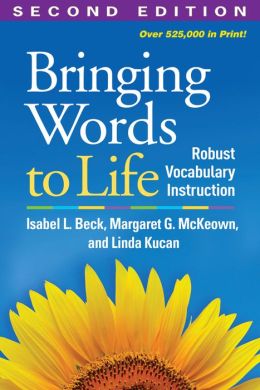
In my ongoing battle for students to absorb vocabulary, I have found a technique that I have very slowly begun mentioning to my students: Word Wizard. This technique, focused on extending vocabulary beyond the classroom, comes from Bringing Words to Life.

As we have discussed different words throughout the year, I have tried to point out to my students when I have heard and/or read our words outside of class, whether it be on a television show, in a book, in a magazine, in a conversation. On occasion, I have had students come back and tell me that they are also encountering our words in life outside of school (vex seems to be a very popular word). 

This is the premise of Word Wizard. In Bringing Words to Life, the authors set up a Word Wizard system in which students earned extra-credit points based on vocabulary evidence by sight, sound, or use outside of the classroom lesson. I am not a big fan of extra credit assignments, but I do like the idea of giving extra credit points for being a Word Wizard (celebrate the nerdiness). 

So here is what I have done so far:

  • I have encouraged my students to be on the lookout for our words because they might be rewarded in the future. Because I came across the Word Wizard idea in the middle of a marking period/end of semester, I decided to hold onto it until our second semester. 
  • I have started using a Word Wizard hashtag on Instragram (search #wordwizard and/or @kirstenfoti). Whenever I run across one of words, I post it. Sometimes I take a screenshot of my Nook book. Sometimes I type out a quote from a TV show. Sometimes I take a picture from a book. Anything I can do to put our words out there. One of my students actually filmed a segment from the TV cartoon Lilo & Stitch, pointing out that there was rubble (one of our words) on the screen. He then told me that he really think that episode helped him understand the word even better.
  • I have started inviting my students to be Word Wizards. Yes, they let me know that I am dorky, but I know that I can sucker them into this. 
My next step is to introduce the Word Wizard system to my students when we return to school in January. I am going to create a classroom poster (link added 12/17/14) that contains the words we have covered so far this year. As we learn more words, I will add to it. When the kids bring me evidence (link added 12/17/14of a word encounter, I will put a stamp next to the word (may as well work in some math graphing skills), and the student will receive a coupon (link added 12/17/14for five extra credit points on any assignment. 

I am definitely seeing successes with vocabulary in my classroom. We are moving beyond rote memorization and moving on to fluent usage. I am going to share this idea outside of my content area and see if we can create a new culture within the school. It is a grand idea, but if we expect our kids to dream big, we must also dream big. 


_______

As I finished typing this post and clicked Publish, one of our classroom words (fancy = to imagine) was used by Lena Dunham on a repeat episode of Ellen from last October. I am getting ready to post it on Instragram!

Friday, December 12, 2014

When tragedy strikes

In the eleven and a half years that I have been teaching, I have had three students die during or after high school - one from a drowning, two from car accidents. It is devastating every time, but the current tragedy has hit me far worse than any other. 

At the end of the school day Wednesday, our principal came over the loudspeaker to tell our students to not go to the elementary school down the road. A police perimeter had been established in the neighborhood, and the elementary school was on lockdown. It was emphasized that we were all safe. 

I left school, ran to get my daughter, and headed back for a basketball game. By the time I returned, numerous news helicopters were perched above the houses next to us. I started hearing rumors of two dead bodies, but there was no specific news. I focused on the basketball game. 

Toward the end of the first game, I was checking my Facebook news feed for any information about the nearby police activity. A familiar name immediately jumped out at me. 
A woman had been arrested for a the double homicide of her husband and stepdaughter. 

This woman was my former Words with Friends buddy. We played for years, connected by her son, a former student of mine. We chatted often, keeping updated on kids and progress. The son comes to see me every now and then, often inviting me to his wrestling competitions. I have been waiting to hear from him this year, but I have recently learned that there have been things going on aside from this of which I was unaware. 

The past two days have been rough. There are four surviving children, including my former student. I worry for his mental health as he grows into adulthood. I worry about how he will cope with what has happened and with what will happen with his siblings. This is truly a good kid, and I am deeply pained for him. 

I have struggled to understand why this has hit me so hard. I had a visitor yesterday who told me that in her travels to different schools in the area, she has not encountered many who care like I do. When I tell my students that I love them, I mean that I love them. When I tell them, "Once a Foti kid, always a Foti kid," I mean it. When I tell them I will always be here, I mean that I will always be here. 

I am tormented by many negative thoughts right now (if I expressed them, I might get fired), and I know that it is nothing compared to what this family is going through. 

What we do is never easy. We deal with so much, but how much do we really know about every single one of our kids at the end of the day? 

I have received the reminder: Be patient. Be kind. Show love and tolerance. 

They need us.

Monday, December 8, 2014

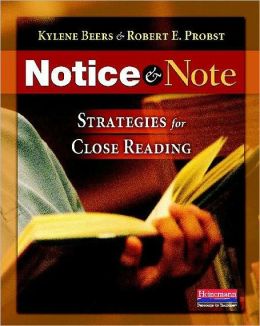
Using Notice and Note with Dialectical Journals

I have discovered my favorite thing with Notice and Note: it goes with everything! I had been planning on teaching The Giver this year, as I have for the past few years. When I went to get copies of the book from our storage room, however, I discovered we did not have enough for me to provide each student with a copy. I did not want to work with a class set because I often have students who want to read ahead. I already had my Notice and Note lesson prepared, but since it works with everything, I did not have any issues with changing novels to work with. 

After much scrambling, I decided to teach Milkweed, a novel I used only with my Pre-AP students last year. My students will be studying World War II later this year, and after reading this book last year, I realized that even my knowledge was limited to a concentration camps (I still remember the paper I wrote in my eighth grade English class about Auschwitz). This easy-to-read novel gives my students a perspective that is not taught in most history classes. 

Coming back from Thanksgiving break last week, I had my students do nothing but copy my Notice and Note mini-posters. Ok, ok. I was really tired and did not want to have to work too hard the first day back, but...but... I am human, too! 

When I distributed student novels, I also gave them a Notice and Note bookmark. Aside from that, I have not mentioned one thing about the mini-posters until today (I actually had one kid try to talk to me about when we discussed the signposts earlier but we had not; I must be really good). 

Today I taught my students how to create a dialectical journal, using the signposts as a guide. We analyzed the text for signposts, using our bookmarks as a cheat-sheet. After identifying a signpost, we used the accompanying question from the bookmark and our posters to guide our class discussion and to write our responses. I never stopped to teach each the signposts individually. I simply jumped right in, and the kids reacted. This is what my classes came up with today for chapters one and two of the novel:


Tomorrow, the kids will start working in groups to identify signposts in the text. Some want more support before having to work on their own. Since dialectical journals are new to 76 of my 77 students, I do not have any problems with this. 

On a side note, many of my students are close to finishing the novel. Since I never even assigned a specific reading, this is a thrilling thing to see. 

Skills targeted:

  • ELPS - listening, speaking, reading, writing
  • using text evidence
  • monitoring comprehension
  • collaboration
  • inference
  • reader response


The victory is not in the test

I have a student who is well below grade level. I knew him from last year, and I knew that he was prone to acting out, especially when not understanding material. For most of this year, every day has been filled with frustration. The student gets upset when he does not know what to do, and I get upset because a number of someones did him wrong in the past.  Since day one, I have been concerned with what to do with this child. How do I help him? How do I prevent him from becoming a statistic? What services can I provide?

Despite all the hair I have pulled out over this kid in the past few months, he has grown on me. I do not know exactly when it happened, but one day I realized that he really makes me laugh and smile. 


In the past few weeks, I have watched miraculous things happen with this child, and I am not quite sure what has brought about the change. 


  • Last week, D. came into my room from another teacher to work on a make up assignment. While he was here, he listened to the lesson he would be part of the next class period. The student did his best to absorb all the "smart answers" to share in his class. During his class period, he did his best to spit back everything he had heard, and he honestly did a very good job. He was determined to be the "smart kid," and I gave him every possible chance to do so. 
  • I do a lot of choral activities in class. D. responds very well to them because he likes to talk. As D. has become more comfortable with these activities, I have noticed that he is using our class words more and more frequently. When a kid who can barely read is using words like plausible and preposterous in his speech, I am declaring victory. He has even been able to use the words accurately in his writing.
  • During one of our advisory periods last week, D. started reading Milkweed on his own. I simply handed out the books and told the kids we would be reading it. I never assigned a thing. My tutor and I did our best to act is if we did not notice , but we discovered that D. was reading the book on his own. He was very engaged, and the look on his face showed that he was focusing on understanding the story. We started discussing the novel today, and D. was able to raise his hand and participate in conversation. This is not something he has been able to do in the past. He even attempted to make an analogy about the plot, but he could not find the right words. I know potatoes and Cheez-it's were involved. Whatever it was, it made sense in his head, and I give him credit for working to express himself and clarify his thoughts. 
This is a student who rarely receives praise. I really felt that he needed to hear some. I called him over in class, and gave him some very specific positive praise about his participation. D. got the biggest, goofiest grin on his face, and I loved it. Once I caught him reading without being forced, I printed a "You're a star" certificate for him. I colored and signed it, writing a note at the bottom that it was for him to take home and hang on the refrigerator - which he did. 

By middle school, we want our students to know a lot. I have seen teachers give up on kids, thinking that if they do not have it be the time they reach us, they never will. I am not giving up on this kid. I do not know how far he will make it in the long run, but I want him to know that someone believes in him. 

Sunday, November 30, 2014

Plausibly Preposterous: Mixing Vocabulary and Grammar (Part II)

In Part I, I discussed my writing lesson using the vocabulary words plausible and preposterous, with the addition of the word there, using a strategy from Gretchen Bernabei. I now pick up with a revising strategy from Bernabei called Paragraph Overhaul. 


____________________

My students have done a great deal of writing this year, but we have not moved on to editing and revising until now. While attending the TexTESOL conference in San Marcos this month, Gretchen Bernabei discussed a technique she calls Paragraph Overhaul, and I brought this back to my classroom to use with my students. 

I had my students the steps in their composition books. We worked on each step as we went through the process. I modeled. They worked with me. I also had conversations with toys, but that's a bit farther along in the reflection. 

Paragraph Overhaul

1. Count how many sentences you wrote (this means a beginning capital letter to an end punctuation mark). Write this number at the top of your paragraph. 

This step made many of my students aware that they are not using end punctuation anywhere in their writing. I have a dyslexic student who can write clear thoughts, but he was surprised to discover that he had written one gigantic run-on sentence. As we continued through the writing workshop, I had to help break his writing into chunks for him to work with. I saw similar issues with some of my ESL students. 

2. On a new page, write your sentences in list form. 

Although I wrote my own paragraph for my students, I had not made enough mistakes to effectively model the paragraph overhaul process. I used a student's writing from different class periods throughout the day. 

Student Example

3. Put your sentences through the WRINGER.

This was another opportunity to introduce a vocabulary word. Although a few students thought this word was "that thing your phone does," most were able to define it when I made physical gestures and describes what I would do to a wet towel. My kids knew this word, but they had not seen it in writing to know that it was spelled differently than "that thing your phone does."

One thing I am not afraid to do in my classroom is embarrass myself. It is not easy to teach grammar. Grammar tends to be boring and dry. Over the past 11 1/2 years, I have embraced my nerdiness and let it shine in my classroom, and it seems to work. Bernabei shared her way of teaching this process, but I had to put my own spin on it. 

3a. Pssst! Test: Does it make a statement?

I don't even know how to explain this and have it make sense, so I am going to share a page from Bernabei's book:


Now, saying Pssst! in a room full of eighth graders sounds like another word that I do not like them using in my classroom. So, of course, I ran with it and made lots of corny jokes to sucker them into this part of the lesson. Sometimes ya gotta do what ya gotta do!  

I also added my own spin to this. I really wanted my students to understand that this "What?" voice is meant to annoy them and get them thinking. So I brought a prop:


Who is more annoying than Donkey?

As I modeled the Pssst! Test, I was having conversations with Donkey. Yes, my students told me that I am weird and that I have lost cool points (but earned crazy points), but within a few minutes, they were following my lead. 

Me: Pssst! Donkey!
(wait a moment)
Me (looking at class): Donkey said, "What?"
(read sentence, then listen again)
Me: Donkey says that is not a sentence, and he is not being nice about it.

This part was a struggle for them when they did it on their own. I had them drawing faces on their fingers and Pssst!ing their classmates to help, but because their everyday speech is grammatically flawed, they were not picking up on some of their fragments and run-ons. Most of my students did eventually pick up on their mistakes and make corrections.

3b. Verb Check

Although this step is meant for sentence fragments, I had my students to verb checks on every sentence they wrote. Yes, I teach eighth graders who are clueless about verbs. So I took advantage of the opportunity. I was also able to use this method with a student from another English class who was stuck on a subject and predicate assignment. It's so simple, I wish I had thought of it. 

To prove you have a verb, find the word in the sentence that you think is a verb, and plug it into each of the following blanks:

I __________. You __________. He __________. 

If your word makes sense in any of those, you have found your verb. We did discover that some adverbs also made sense, but if the students had adverbs, they usually had verbs. 

3c. How many? If there is more than one sentence, how are they joined?

To join sentences legally, use one of the following:

. (period); (semicolon), conjunction 

This WRINGER sample is from an ELL. She struggles with
using correct verb tenses. We focused heavily on this,
and she made significant progress.


I modeled every step of this. I had kids making their own corrections as we modeled. I had some who took three days to figure it out ("I don't get it. What's wrong with 'take me a bath'?"). Regardless of how much (or little) they ended up understanding, there were huge improvements in their writing. 


The whole lesson was more fun than I expected, and I enjoyed every bit of frustration my students endured. I told them that frustration means they are thinking, and we need to push through that frustration instead of giving up. For a first attempt on my part, I think this went quite well.