Search This Blog

Sunday, August 30, 2015

Getting to know you: Super Empowered Student


In addition to getting to know my students during the first week of school, I wanted my new kids to get to know themselves. I know some kids are always going to be quiet (I was one of them), and I want those students, in particular, to understand that they have a voice in my classroom, that they have something to contribute. I also hate seeing kids get stuck in a rut from one year to the next. Once I moved from teaching seventh grade to eighth grade, I realized how important it was for every student to be granted a fresh start full of new opportunities. So a lesson I was given this summer jumped out at me as a great way to communicate this to my incoming students. 


One of the activities I received from  AVID Summer Institute Culturally Relevant Teaching session I attended is Super Student. Super Student allows kids to examine what empowerment means, discuss people of various groups whom we empower, then find their own personal empowerment. We then use those ideas to create our super hero versions of ourselves: SuperYOU. 

I provided the kids with two separate super hero templates, plus gave my artistic students the opportunity to create their own from scratch. My new students were instructed to pick five skills or tools that they have or use in real life, then magnify those into super powers. For example, I use my super power of engagement strategies to draw my students into lessons without them ever realizing that they are actually learning (insert evil laugh here). They then had to write a short paragraph describing their skills/traits, providing me with an opportunity to formatively assess their writing skills. 

Here are some examples of what they came up with: 


Initially, many of the kids had a hard time getting started with their super heroes. They struggled to find qualities with which they are empowered. It didn't take too long, though. I only spent two days on this in class, and every student ended up with a SuperYOU. 

At the end of the week, I asked what their favorite activity had been. Many choose the Super Student: 


I looked through most of these assignments at the nail salon while my daughter got her mani/pedi. A woman sat down next to me, peeking at my papers.

"Do you teach first grade?" she asked. 

"No," I giggled. "I teach eighth graders."

I am not sure if the woman was simply shocked or disgusted, but her reaction was far from positive either way. Unlike her, I am very proud of the personal empowerment that my new students discovered about myself, and I cannot wait to use this lesson again in future years. 

Sunday, August 23, 2015

Community Building Activity: Hands On

Tomorrow is the first day of school with my 2015-2016 students. I will have 118 (at last count) new bodies in my classroom, some of whom I know a bit better than others. Some I do not know at all, as we have had many students transfer in from other junior highs, districts, cities, and states. 

With so much newness, it is important for everyone to get to know one another. It is my responsibility to build a healthy and safe classroom community. Our first assignment is going to be an introductory activity called Hands On, another  steal from the AVID Culturally Relevant Training I attended this summer (see Poker Time seating/grouping strategy)


We will be hanging the hands in the hallway to show everyone that we are going to work together. When this year's parents come in Thursday night to meet the teachers, I want them to see that we have been building a community from day one. I am a big preacher about my classroom being accepting of all people, regardless of any type of differences, and the Hands On activity is just one way to begin expressing that. 


In addition, my students will be reading, writing, listening, and speaking with this lesson, all of which are essential components of both English language arts and English language learner instruction. 

There is another, more secret reason that I am using this as my first day lesson. How many of you are still preaching procedures, expectations, rules, consequences, and the like on day one? How does your mouth and throat feel by the end of the day? It took me ten years to realize that coming home with a sore throat was not the way to start my school year, so I stopped that a few years ago. The kids will listen to me a little bit, but for the most part, I get to walk around, monitor, listen, and smile (yes, I smile before December). 

How will you build a safe and welcoming classroom environment?

Wednesday, July 8, 2015

It's poker time!

Well, not really, but now that I have your attention, let me share a seating/grouping strategy that I learned about this summer at AVID Culturally Relevant Training: Empowering Students. It involves elements of poker!

Upon entering my second day of the conference, I was instructed to draw a card from a deck. I then had to sit at a table the held a sign of the same suit as my playing card. This forced me to sit with (mostly) different people from the first day of the conference. You know that as teachers, we become very territorial very quickly. We find a comfort zone and stick with it. This training was not allowing that, and I am grateful for the push. 

I like this idea for the classroom. My environment is set up in groups every day. I usually make a seating chart the second week of school for the sole purpose of splitting up friends. Being friends, however, does not mean that students can not learn from one another. After thinking about it, shouldn't students be offered this same opportunity by random draw? 

My intention is to use this method on the first day of the 2015-2016 school year. Students may end up with friends; they may not. Either way, that should not take away from the group-building activity that I am planning on using (keep checking back for future blog post). I am considering using it every day for the first week, just to get the kids familiar with all of their classmates. [One of my biggest issues is always when students do not know the names of classmates after a couple of months. Heck, if I can learn them in a week, they should be able to learn them, too.]


__________________________________________

Resource: Table Signs

  • I have doubled the symbols on each page in order to fold them in half to get them to stand up. I am considering using the four-suit image for the last students who come in who may not fit into other full groups. This will depend upon class sizes. 

__________________________________________

At the conference, we took the playing cards a step further. Although we sat with one group, we created poker hands to mix-and-mingle with other classmates to answer questions. We took our cards, then paired up by a poker hand that was called out: two of a kind, three of a kind, flush, straight. For each round I participated in, I managed to meet someone new. Sometimes I was with one other person; sometimes four. 

This has unlimited possibilities for the classroom. For the first week, I am considering using this method with a 3-2-1. Students will write down three things they learned (it probably will not actually be about my class), two things they like, and one question they have. Then I will have them create their poker-hand groups to discuss what they have written. My goal is to always to incorporate reading and writing with listening and speaking to address ESL needs. And after twelve years of teaching, it becomes easier and easier to blend different strategies, so why not! 

__________________________________________

  • Because I am not terribly familiar with poker, and because I really hope that my students are also clueless (yes, naive), I made myself a display cheat sheet. I will post this to assist with students making their groups. 
__________________________________________

The AVID site team is hoping to present these playing card strategies during our in-service week in conjunction with some team-building activities. I only share what I see value in, and I am excited about adding this to by classroom management repertoire. Plus, I can definitely get cheap decks of cards at the dollar store (a teacher's best friend). 

What are your thoughts? How can you use this with your students (aside from teaching them how to play poker)?

Tuesday, March 24, 2015

My BEAM Symposium Workshop: Teaching Poetry with the ELPS

Years ago, I was asked to present an in-service workshop for other ELA teachers in my district, and I did it because I do not like (or know how) to say no. Years and years later, this is becoming a thing, and I am really starting to enjoy this thing. I have now presented at my school and in-district for ELA and district-adopted instructional model workshops, as well as at two state ESL/bilingual conferences for English language learner strategies. Last weekend, I presented my first ever, out-of-district, solo workshop presentation at the 31st BEAM Symposium (Bilingual/ESL Education Association of the Metroplex, Texas). 

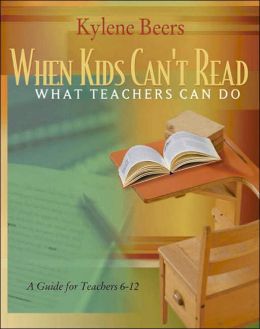
For my BEAM proposal, I actually reworked that very first workshop. After winning a copy of Kylene Beers' When Kids Can't Read at  a district training, I was asked to present one of her strategies. I conducted a Tea Party experience with the poem "Grandmother Grace" by Ronald Wallace. Because it has been so long, all I remember about this presentation is that it was my birthday, I brought cookies, I made people cry with the poem, and the feedback was good. 

For the English Language Learner presentation, I started with the basic premise - Tea Party with the poem. This is an activity I use frequently in my classroom in various ways, and it is always a success. It gets kids thinking and engaged with poetry (and other genres) before they even see the poem. And getting middle school students to do anything but glaze over at the mention of poetry is success in my book. 

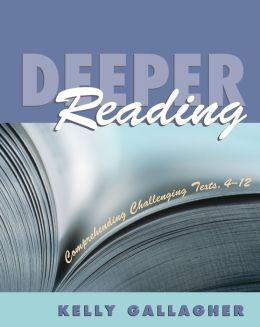
In my revisions of the presentation, I added more activities: Get the Gist from ReadWriteThink, understanding metaphor from Kelly Gallagher's Deeper Reading, and a final word activity, again from Kylene Beers. Although these strategies are not written specifically for English language learners, they work very well for this specific population. 

I did modify the activities to focus specifically on reading, writing, listening, and speaking, the four components of Texas' ELPS (English Language Proficiency Standards). The reading was a given; we had a poem. For writing, I worked with sentence stem responses to the different activities throughout the lesson. Participants shared their sentence stem writing with partners, allowing them to work on both listening and speaking skills. 

Overall, the workshop went very well. I received positive written and verbal feedback. The teachers in attendance were appreciative of the ability to take something directly back to their classrooms. As a teacher, I know that is something that I always want from sessions I attend. 

I have submitted a proposal to present this same workshop at another state organization conference, and it looks like it could be going to a third based on my ESL Teacher of the Year award. My goal is to wear the mess out of it as I practice my presenter skills, and then I will start working on a new one. Because I believe in sharing/stealing in teaching, it is all here for you, as well. 

I considered leaving the classroom last year, but I am glad I did not. I feel like I am in the best possible place. I get to do what I love and work with goofy children every day, plus I get to go outside of the classroom and share what I do with other teachers. Watch out world. I'm comin' to get ya! 

Saturday, March 21, 2015

May I now present myself as...

Until this week, winning and acknowledgement were in no way synonymous in my brain. As a teacher, I have never been concerned with winning something. I have always possessed expectations of being acknowledged for doing a good job. Despite the ego many think I walk around with, I am much more modest and humble than I often present myself to be, and I am quite content with a quick thank you and you did great. I have never really been comfortable being in the stage spotlight, unless it has been by my own doing. 

A few months ago, my district ESL/bilingual representative/mentor asked if she could nominate me for a teacher of the year award. She is affiliated with a local bilingual/ESL organization, and she told me that she felt that I was the perfect candidate for the award. I agreed, without much thought, thinking it would make her happy and would amount to nothing. 

The first thing I learned is that there is a lot of work involved in being nominated. You have to put together an entire portfolio!  Granted, my mentor did most of the work. I helped find some people to write letters of recommendation, and I wrote a biography and a philosophical statement - and put together a presentation proposal for the upcoming symposium. 

My focus for the symposium was always entirely upon the presentation. I have been presenting for many years now, and under the guidance of my mentor, I have been moving beyond district presentations. For the BEAM Symposium, I was modifying and updating a workshop that I conducted years ago within my school district (I believe it was from my very first time facilitating) to make it more strategically focused on ELL strategies. 

Last Monday, as my student teacher and I were walking back to class after lunch, I was checking my email on my phone, looking for something that I was afraid I would forget to check if I did not do it right then. As I walked to my desk, I opened a message informing me that I had won the 2015 BEAM ESL Teacher of the Year award:


Now let me tell you something: I don't cry. I. DO. NOT. CRY. Especially in front of people. Especially in front of my students. But I started crying. My student teacher looked at me with confusion as I handed her my phone. I am getting teary and turning red, she is high-fiving and hugging me, and my students are crying out different variations of "Oh my gosh! What happened? Is it something bad?". I was shaking my head that it was not and yelling at them to get out of my way because I DON'T CRY, and I needed to get to the restroom for a minute. 
I wish I had a logical reason for my initial reaction, but there is not much normal about me. I have won awards in the past, but they are student-chosen awards. There have not been many days in the past eleven and a half years, however, that my students have let me feel unappreciated for what I do with and for them. If they had it their way, I would win everything ever because I am just the best teacher ever (teens do have their shining moments). 

With my peers, I have never needed to win anything, but I have often felt that I do not get acknowledged for much of the work that I do that affects my entire campus (disclaimer: this does not apply to everyone I work with because some of them will be reading this). The email did not feel like a win; it felt like the most gigantic acknowledgement regarding almost twelve years of continuous development and growth as a teacher. 

Aside from telling my students what was going on to ease their concerns, I did not run down the halls yelling my good news at the top of my lungs. I informed my administrators, and I let my principal do the rest. Yes, I posted to my social media pages, but I knew the news would still take some time to get out there. 

I have been completely overwhelmed by both the acknowledgement and the win. My campus colleagues have emailed, texted, hugged, and spoken some of the kindest words I have heard in my entire teaching career, and I think the flattery is enough to tide me over for another twelve years. 

Last night, I was acknowledged at a pre-symposium dinner. I brought my daughter as my date. She was 11 1/2 months old when I started teaching, and she has grown up extremely patient and tolerant of all that I give to my students, many of whom she understands do not have the same support and opportunities as she. 

Yes, she is a few inches taller than me, but she also has on wedges. 
Oh, captain, my captain. 
Today, I was presented to the entire symposium as the ESL Teacher of the Year. 
We are forgiving them for misspelling my name here...

because they spelled it correctly here. 


Once all was said and done this afternoon, I was told that I am now moving along to the next round (I had no idea that I was in a beauty pageant). In May, my portfolio and presentation proposal will be presented to the Texas Association of Bilingual Education, and next October, I will travel to El Paso for the TABE conference. 

On a side note, I was also endowed with a Spanish dictionary and two sets of Texas Rangers baseball tickets, one set being for opening weekend. 

I almost left the classroom this year. I explored other options in education outside of the classroom. It was not meant to be, and part of me knew that even prior to my attempt to try something different. I feel like life is letting me know that I am still meant to be in the classroom with my zany, hormonal, pre-adults, and sharing my classroom lessons and adventures with other teachers is an added bonus to what I give to my kids. 

I am humbled. I am overwhelmed. I keep finding myself tongue-tied, and I promise you, that does not happen often. I did not need to win, but it sure does feel good to be acknowledged on such a grand scale. 

Thursday, February 5, 2015

"You can't write a poem about McDonald's"

"You can't write a poem about McDonald's" has been one of my favorite poems for years now. I have been teaching it annually because I want my kids to understand that poetry can be different than what they expect. Most kids hear the word poem or poetry and 
shut down immediately. Honestly, I am not a big poetry fan myself, so it is far from being my favorite thing to teach. For the benefit of my students and for me, I do my best to find off-the-wall poems. 


The focus for this lesson was making inferences from sensory details. To get them thinking about this, I had my students complete a pre-reading writing assignment, describing their favorite meal in as much sensory detail as possible. 



I then introduced three vocabulary words from the poem: fanatic, salvation, and cannibalism. To confuse them, I threw in the phrase "hip huggers and halter tops", showing them a picture from the 1970s. We focused on their meanings, and tried to figure out how they could possibly be connected and used them to make a prediction about the poem. Most of the kids focused completely on 

The next day, we worked on a sorting game. On one set of index cards, I glued images for the five senses. On a second set, I glued phrases from the poem. In groups, my students decided the sense being used to create each description. Adding the words and phrases to the vocabulary from the day before, the kids wrote a new prediction. Again, they seemed fixated on the cannibalism, and I began to question them about the type of teacher they think I am. 


At this point, they were completely suckered in, and I gave them the title of the poem. Many of the kids did not believe me (probably because I am known for pranking them). After a bit of convincing, the resigned their suspicions, and the lightbulbs above their heads began sparking as they made connections between the title and the phrases I had given them: crisp as a pickle, brown as a bun, greasy air, fingers thin like french fries

Once I let them read the poem, there were some realizations that out of the original words I taught them, they should have focused on fanatic rather than cannibalism. I think a few kids were disappointed that the poem was not about a savage murderer ("You did teach us that story about the guy who cut up the body and buried the heart, Miss."). But the more we discussed the sensory details, the more the poem came to life for them. 

As a culminating activity, we are drawing visual representations of the poem. Some kids are creating scenes while others are working on collages of images throughout the poem. So far, I have seen everything from the crazy fanatic to very interesting renditions of a hamburger cashier. Images to come!


Monday, January 12, 2015

Smashing Vocabulary

Today one of my district technology representatives came to my campus to teach my students (and me) how to 


It turns out that most of us are already doing this every day, but I actually learned some things. 

We started by using Pic Collage to create a collage relating to one of our vocabulary words from last week (innovative, amicable, and inquisitive). The kids were able to use text, web images, classroom photos, and app stickers to show the meaning of the assigned word. 

We then imported the collages into Thinglink. This app and website is completely new to me. Thinglink allows you to create interactive pictures. The user can add hover-over icons that contain text, links, pictures, and videos. My students were adding everything from definitions to captions to videos. 

When I asked how the kids felt about this activity versus our usual hand-made creations, most stated that they liked this better. This is definitely one to add to my repertoire, and I can see numerous possibilities already with Thinglink. I definitely have to find some play time for myself. 

Class examples: